Two Reasons Why Today’s Housing Market Isn’t a Bubble

Two Reasons Why Today’s Housing Market Isn’t a Bubble

Two Reasons Why Today’s Housing Market Isn’t a Bubble | Simplifying The Market

You may be reading headlines and hearing talk about a potential housing bubble or a crash, but it’s important to understand that the data and expert opinions tell a different story. A recent survey from Pulsenomics asked over one hundred housing market experts and real estate economists if they believe the housing market is in a bubble. The results indicate most experts don’t think that’s the case (see graph below):
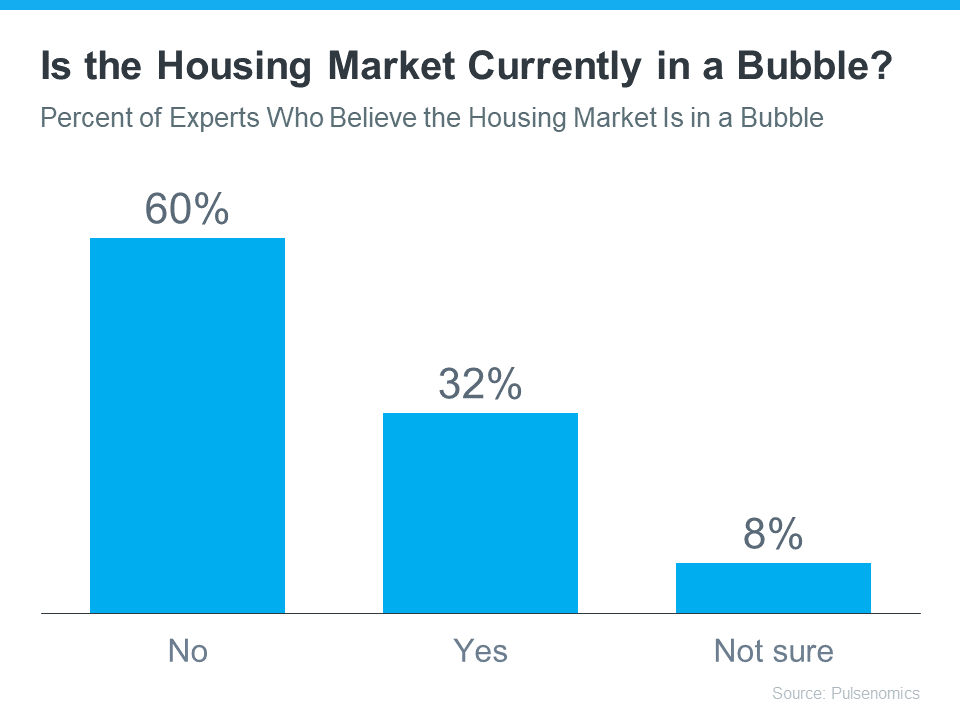
Two Reasons Why Today’s Housing Market Isn’t a Bubble | Simplifying The MarketAs the graph shows, a strong majority (60%) said the real estate market is not currently in a bubble. In the same survey, experts give the following reasons why this isn’t like 2008:

  • The recent growth in home prices is because of demographics and low inventory
  • Credit risks are low because underwriting and lending standards are sound

If you’re concerned a crash may be coming, here’s a deep dive into those two key factors that should help ease your concerns.

1. Low Housing Inventory Is Causing Home Prices To Rise

The supply of homes available for sale needed to sustain a normal real estate market is approximately six months. Anything more than that is an overabundance and will causes prices to depreciate. Anything less than that is a shortage and will lead to continued price appreciation.

As the graph below shows, there were too many homes for sale from 2007 to 2010 (many of which were short sales and foreclosures), and that caused prices to tumble. Today, there’s still a shortage of inventory, which is causing ongoing home price appreciation (see graph below):

Two Reasons Why Today’s Housing Market Isn’t a Bubble | Simplifying The MarketInventory is nothing like the last time. Prices are rising because there’s a healthy demand for homeownership at the same time there’s a limited supply of homes for sale. Odeta Kushi, Deputy Chief Economist at First American, explains:

“The fundamentals driving house price growth in the U.S. remain intact. . . . The demand for homes continues to exceed the supply of homes for sale, which is keeping house price growth high.”

2. Mortgage Lending Standards Today Are Nothing Like the Last Time

During the housing bubble, it was much easier to get a mortgage than it is today. Here’s a graph showing the mortgage volume issued to purchasers with a credit score less than 620 during the housing boom, and the subsequent volume in the years after:

Two Reasons Why Today’s Housing Market Isn’t a Bubble | Simplifying The MarketThis graph helps show one element of why mortgage standards are nothing like they were the last time. Purchasers who acquired a mortgage over the last decade are much more qualified than they were in the years leading up to the crash. Realtor.com notes:

. . . Lenders are giving mortgages only to the most qualified borrowers. These buyers are less likely to wind up in foreclosure.”

Bottom Line

A majority of experts agree we’re not in a housing bubble. That’s because home price growth is backed by strong housing market fundamentals and lending standards are much tighter today. If you have questions, let’s connect to discuss why today’s housing market is nothing like 2008.

Why an Agent Is Essential When Pricing Your House [INFOGRAPHIC]

Why an Agent Is Essential When Pricing Your House [INFOGRAPHIC]

Why an Agent Is Essential When Pricing Your House [INFOGRAPHIC] | Simplifying The Market

Why an Agent Is Essential When Pricing Your House [INFOGRAPHIC] | Simplifying The Market

Some Highlights

  • When it comes to pricing your house, there’s a lot to consider. The only way to ensure you price it right is by partnering with a local real estate professional.
  • To find the best price, your agent balances current market demand, the values of homes in your neighborhood, where prices are headed, and your home’s condition.
  • Don’t pick just any price for your house. If you’re ready to sell, let’s connect to find the perfect price for your house.
The Average Homeowner Gained $64K in Equity over the Past Year

The Average Homeowner Gained $64K in Equity over the Past Year

The Average Homeowner Gained $64K in Equity over the Past Year | Simplifying The Market

If you own a home, your net worth likely just got a big boost thanks to rising home equity. Equity is the current value of your home minus what you owe on the loan. And today, based on recent home price appreciation, you’re building that equity far faster than you may expect – here’s how it works.

Because there’s an ongoing imbalance between the number of homes available for sale and the number of buyers looking to make a purchase, home prices are on the rise. That means your home is worth more in today’s market because it’s in high demand. As Patrick Dodd, President and CEO of CoreLogic, explains:

“Price growth is the key ingredient for the creation of home equity wealth. . . . This has led to the largest one-year gain in average home equity wealth for owners. . . .”

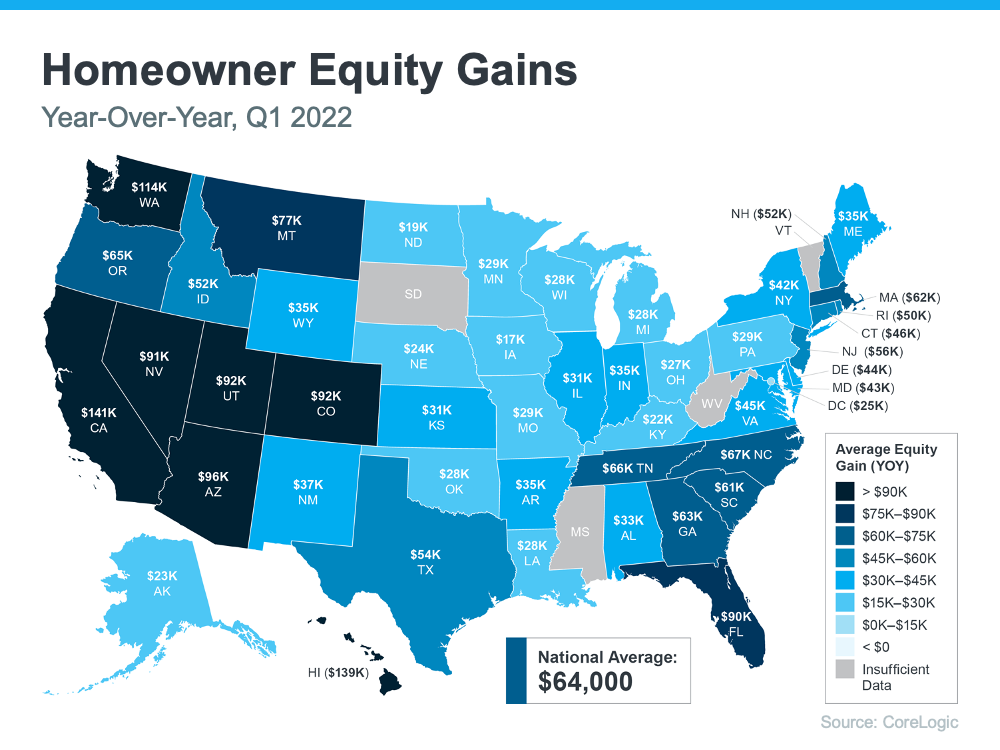
Basically, because your home value has likely climbed so much, your equity has increased too. According to the latest Homeowner Equity Insights from CoreLogic, the average homeowner’s equity has grown by $64,000 over the last 12 months.

While that’s the nationwide number, if you want to know what’s happening in your area, look at the map below. It breaks down the average year-over-year equity growth for each state using the data from CoreLogic.

The Average Homeowner Gained $64K in Equity over the Past Year | Simplifying The Market

The Opportunity Your Rising Home Equity Provides

In addition to building your overall net worth, equity can also help you achieve other goals like buying your next home. When you sell your current house, the equity you built up comes back to you in the sale. In a market where homeowners are gaining so much equity, it may be just what you need to cover a large portion – if not all – of the down payment on your next home.

So, if you’ve been holding off on selling or you’re worried about being priced out of your next home because of today’s ongoing home price appreciation, rest assured your equity can help fuel your move.

Bottom Line

If you’re planning to make a move, the equity you’ve gained can make a big impact. To find out just how much equity you have in your current home and how you can use it to fuel your next purchase, let’s connect so you can get a professional equity assessment report on your house.

More Listings Are Coming onto the Market [INFOGRAPHIC]

More Listings Are Coming onto the Market [INFOGRAPHIC]

More Listings Are Coming onto the Market [INFOGRAPHIC] | Simplifying The Market

More Listings Are Coming onto the Market [INFOGRAPHIC] | Simplifying The Market

Some Highlights

  • Worried you won’t be able to find your next home after you sell? You should know data from realtor.com shows more listings are coming onto the market each month this year.
  • Having additional options can make the search for your next home easier. But inventory is still low overall, which means your house should still stand out when you sell.
  • If your biggest question is where you’ll go if you sell, take this as encouraging news. Let’s connect to start the process today.
Home Price Deceleration Doesn’t Mean Home Price Depreciation

Home Price Deceleration Doesn’t Mean Home Price Depreciation

Home Price Deceleration Doesn’t Mean Home Price Depreciation | Simplifying The Market

Experts in the real estate industry use a number of terms when they talk about what’s happening with home prices. And some of those words sound a bit similar but mean very different things. To help clarify what’s happening with home prices and where experts say they’re going, here’s a look at a few terms you may hear:

  • Appreciation is when home prices increase.
  • Depreciation is when home prices decrease.
  • Deceleration is when home prices continue to appreciate, but at a slower pace.

Where Home Prices Have Been in Recent Years

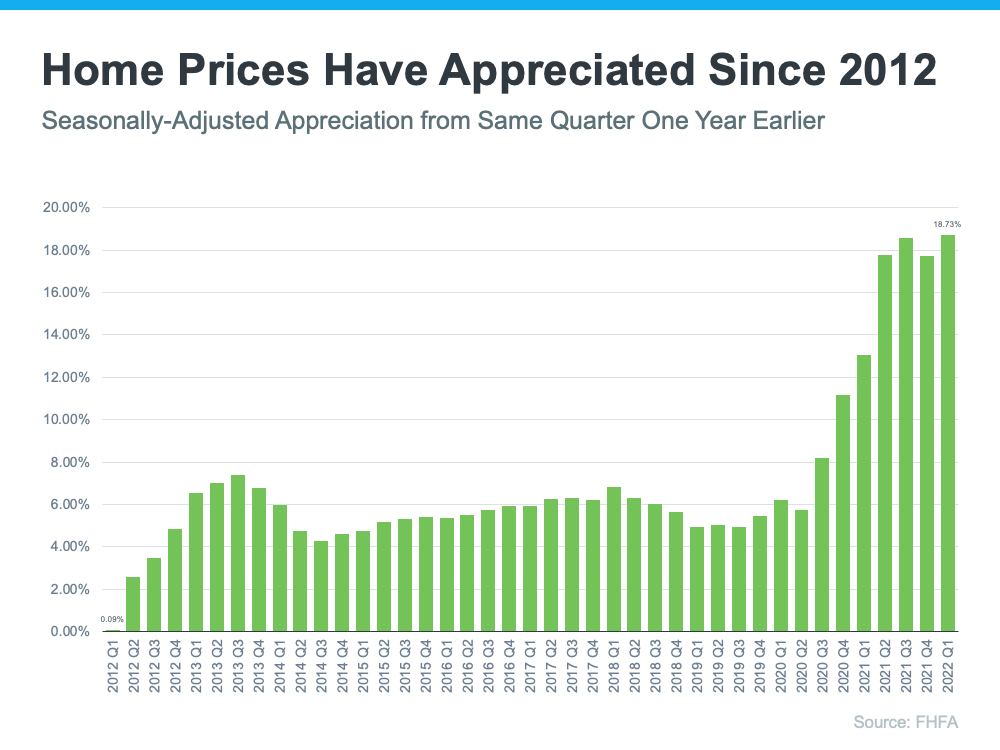
For starters, you’ve probably heard home prices have skyrocketed over the past two years, but homes were actually appreciating long before that. You might be surprised to learn that home prices have climbed for 122 consecutive months (see graph below):

Home Price Deceleration Doesn’t Mean Home Price Depreciation | Simplifying The Market

As the graph shows, houses have gained value consistently over the past 10 consecutive years. But since 2020, the increase has been more dramatic as home price growth accelerated.

So why did home prices climb so much? It’s because there were more buyers than there were homes for sale. That imbalance put upward pressure on home prices because demand was high and supply was low.

Where Experts Say Home Prices Are Going

While this is helpful context, if you’re a buyer or seller in today’s market, you probably want to know what’s going to happen with home prices moving forward. Will they continue that same growth path or will home prices fall?

Experts are forecasting ongoing appreciation, just at a decelerated pace. In other words, prices will keep climbing, just not as fast as they have been. The graph below shows home price forecasts from seven industry leaders. None are calling for prices to fall (see graph below):

Home Price Deceleration Doesn’t Mean Home Price Depreciation | Simplifying The Market

Mark Fleming, Chief Economist at First American, identifies a key reason why home prices won’t depreciate or drop:

In today’s housing market, demand for homes continues to outpace supply, which is keeping the pressure on house prices, so don’t expect house prices to decline.”

And although housing supply is starting to tick up, it’s not enough to make home prices decline because there’s still a gap between the number of homes available for sale and the volume of buyers looking to make a purchase.

Terry Loebs, Founder of the research firm Pulsenomics, notes that most real estate experts and economists anticipate home prices will continue rising. As he puts it:

“With home values at record-high levels and a vast majority of experts projecting additional price increases this year and beyond, home prices and expectations remain buoyant.”

Bottom Line

Experts forecast price deceleration, not depreciation. That means home prices will continue to rise, just at a slower pace. Let’s connect so you can get the full picture of what’s happening with home prices in our local market and to discuss your buying and selling goals.

A Majority of Consumers Say It’s a Good Time To Sell Your House

A Majority of Consumers Say It’s a Good Time To Sell Your House

A Majority of Consumers Say It’s a Good Time To Sell Your House | Simplifying The Market

If you’re a homeowner thinking about selling your house, you’re probably looking for the best time to make your move. That means you’re likely balancing a number of factors, like your changing needs, where you’ll go when you sell, and today’s mortgage rates in order to time it just right.

According to recent data, that sweet spot could already be here. The latest Home Purchase Sentiment Index (HPSI) by Fannie Mae finds that 76% of consumers believe now is a good time to sell.

The graph below shows the percentage of survey respondents who say it’s a good time to sell a house. The big dip in March and April of 2020 reflects how consumer sentiment dropped at the beginning of the pandemic as uncertainty about the health crisis grew. Since then, the percentage has grown consistently as more people feel confident it’s a good time to sell.

In fact, survey respondents think it’s an even better time to sell a house today than they did in 2019, which was a strong year for the housing market. The latest survey results indicate one of the strongest peaks in seller sentiment in nearly three years (see graph below):

A Majority of Consumers Say It’s a Good Time To Sell Your House | Simplifying The Market

What Makes Today a Good Time To Sell?

One reason so many people think it’s a good time to sell is because there are still more buyers in today’s market than there are homes for sale. That’s driving home prices up, making it a good time to sell your house.

And if you’re on the fence about whether or not to sell because you don’t know where you’ll go once you do, know that you might have more options today than in previous months. That’s because the number of homes coming onto the market has grown each month since the start of the year. When more homes come onto the market, it gives you more opportunities to find one that meets your changing needs.

Bottom Line

While the number of homes available for sale is growing and giving you more options for your move, inventory is still low overall. That could mean it’s a great time for you to sell. If you’re ready to address your changing needs and take advantage of today’s favorable conditions, let’s connect.