Haunted Houses & Real Estate Disclosures in Albuquerque | Venturi

Haunted Houses & Real Estate Disclosures in Albuquerque | Venturi

Spooky Season in Albuquerque: Haunted Houses, Real Estate Tips & Market Updates

From Episode 558 of Albuquerque Real Estate Talk
By Venturi Realty Group

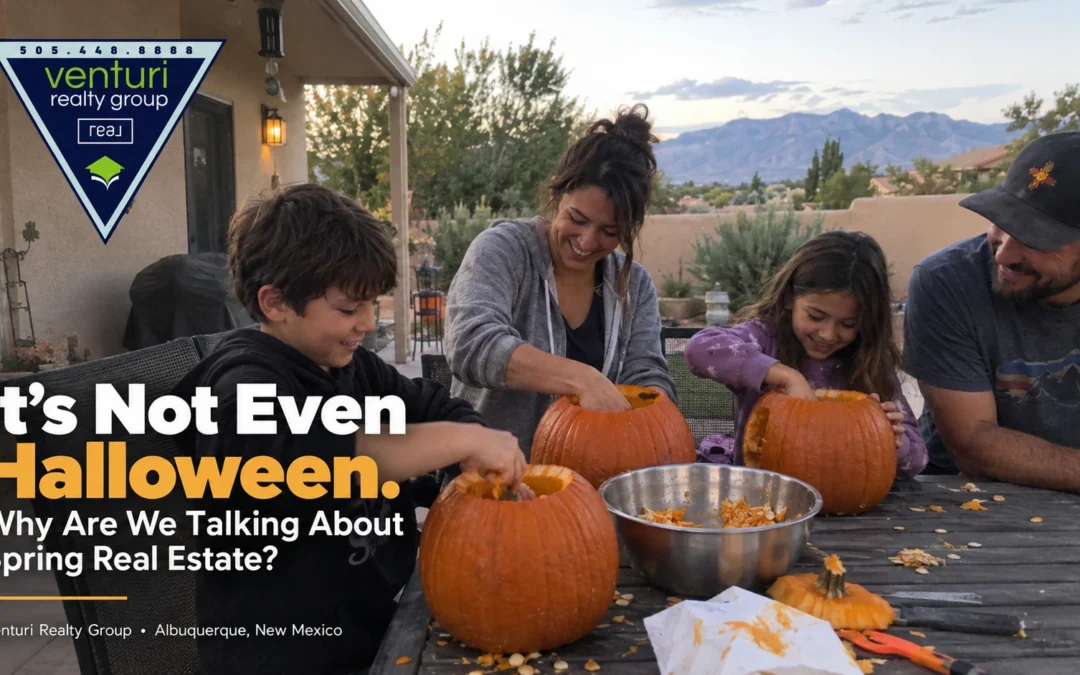
It’s spooky season here in Albuquerque, a time when many locals and visitors alike enjoy exploring the city’s rich past. As Asel mentions on the show, even a simple ghost tour through our historic Old Town can be a fun way to learn about the city’s deep and sometimes spooky history.

This got us thinking about a question that comes up more often than you’d think, especially in a city as historic as ours: If you’re selling a house that you believe has paranormal activity, do you actually have to disclose that to a buyer?

On our latest podcast episode, Tego and Tracy tackle this ghostly gray area. But the spooky topics don’t stop there. We also dive into real-world “scary” situations, like the scariest things you can find on a home inspection report, the truth about ‘zombie homes’, and the real financial horror of overpricing your house.

Plus, we’ve got a key update on interest rates that you won’t want to miss. (Listen to the full episode below).

The Haunted Disclosure Dilemma

Let’s get the big question out of the way. If your house has a reputation for being haunted, are you legally required to tell the buyer? The short answer, according to Tego, is no.

New Mexico state law is specific about what *doesn’t* need to be disclosed, and it covers many situations that buyers might find unsettling.

“[The New Mexico statute says] a seller or a landlord, they’re not required to disclose these things. And is that if the home was a site of a natural death, the site of a homicide, suicide, assault, sexual assault, or any other crime punishable as a felony.”

– Tego Venturi

Why You Should Consider Disclosing Anyway

Just because you don’t *have* to disclose something doesn’t mean you *shouldn’t*. We almost always advise our sellers to over-disclose rather than under-disclose. Why? Because the neighbors will talk.

“Somebody buys a new house, the neighbors walk over and say, ‘Oh, that’s the house where somebody did X, right?’ … And honestly, it happens every time. Every time. Something catastrophic happened in the home, the neighbor wants to talk to the new buyer about it. So wouldn’t it be better just to disclose it up front?”

– Tracy Venturi

The Caveat: “Adverse Material Fact”

Here’s where it gets tricky. While you don’t have to disclose a *stigma*, you absolutely must disclose any “adverse material fact”. So, what does that mean?

“The definition of an adverse material fact is something the seller knows that would affect the value of the property, the desirability of the property, or the buyer’s ability to use it.”

– Tego Venturi

You can’t prove or disprove a ghost. But if the home’s *reputation* for being haunted is so well-known that it could affect its desirability or value, a buyer could argue it falls into this category. This is a gray area you don’t want to be in, reinforcing the case for disclosing upfront.

Albuquerque Real Estate FAQ

  • Do I have to disclose if my house is haunted?
    No. Legally, New Mexico law does not require you to disclose a “stigma” like a haunting, or even a death or crime that occurred in the home. However, you must disclose any “adverse material fact.”
  • What is an “adverse material fact”?
    It’s defined as something the seller knows that would affect the property’s value, desirability, or the buyer’s ability to use it. A home’s strong *reputation* for being haunted could fall into this gray area.
  • What is a “zombie home”?
    This is a real estate term, not a supernatural one! It’s a property where the owners have abandoned it during the foreclosure process. The house sits empty, often boarded up and uncared for, while it’s in legal limbo between the owner and the bank.
  • What’s a “scary” home inspection item that isn’t a big deal?
    One of the most common is “reverse polarity” on an electrical outlet. It sounds alarming, but it’s often a $0 to $2 fix that just requires a simple wiring correction.
  • What’s an inspection item that *is* scary?
    Seeing the word “MOLD” on a report. If you see this, don’t panic, but do get it properly tested by an expert to find out exactly what you’re dealing with and, most importantly, what the source of the moisture is.
  • What is the “horror of overpricing” a home?
    When sellers overprice, their house sits on the market, which creates frustration. Data has proven that they might actually lose money in the end compared to pricing it correctly from the start.

From Ghosts to “Zombie Homes”

Sometimes, a house doesn’t have ghosts—it’s just a “zombie home.” This is a real term we use in the industry.

A zombie home isn’t supernaturally possessed; it’s a property that has been abandoned by its owners, usually after foreclosure starts. The owners leave, but the bank hasn’t taken possession, and the eviction isn’t complete. It’s a house in limbo.

“So that’s what a zombie house is. It’s basically a home that’s kind of in limbo… It’s on their [the bank’s] books, but they’re not doing anything with it. It’s just sitting there boarded up. So that’s what’s considered a zombie home.”

– Tego Venturi

The Truly Scariest Things in Real Estate

Ghosts and zombies aside, there are a few things that *really* give buyers and sellers a fright. Here’s what to watch out for.

1. Scary-Sounding Inspection Items (That Aren’t)

Home inspectors can find things that sound terrifying but are actually simple fixes. Our favorite example?

“’Reverse polarity’ on an electrical outlet. Oh my gosh, it’s got an electrical problem. Well, that’s like a $2 fix, right? … It’s a $0 fix in most cases. It’s just if you know what to do, putting the wires back in the right polarity.”

– Tracy & Tego Venturi

On the flip side, a truly scary word to see on an inspection report is MOLD. If you see that, don’t panic, but do take it seriously. You need to get an expert to properly test it and find out exactly what you’re dealing with.

2. The Horror of Bad Information

One of the scariest things we see is people making huge financial decisions based on fear and bad information, especially from “doom and gloom” posters online.

“You just scared all these people… into not participating in the most dynamic and appreciating real estate market in history because you just wanted to get a few more clicks on your YouTube video. It’s just, yeah. That’s scary. The bad information out there is scary.”

– Tego Venturi

3. The Nightmare of Overpricing Your Home

For sellers, the real horror story is overpricing. Pricing too high “to see what happens” is a strategy that almost always backfires.

“[That strategy] will backfire and create more frustration and actually maybe… data has proven that you might actually lose money in the end by overpricing.”

– Tego Venturi

It’s especially painful to see sellers who really need to sell make this mistake, as they statistically end up getting less than if they had priced it correctly from the start.

Market Update: Time to End the Fright of High Rates?

Finally, let’s talk about interest rates. If you bought a home in late 2023, you might have locked in a rate over 8%. Today, rates are in the low 6% range, and some buyers are even locking in at 5.75%.

If you’re one of those homeowners with a high rate, it is absolutely time to look at refinancing. You could significantly impact your monthly payment.

“I would call the person, like the local person that helped you get that loan and… talk to them because they can run the numbers very quick and easily for you to see how much you could save by refinancing.”

– Tracy Venturi

Don’t just call the servicer on your bill; talk to the local loan officer who helped you in the first place. They can give you the best advice.

Thinking of Buying or Selling?

We’re here to help you navigate the process, from spooky stigmas to market updates. Call us for a no-obligation consultation.

Venturi
Realty Group

☎ Phone: (505) 448-8888

✉ Email: info@welcomehomeabq.com

📍 Address: 1119 Alameda Blvd NW, Albuquerque, NM 87114


Send Us a Message

What Home Remodels Add Value in Albuquerque? Joy vs. ROI

What Home Remodels Add Value in Albuquerque? Joy vs. ROI

Remodeling for Joy vs. ROI: An Albuquerque Homeowner’s Guide

From Episode 557 of Albuquerque Real Estate Talk

By Venturi Realty Group

For homeowners, the remodeling itch is always present. Whether you’re dreaming of a gourmet kitchen, craving a spa-like primary suite, or just tired of looking at worn-out finishes, the big question is always the same: is it worth it? This conversation often gets split into two distinct paths: Return on Investment (ROI) and what we call the “Joy Factor.”

Which projects add real, measurable value when you sell? And which projects are all about the joy they bring to you while you live in the home? In this breakdown, Tego, Tracy, and Asel Venturi explore the data and share their on-the-ground experience to help you decide what’s right for your home and your goals.


The “Joy Score”: Remodeling for Your Happiness

Not every home project has to be about the final sales price. In fact, some of the most satisfying upgrades are the ones you do for yourself. The National Association of Realtors (NAR) even publishes a “Joy Score” for remodeling projects, rating how much happiness homeowners get from their new space.

Projects like a complete kitchen renovation, adding a primary suite, or a full bathroom remodel consistently receive a 10 out of 10 for joy. Why? Because these are the spaces we live in every day. As Tracy notes, “The house I showed yesterday, yeah. They were like, ‘we’ll make that dining room an office or something ’cause we’re just gonna sit on bar stools at the island.’ That’s how we live these days, right?”

If you love to cook, investing in an $80,000 upscale kitchen with professional appliances is a “Joy Factor” decision. You probably won’t get all that money back in a sale, but you’ll get to enjoy it every single day you’re in the home.

Interestingly, the NAR study also shows a high joy score for a new roof. While that sounds more like maintenance, Tego points out it’s about “peace of mind.” It’s the joy of not having to worry about leaks. Ultimately, these projects are about making your home more livable for *you*.

“One of the things I see a lot Tego when we work with home sellers is they plan to do some remodeling and upgrades… for sale. And I’m like, you always wanted that done the whole time you lived here. Now you’re gonna do it for the next… owner. Like, get it done, enjoy it while you live there.”

– Tracy Venturi

Maximizing ROI: What to Fix When You’re Selling

If your goal is to prepare your home for sale and get the highest possible price, the strategy changes. Here, you should focus on refreshing, repairing, and neutralizing—not on major, custom renovations.

The projects with the best ROI are often the least expensive:

  • Cleaning: This is the #1 ROI you can get. It costs nothing but time and some cleaning supplies.
  • Painting: A fresh coat of neutral paint can do wonders. It makes a home feel light, bright, and new. Avoid chaotic, multi-colored rooms.

“I showed a house earlier this week actually, and every room was a different color… one wall was pink, one was purple… one of the rooms was mostly like a really dark blue, and the whole room felt small and heavy. Just refreshing with paint can be a huge ROI and a really good selling point.”

– Tracy Venturi

  • Curb Appeal: This is that critical first impression. As Tego says, “Curb appeal matters. Always has mattered. Will always matter when you’re selling your home.” This doesn’t have to be expensive. Tracy adds, “A lot of homeowners are capable of doing something on the exterior themselves… like weeding, trimming, maybe painting trim… just repainting the front door… can make a huge difference.”
  • Deferred Maintenance: Fix the things you’ve been putting off. If your roof is failing, it’s going to come up. It’s better to get it taken care of than to have it become a major negative for buyers.

Albuquerque Remodeling FAQ

  • What’s the best ROI remodel before selling? Cleaning, fresh paint (light & neutral), and curb appeal (trimming, weeding, painting the front door). These cost little but have a huge impact.
  • What is a “Joy Score”? A rating of how much happiness homeowners get from a remodel. High-joy projects include kitchen upgrades, new primary suites, and bathroom renovations.
  • Will a new roof add value? It’s mostly a maintenance item, not an upgrade. A new roof gives peace of mind and removes a major buyer objection, but you likely won’t get a 100% return on the cost.
  • Do new windows really add 15% to my home’s value? Be wary of marketing claims. While new windows are a good upgrade (especially if the old ones are original), a 15% *total value* increase is unrealistic.
  • Should I remodel before I sell? Talk to us first! We can advise which projects (if any) will actually help you sell for more, and which ones aren’t worth the time or money.

Albuquerque’s 2025 Cost vs. Value: What the Data Says (and How to Use It)

The new Cost vs. Value report is out, and it’s a useful gut-check for remodels you’re considering in the Albuquerque area. To respect copyright, we’re sharing only brief excerpts and high-level takeaways here – if you want the full details, you can see the full report here.

“Exterior replacement projects remain the clear winners when it comes to adding resale value.”

“This year’s results reaffirm a long-standing trend: exterior projects deliver more value at resale than larger interior remodels.”

— Zonda’s 2025 Cost vs. Value overview

How the Report Applies in Albuquerque

The report provides market-level estimates you can filter to the Albuquerque MSA. While exact figures live in the report, the pattern is clear and matches what we see on the ground:

  • Curb appeal leads ROI. Think garage doors, entry doors, façade refreshes (e.g., stone veneer), siding/stucco upkeep. These projects are, visible, and market-friendly.
  • Minor kitchen updates punch above their weight. Light-touch refreshes (surfaces, hardware, select appliances) often outperform full gut remodels for resale.
  • Big interior remodels skew “Joy Factor.” Great if you’re staying; less reliable for dollar-for-dollar payback if you’re selling soon.

Quick Albuquerque Guidance

  • Selling in the next 12 months? Prioritize exterior refreshes, paint (light/neutral), and deferred maintenance. Reduce objections first; then add sizzle.
  • Staying put? Spend where you live… kitchen, primary suite, bath – then sanity-check against the report’s local ranges.

How to Pull the Albuquerque Numbers

  1. Open the report: 2025 Cost vs. Value.
  2. Select the Mountain Region and Albuquerque, NM market.
  3. Compare estimated Job Cost vs. Resale Value for the projects you’re considering.

Reality Check: Joy vs. ROI

High-end materials and custom features are often Joy Factor choices. That’s great if you’ll enjoy them for years, but it doesn’t guarantee a 1:1 payback. If the move is near-term, we’ll help you target updates that actually move your sale price – or your time on market.

Remodels That Can Hurt Your Home’s Value

Not all projects are created equal. Some “upgrades” can actually deter buyers or even reduce your home’s value.

1. Poorly Done DIY Projects

This is the biggest offender. A weekend warrior project that’s done with subpar workmanship—like an uneven floor, bad tile work, or messy paint—can take value *away* from the home. Buyers see it as a project they’ll have to pay to fix.

“Poor workmanship and poor design choices do not necessarily add value just because you spent the money on it. So that would be, I think, top of my list.”

– Tego Venturi

2. The Dreaded Garage Conversion

We see this a lot in Albuquerque. Converting a garage into another room is almost always a bad idea for value. Buyers expect a garage, and a poorly done conversion often feels like what it is: a garage they’re trying to make into a bedroom. In many cases, you’d increase the value by undoing the conversion.

3. Over-Personalization & Bad Design

Making a single room (like the kitchen) ultra-contemporary and glossy while the rest of the house is from 1972 creates a jarring, disjointed feel. Buyers may not know *why* it feels wrong, but they know they don’t like it.

“This kitchen is all like white, glossy and contemporary, and the rest of the house is 1972. And… they’re not cohesive… buyers don’t know what it is that they’re feeling when they see these things, but they just know… there’s something wrong.”

– Tracy Venturi

4. High-End Fixtures in the Wrong House

Putting top-of-the-line quartz, expensive faucets, and $10,000 appliances in a $400,000 house is a “Joy Factor” decision. You will not get all that money back. As Tego explains, “Putting those high-end things in a $2 million house, that’s just expected. Versus putting it in a $400,000 house, right?” Make smart, appropriate choices for your home’s price point.

5. Swimming Pools

A pool is the ultimate joy factor vs. ROI debate. It might add some value, but it will almost never add *as much* value as it cost to install.

The Truth About Solar and Home Value

Solar is a hot topic, but the financing makes all the difference.

“If you’re getting one of those systems [a lease or Power Purchase Agreement] and somebody claims that that adds value to your home, that’s a hundred percent false… In fact, the Fannie Mae and Freddie Mac guidelines specifically say those systems have zero value.”

– Tego Venturi

Leased solar can be a major problem when selling. It limits your pool of buyers, as many won’t want to (or can’t) qualify to take over the lease. Tracy warns, “If you have leased solar, that really limits your pool of buyers. There are many buyers who are not interested in having leased solar and taking on your lease.”

Owned solar offers great long-term benefits and is a better option than Leased or a PPA, but it still requires time to get the big payoff. You aren’t likely to get the full cost back if the home sale happens right away.

Final Advice: Talk to Us First

Whether you’re planning to sell next month or stay in your home for 20 years, we’re happy to give you advice. Don’t wait until *after* you’ve spent the money on a remodel to find out if it was a good investment.

As Tracy says, “Talk to us first because we can help consult. Should you do this or should you do that or should you do both or should you do none? We don’t want you wasting time, energy, [or] money if it’s not really gonna help you.”

Thinking of Buying or Selling?

We’re here to help you navigate the process, from remodeling advice to closing day. Call us for a no-obligation consultation.

Venturi
Realty Group

☎ Phone: (505) 448-8888

✉ Email: info@welcomehomeabq.com

📍 Address: 1119 Alameda Blvd NW, Albuquerque, NM 87114


Send Us a Message

Closing Costs in Albuquerque, NM | A Buyer & Seller Guide

Closing Costs in Albuquerque, NM | A Buyer & Seller Guide

Understanding Closing Costs in Real Estate: Albuquerque Market Insights

From Episode 556 of Albuquerque Real Estate Talk

By Venturi Realty Group

"Closing costs" is one of the most common, and most confusing, topics in a real estate transaction. For both buyers and sellers, these fees can feel mysterious, often raising critical questions: What are they for? Who is responsible for paying them? And most importantly, how much is it all going to cost?

A clear understanding of closing costs is essential for a smooth and predictable home buying or selling experience. In this detailed breakdown, Tego and Tracy Venturi (with questions from Asel Venturi, who has a background in home loans) dive deep into the world of closing costs to give you the clarity and confidence you need for your next transaction in the Albuquerque real estate market.

Who Pays the Closing Costs: Buyer, Seller, or Both?

The short answer is: both. In a typical Albuquerque real estate transaction, the seller has their set of closing costs and the buyer has theirs. However, the most important thing to know is that this isn't a universal rule; it's highly dependent on local customs.

"This is very specific to our location, right? In Santa Fe it's different. In Kentucky, it's different. In Texas it's different. In Las Cruces it's different."

- Tracy Venturi

Beyond local customs, who pays for what can also be a point of negotiation. Depending on whether it's a buyer's or seller's market, one party might ask the other to cover a specific fee to make the deal work. For example, a buyer who has their down payment ready but is short on cash for other fees might ask a seller to cover some of their closing costs as part of the offer.

Who Pays For Closing Costs?

  • Both Parties Pay: Buyers and sellers each have their own set of closing costs.
  • It's Local: Who pays for what is determined by local custom (Albuquerque vs. Santa Fe vs. other states).
  • It's Negotiable: Nearly all costs, including commissions, are negotiable and can be part of the offer.
  • Buyer Costs = Loan: Most buyer costs are tied to their mortgage (appraisal, underwriting, etc.).
  • Seller Costs = Title: A primary seller cost in NM is the Owner's Title Insurance Policy for the buyer.
  • Ask for Help: Buyers can (and often do) ask sellers for contributions toward their closing costs as part of the initial offer.

What's Included in Closing Costs?

The total amount for closing costs "depends" because it's specific to each person's situation. The biggest factor is whether a mortgage is involved. A cash buyer, for example, will have very few closing costs because they don't have any loan-related fees.

Typical Buyer Closing Costs

For a buyer getting a mortgage, the majority of their closing costs are associated with originating the loan. These fees are the buyer's responsibility.

"Anything associated with the loan or getting the mortgage is gonna be a buyer closing cost."

- Tego Venturi

This can include:

  • Mortgage Application Fee
  • Loan Origination Fee
  • Underwriting & Processing Fees
  • Credit Report Fee
  • Mortage Rate Buydown
  • Appraisal Report

Other Fees and Costs Home Buyers Have:

  • Property Inspections Costs
  • Homeowners Insurance
  • Property Tax Escrow Funding

Typical Seller Closing Costs

In the Albuquerque market, a seller's closing costs typically include:

  • The Owner's Title Policy: This is a major one. It's an insurance policy that the seller purchases for the buyer to guarantee they are receiving a "clear title." As Tracy explains, "The title company is checking the history of the property and making sure they're conveying clear title, that there aren't any liens or judgements on the property."
  • Title Company Fees: Most of the title company's fees for managing the closing. This is also called Escrow fees sometimes.
  • Real Estate Commissions: The fee paid to the real estate professionals who facilitated the sale.

A Note on Real Estate Commissions

Real estate commissions are always negotiable. Typically, a seller agrees to a fee with their listing agent, and a buyer agrees to a fee with their buyer's broker. In our market, it is common for a buyer to write an offer that asks the seller to pay the buyer's brokers commission. As Tego notes, recent rule changes have brought more transparency to this negotiation.

When Are Closing Costs Paid?

This is different for buyers and sellers.

For Sellers: Most seller costs are paid at the very end, at closing. They are simply deducted from the proceeds of the sale at closing. The only exceptions might be if a seller pays for a inspection (septic inspections are normaly paid by the seller) or for repairs done prior to closing.

For Buyers: Buyers have some up-front, out-of-pocket costs before the closing day. These typically include:

  • Earnest Money: This is a good-faith deposit submitted with the offer, which goes toward your closing costs.
  • Independent Consideration: A small, non-refundable payment from buyer to seller that makes the contract binding.
  • Inspection Fees: Buyers almost always pay for their home inspections at the time of service.
  • Appraisal Fee: This is often prepaid to the lender.

The rest of the buyer's costs, including the down payment, are paid at the final closing in one lump sum called your "Cash to Close."

How Can a Buyer Reduce Closing Costs?

If you're a buyer, you have two main strategies for reducing the amount of cash you need to bring to closing.

1. Ask the Seller for a Contribution

You can ask the seller to contribute a certain amount toward your closing costs. However, this must be part of the negotiation from the very beginning.

"That's a part of the initial offer. That's not like we're down the road, we're under contract, and now I'm gonna ask the seller to cover these costs. That's a part of the whole offer process right up front."

- Tracy Venturi

For example, you might offer a specific price and ask the seller to "contribute $5,000 toward buyer's closing costs and prepaids." The seller then evaluates your offer as a whole. This is a very common strategy, especially for buyers using FHA or VA loans.

2. Use Down Payment Assistance Programs

New Mexico has excellent programs to help with down payments and closing costs. The best-known is Housing New Mexico (formerly known as the Mortgage Finance Authority or MFA). These programs have specific income and credit score qualifications, but they are a fantastic option for many buyers looking to reduce their upfront expenses.

When Will I See My Final Closing Cost Numbers?

You won't be in the dark, but the final, exact number isn't available until the very end. Here's the timeline:

  • For Buyers (Up-front): When you first apply for a loan, your lender must provide you with a "Loan Estimate" (LE). As Tego mentions, "You have to get a disclosure on what the closing costs could be. It's an estimate."
  • For Sellers (Up-front): At Venturi Realty Group, when we list your home, we provide you with a "Seller Net Sheet." This is a detailed estimate of all your costs so you can see your net proceeds from day one.
  • The Final Number: The final, 100% accurate "Cash to Close" number for the buyer and the final "net proceeds" for the seller usually arrive the day before signing the closing documents.

FAQ: Closing Costs in Albuquerque Real Estate

What are closing costs?

Closing costs are the fees and expenses typically paid at the end of a real estate transaction. They cover services like lender fees, broker fees, title insurance, appraisals, recording, and escrow needed to transfer ownership.

Who pays closing costs — the buyer or the seller?

In most Albuquerque transactions, both buyers and sellers pay closing costs. Buyers typically cover loan-related fees, while sellers cover title and commission costs. The split can be negotiated in the offer.

How much are typical closing costs for buyers in Albuquerque?

For financed purchases, buyer closing costs usually range from 2% to 4% of the purchase price. Cash buyers often pay less because there are no lender fees.

Can a buyer ask the seller to pay some closing costs?

Yes. Buyers can request a seller contribution toward closing costs in the initial offer (for example, a flat dollar amount or percentage). The amount is limited depending on the type of loan.

What’s included in buyer closing costs?

  • Loan origination and underwriting fees
  • Appraisal and credit report fees
  • Home inspection fees
  • Homeowners insurance and escrow setup
  • Buyer's broker fee

What’s included in seller closing costs?

  • Owner’s title insurance policy for the buyer
  • Title company or escrow fees
  • Real estate commissions paid from sale proceeds

What is independent consideration in a real estate contract?

Independent consideration is a small, non-refundable payment from the buyer to the seller, separate from earnest money. It may be required to make the purchase agreement legally binding, especially when the buyer has a due-diligence period.

When are closing costs paid?

Buyers pay some items upfront (like inspections and appraisals) and the rest at closing as their “Cash to Close.” Seller costs are usually deducted from sale proceeds at closing.

How can buyers reduce closing costs?

Buyers can reduce costs by negotiating seller credits, comparing lender fees, and using down payment or closing cost assistance programs such as Housing New Mexico (formerly MFA).

When will I know my final closing cost numbers?

Buyers receive a Loan Estimate after applying and a final Closing Disclosure about three days before closing. Sellers receive a Seller Net Sheet early and a final settlement statement before signing.

Are real estate commissions part of closing costs?

Yes. In most Albuquerque transactions, commissions are part of the seller’s closing costs and are fully negotiable.


Get the Right Advice

Navigating closing costs, negotiations, and loan programs requires what we call "the trifecta": a great buyer (or seller), a great real estate agent, and a great mortgage broker all working together. Our team is here to help you put together the numbers, work with fantastic local lenders, and guide you into the best program for your needs. If you're thinking about buying or selling, we'd be happy to sit down, go through it all, and help you make the best decision for your situation.

Thinking of Buying or Selling?

We're here to help you navigate the process, from closing costs to closing day. Call us for a no-obligation consultation.

Venturi
Realty Group

☎ Phone: (505) 448-8888

✉ Email: info@welcomehomeabq.com

📍 Address: 1119 Alameda Blvd NW, Albuquerque, NM 87114

Send Us a Message

Albuquerque Housing Market Update – Fall 2025 | Prices, Rates, Forecast

Albuquerque Housing Market Update – Fall 2025 | Prices, Rates, Forecast

Albuquerque Housing Market Update – Fall 2025

Last updated: October 6, 2025 • Venturi Realty Group, Real Broker, LLC

Is Albuquerque’s real estate market cooling or heating? It’s balancing. Prices are increasing slightly, mortgage rates have eased, and sellers are adjusting to a slower, more selective pace. Here’s what’s actually happening in the Albuquerque housing market.

Are home prices falling in Albuquerque?

No. Prices are stable to slightly higher, even as more sellers adjust list prices.

  • 51% of active listings have a price reduction (record high).
  • Median Sale Price Sep 2025: $383,415 (+6.5% YoY). Note: this is the “median” sale price change, not price appreciation; real appreciation is in the +3% range YoY.
  • Median List Price: $429,990 (+1% YoY).
  • Median Pending Price: $379,995 (+4.1% YoY).

Prices are still higher than last year, but sellers are working harder to capture buyers’ attention.

Percent Price Reductions Homes For Sale - Albuquerque MSA             

Median List Price             

Translation: Buyers are choosier; values remain firm.

Days on Market

The average days on market is ~87 for UNSOLD homes (compared to 72 in 2024 and 66 in 2023). The average days on market is 42 for homes that SOLD in September (vs. 30 in 2024 and 29 in 2023). The longer timeline is pushing more list-price adjustments.


Homes need longer to sell; pricing and presentation matter more. The market is sending a clear message: well-priced, well-presented homes are still selling, but overpriced listings will linger and likely need to reduce price to attract buyers.

Balanced market, not “normal”

Supply and demand are in equilibrium. That’s a balanced market, neither a buyer’s nor a seller’s market, resulting in ~3% annual appreciation. If mortgage rates drop further, demand could jump and tilt us back toward a seller’s market.

Context: Albuquerque Journal coverage featuring this perspective.


Mortgage rates: relief vs. January

Rates are ~1% lower than at the start of 2025—roughly $230/month less on a $350,000 loan. That’s renewed interest for first-time and move-up buyers.


Stability advantage: mortgage-free owners

41.5% of homeowners in metro Albuquerque are mortgage-free, which supports price stability during interest rate swings.

Albuquerque home value forecast (2025 → 2026)

Zillow projects +2.5% for Albuquerque vs. +1.1% nationally (Aug ’25 → Aug ’26). Healthy, steady growth—no bubble behavior.


Albuquerque is projected to outperform the national average over the next year.

How homes are purchased in the Albuquerque MSA (2025 YTD)

Financing mix shows stability and aligns with affordability trends.

Financing Type Share
Conventional Loans 59.7%
FHA Loans 15.3%
Cash Purchases 14.8%
VA Loans 8.4%
Seller Financing & Other 1.7%

Conventional remains dominant (~60% since 2019). FHA is stable near 15%. Cash normalized after the 2022 spike. VA consistently 7–9%.

Bottom line

  • Prices are steady; YoY metrics are positive.
  • More price reductions, longer selling timelines.
  • Mortgage rates eased, boosting affordability.
  • Mortgage-free owners add resilience.
  • Forecast calls for moderate appreciation into 2026.


How Sellers Can Win in a Bidding War

How Sellers Can Win in a Bidding War

How Sellers Can Win in a Multiple Offer Situation

Albuquerque Real Estate Talk | Episode 552

How Sellers Handle Multiple Offers

One of the most exciting—and potentially overwhelming—situations for a home seller is receiving multiple offers. While it may seem like a dream scenario, it brings its own set of questions. In this episode, Tracy and Tego Venturi break down how to navigate the process and avoid common pitfalls.

Should you accept the highest offer? Counter everyone? Ask for best and final? According to the Venturis, there's no one-size-fits-all approach. The right move depends on the specifics of the offers, the seller’s goals, and market dynamics.

Sometimes, the “best” offer isn’t the highest. It could be the one with stronger financing, fewer contingencies, or better timing. The Venturis explain how smart sellers evaluate appraisal gaps, escalation clauses, and the strength of each buyer’s position.

Balloon Fiesta Neighborhood Spotlight

With the Albuquerque International Balloon Fiesta just around the corner, the team also shares which neighborhoods offer the best views and easiest access to the event. Whether you’re looking to host family or get a front-row seat to the festivities, location makes all the difference.

Mortgage Rate Update

Rates dipped slightly this week, but buyers remain cautious. Tego breaks down the latest mortgage trends and what they mean for affordability going into fall. This segment is especially relevant for anyone trying to time their purchase or refinance plans.

3D Printed Homes — The Future?

The team explores recent headlines about 3D printed housing and whether it could be a game-changer for affordability in New Mexico. While still a niche technology, the promise of faster build times and lower labor costs makes it one to watch.

🎈 Top Neighborhoods for Balloon Fiesta Access

  • Vista del Norte – Quick freeway access & views
  • North Valley – Balloon flyovers & charm
  • Nor Este / North Domingo Baca – Family-friendly with easy access
  • Sandia Heights – Elevated views from the foothills
  • Rio Rancho (East Side) – Affordable options with balloon sightings

Visit our office just up the road from Balloon Fiesta Park to see all the official posters on display!

📺 Watch or Listen to the Full Episode

Want the full breakdown on multiple offers, market trends, and Fiesta neighborhoods?

🎬 Watch on YouTube  |  🎧 Listen on Podbean

Albuquerque Housing Market Update – Long-Term Trends & Aug 2025 Data

Albuquerque Housing Market Update – Long-Term Trends & Aug 2025 Data

Albuquerque Housing Market Long-Term Snapshot — September 2025

This week, I stepped back from the month-to-month noise to show where Albuquerque stands over the long run. We’ll hit the key numbers—average and median prices, price-per-sq-ft, inventory, new listings, closed and pending sales, days on market, months of supply, and typical seller discounts—and turn them into practical guidance for buyers, sellers, and fellow agents. I’ll also point you to the weekly charts and trackers I use so you can follow along anytime.

Average sale prices in August 2025 for detached and attached homes in Albuquerque

Why look long-term?

Monthly snapshots swing with seasonality. Long-term charts separate normal cycles from real shifts. When you zoom out, past 2022’s ultra-tight inventory and the oversupply of 2007–2008, you see where today’s market fits in relation to “normal.” Albuquerque has eased off the 2022 extremes, but is nowhere near the 2007–2008 glut. Prices are up modestly; the sales pace is slower than in several pre-pandemic years. 

Prices: Average, Median, and $/SqFt

August 2025:

  • Average sale price (detached): $443,816
  • Average sale price (attached): $285,144
  • Median sale price (detached): $379,000 — a new high
  • Median sale price (attached): $279,000

Median price per square foot for attached vs detached homes

Two quick notes:

  1. Averages can get skewed by a few high or low outliers. I lean on the median for a cleaner read.
  2. Detached median at a record matters, even if averages wobble month to month.

$ / SqFt helps normalize for size:

  • Attached median $/SqFt: $207
  • Detached median $/SqFt: $216 (basically ties the March 2025 peak)

Bottom line: single-family values sit near record territory; attached homes remain a relative value. 

What it means

Sellers: Pricing can be confident but must be precise. Clean presentation still wins.
Buyers: Expect higher prices for detached homes vs condos and townhomes. However, be sure to compare attached homes, including association fees, as they can often be quite high.

Inventory: Choice vs. Leverage

Historic inventory path: 2007–2008, 2015–2019, 2022, and 2025

  • Average active in Aug: 2,108 detached | 218 attached

More choice than 2022. Still below 2018–2019. Far from 2007–2008. Translation: balanced-leaning-seller, not overheated.

Seasonality + the “Lock-In” Effect

New listings trend with clear spring/summer peaks

  • New listings (Aug): 1,062 detached | 117 attached

Spring and early summer are the listing peaks. Many owners are “locked in” with low rates and comfortable payments, so they stay put. That keeps supply muted and shifts strategy toward presentation and pricing.

Closed & Pending Sales

Monthly closed sales, detached vs attached

  • Closed (Aug): 770 Detached | 87 Dttached

Volume sits below 2015–2019 norms. Demand is steady, not “blowing the doors off.” Expect less frenzy, more normal negotiation. 

Days on Market

Average and median DOM for detached homes, August 2025

  • Avg DOM (detached): 38 days
  • Median DOM (detached): 19 days

Median under three weeks means well-priced, well-presented homes still move. The higher average is pulled up by lingerers. Plan accordingly. 

Months of Supply

Months of supply near 2.8 detached and 2.7 attached

  • Detached: 2.8 months
  • Attached: 2.7 months

Technically a seller’s market, but without 2021–2022 heat. Strategy and accuracy beat hype.

Discount off List Price

Average percent of list price received

  • Detached: ~98.5% of list (at contract)
  • Attached: ~97.2% of the list

Mostly just under ask—very different from 2022’s 100%+ era, and similar to 2018–2019.

How I use the Trackers

Weekly tracker summary with current inventory read

I maintain a monthly tracker for the long view and a weekly tracker for the pulse. Example: for the week ending Sept 5, 2025 the weekly snapshot showed ~2,065 detached homes on market. Use these to watch how rates and seasonality move the numbers. 

QuickTakeaways from the August 2025 Data

  • Detached median price at a record; detached $/SqFt near peak.
  • Inventory up from 2022 but still under some 2018–2019 levels.
  • Sales volume below 2015–2019. Negotiation is back to normal.
  • Median DOM is ~19 days; the average is 38, with pricing and presentation determining the speed.
  • ~2.7–2.8 months of supply = seller-leaning, not overheated.
  • Typical sale price is ~97%–98.5% of the list price, depending on the property type.

In short: a steady, healthy market that rewards good pricing, sharp marketing, and sensible negotiation.

Want this applied to your property?

Every neighborhood is its own micro-market. If you’d like a custom read – CMA, pricing plan, or buy-side strategy—call or text the Venturi Group at (505) 448-8888. We’ll map these trends to your goals. 

Thanks for reading. I’ll keep the trackers current so you can follow along anytime.

Tego