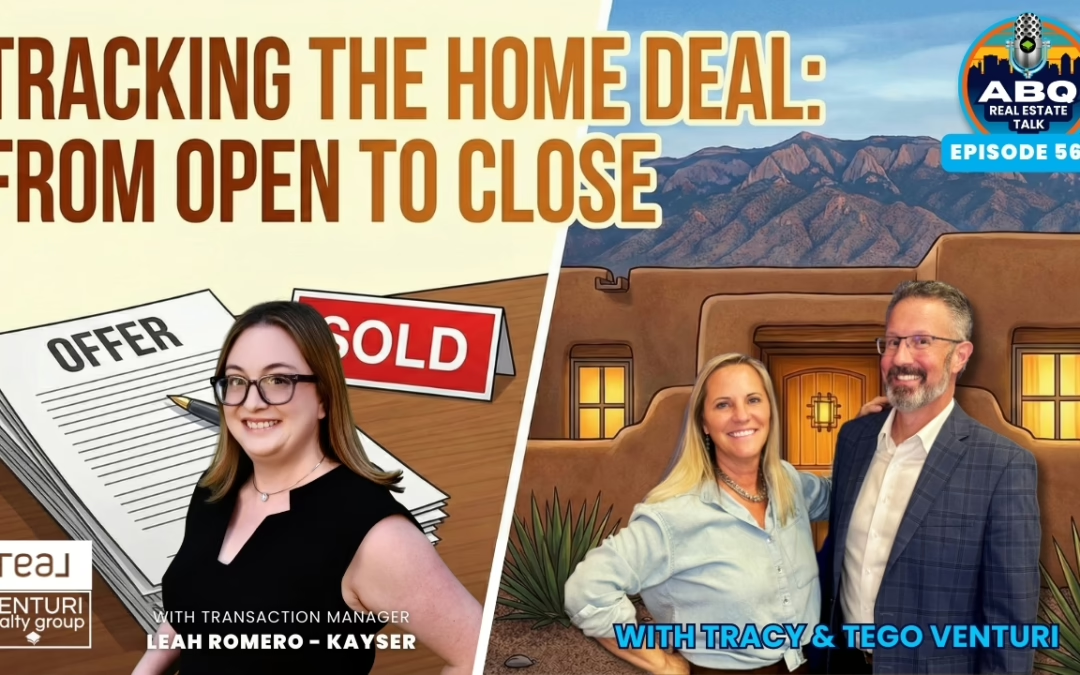
The Ultimate Step-by-Step Guide to Buying a Home in New Mexico

The Ultimate Step-by-Step Guide to Buying a Home in New Mexico

The Ultimate Step-By-Step Guide to Home Buying in New Mexico

By Venturi Realty Group

Buying a home in New Mexico is a major milestone. It affects where you live, how you live, and how you build wealth over time. For many people, especially in the middle class, real estate is where most of their net worth ends up. As Tego Venturi explains, “Home ownership provides stability. It’s a strong financial foundation for people, and most net worth is built by home ownership, at least in the middle class for sure.”

At the same time, jumping into homeownership before you’re ready can create stress. The New Mexico home-buying process involves money, contracts, inspections, deadlines, and a lot of decisions. Understanding each step before you start makes the journey smoother, whether you’re buying in Albuquerque, Rio Rancho, Corrales, Placitas, the East Mountains, Los Lunas, or anywhere in between.

This guide walks through the main stages of buying a home in New Mexico—from deciding if you’re ready, to choosing your real estate agent and lender, to house hunting, making an offer, navigating inspections and appraisal, and finally closing and moving in. Along the way, you’ll see insights and quotes from Tego and Tracy Venturi’s full video guide (available here), based on helping thousands of buyers successfully purchase homes throughout the Albuquerque area.

Step 1: How to Know If You’re Ready to Buy a Home in New Mexico

The first step to buying a house in New Mexico is getting honest about where you stand right now. Are you financially ready? Are you personally ready for the responsibility of homeownership? And does the timing make sense for your life over the next few years?

Start with the basics: Do you have steady income that you can count on? Do you know your credit score, or at least whether you have established credit? Have you begun saving for a down payment, closing costs, and a small emergency fund for repairs or surprises? Are you prepared for home maintenance, yard work, and the realities of owning instead of calling a landlord when something breaks?

“Once you go through that, you have a few yeses… yes, I’m ready. Let’s talk about some of the things that you might wanna talk about.” – Tracy Venturi

Next, think about how long you plan to stay. If you expect to move again in a year or two, renting may still make more sense. If you plan to stay in the area for several years, buying can give you stability, predictable housing costs, and the chance to build equity over time instead of sending rent to a landlord.

“If you’re only gonna be somewhere for a year or two, probably you shouldn’t be buying a house.” – Tego Venturi

To make this easier, Tego created a simple online tool that walks you through these readiness questions in a structured way. The New Mexico Homebuyer Readiness Quiz helps you quickly see where you’re strong and where you might need to shore things up before you start shopping.

“And you are probably readier than you think. If you’re watching this and you’re thinking about home ownership, you’re probably ready.” – Tracy Venturi

Before you scroll another listing or fall in love with a house online, take a few minutes to complete the quiz. It’s a quick way to get a snapshot of your status as a New Mexico homebuyer and to know what to talk about next with a real estate professional or lender.

Step 2: Choosing the Right Real Estate Agent in Albuquerque and Beyond

Once you’ve taken stock of your readiness—and ideally completed the quiz—the next step is choosing who will represent you in the purchase. Many buyers start by scrolling a big national website and clicking “talk to an agent,” not realizing they’re being assigned to whoever is next in line. That’s rarely the best way to find the right fit for such a major decision.

“You should choose your realtor, not have some website choose your realtor for you and say you’ve now been assigned this realtor.” – Tracy Venturi

In New Mexico, you’ll see terms like “realtor,” “broker,” and “agent.” Most professionals here are associate brokers or brokers; “Realtor” is a licensed broker who is also a member of the National Association of Realtors. Labels aside, the important thing is what that person does for you and how they show up during the process.

“When you hire a realtor, a broker, they work for you, they advocate for you. That is their job. But you still make the decisions.” – Tego Venturi

For a smooth home-buying experience in the Albuquerque area, look for a local real estate expert who:

  • Knows the neighborhoods you’re considering (Northeast Heights, Westside, Rio Rancho, Corrales, Placitas, East Mountains, Los Lunas, Belen, and more)
  • Has strong negotiation skills and a solid track record working with buyers
  • Communicates clearly and in the way you prefer (text, phone, email, video)
  • Is willing to give you honest feedback, even when it’s not what you hoped to hear

It’s also smart to talk up front about how you like to work: how often you want updates, what times of day are best to reach you, and how direct you want your agent to be with their opinions and advice. The more aligned you are on expectations, the easier the rest of the journey will be.

Understanding the New Buyer-Broker Agreement Rules

As part of these newer industry rules, buyers now sign a written buyer-broker agreement before touring homes. For some people, the idea of “signing something” early in the process can feel intimidating, but the agreement is designed to protect you and bring clarity—not to trap you.

The agreement explains in writing that your broker represents you, owes you certain duties, and will advocate for your interests throughout the transaction. It also spells out how they are compensated, whether that comes from the seller, from you directly, or from some combination, so you’re not guessing about who pays what and when.

Importantly, this does not mean you are locked into a long-term relationship you can’t get out of. The length and scope of the agreement can be tailored to your comfort level. It can be as short as one day if you simply want to see a single home, or it can cover a longer period if you are actively searching across multiple neighborhoods. If it’s not the right fit, it can be ended and reworked so you feel good about who is representing you.

The goal is transparency and trust. You know who is working for you, how they are paid, and what you can expect from them. Your agent knows you are serious enough about the process to formalize the relationship. From there, everyone can focus on what matters most: finding the right home and guiding you safely through the New Mexico home-buying process.

Are You Really Ready to Buy a Home in New Mexico?

Before you start touring homes or writing offers, it helps to pause and honestly assess where you stand today. Use these checkpoints as a quick self-audit, then back it up by taking the Homebuyer Readiness Quiz so you can see your strengths and gaps in black and white.

  • Check your core financial readiness
    Do you have a steady, reliable income, know your credit score (ideally 600+), and have at least started saving for a down payment and closing costs while keeping a small emergency fund in place? If any of those pieces feel shaky, the quiz will highlight where to focus first.
  • Understand loan options and pre-approval
    Are you curious about FHA, VA, Conventional, and down payment assistance programs, and do you want to learn what pre-approval really means for your buying power in today’s New Mexico market? Answering a few guided questions can show whether you’re ready to talk to a lender now or still gathering pieces.
  • Confirm your lifestyle and emotional readiness
    Can you see yourself living in the home for at least three years, taking on maintenance and repairs, and making realistic trade-offs because you know no home is absolutely perfect? The quiz helps you think through how homeownership fits your daily life, not just your budget.
  • Make sure everyone in your household is aligned
    Have you talked through homebuying plans with anyone you might live with or purchase with, including why you want to buy—whether that’s stability, equity, family needs, or simply more control over your space? Shared answers to the quiz questions can spark the right conversations before you jump in.
  • Review your timing and life plans
    Does your lease or current living situation line up with a possible move in the next six months, and do your job, income, commute, and lifestyle needs feel stable enough to support a long-term commitment? A few quiz questions about timing and plans can reveal whether “now” or “later this year” is your better window.
  • Prepare strategically for the process
    Are you ready to choose a trusted real estate agent, sign a buyer-broker agreement before touring homes in New Mexico, and learn how the full process works from offer and negotiations through inspections and closing? Your quiz results can become the roadmap for those next conversations.
  • Stay confident through bumps in the road
    Do you feel prepared for the fact that things may not go perfectly, and are you willing to walk away if inspection results, financing, or your instincts tell you that a home isn’t the right fit—even if you love how it looks? The more clarity you have upfront, the easier it is to stay calm and confident when the process gets intense.

Take a couple of minutes now to see where you stand—then use your results to decide what comes next, whether that’s fine-tuning your finances, talking with a lender, or scheduling a strategy session with a local agent.

TAKE THE HOME BUYER READINESS QUIZ NOW

Snapshot: New Buyer-Broker Agreement Rules

  • Written agreement before showings
    Your broker now needs a signed buyer-broker agreement in place before they can start showing you homes.
  • Clear representation and duties
    The agreement explains that your broker represents you, works for you, and advocates for your interests while you remain the decision-maker.
  • Compensation explained up front
    How your broker is paid—by the seller, by you, or some combination—must be discussed and documented at the beginning.
  • No guessing about who pays what
    Instead of wondering how real estate professionals get paid, everything is disclosed in writing so there are no surprises later in the process.

Step 3: Why a Local New Mexico Lender Matters for Your Home Purchase

After you’ve checked your readiness and chosen your real estate agent, the next move is to partner with a lender who understands the New Mexico market. The right lender can make your offer stronger and your entire home-buying experience smoother, from pre-approval to closing.

“I think of it as a trifecta, the three of us. You as a buyer, us as your realtor, and your lender… so that we can work together.” – Tracy Venturi

A strong local lender will help you:

  • Understand how much you can comfortably afford in a monthly payment
  • Explore different loan programs like Conventional, FHA, VA, USDA, and New Mexico-specific down payment assistance
  • Calculate how much cash you’ll need for down payment and closing costs
  • Get pre-approved so sellers take your offer seriously

When you compare lenders, don’t look at interest rate alone. Fees can vary widely from one lender to another, and a slightly lower rate can be offset by higher upfront costs.

“One of the things that a lot of buyers don’t ask is, how much do you charge me to do the loan?… We wanna make sure that you’re not just looking at interest rate, but you’re also finding out what the lender charges you.” – Tracy Venturi

Your lender will also help you think in terms of your total monthly payment—principal, interest, property taxes, homeowners insurance, and any HOA dues (PITI). That all-in number is what most New Mexico homebuyers use to decide whether a property fits comfortably within their budget.

Step 4: Define Your Home-Buying Needs, Wants, and Trade-Offs

With your lending in place, it’s time to define what you actually want in a New Mexico home. A buyer strategy session connects your budget to your daily life. You’ll talk about how you live now and how you want to live in your next home: Do you host large gatherings? Work from home? Need space for hobbies, toys, or pets?

Bedrooms and bathrooms matter, but so do features like a big great room, a separate office, a three-car garage, or a flexible loft. In the Albuquerque metro area, location is another major factor. You might prefer an established area like the Northeast Heights, newer construction on the Westside, the open feel of Rio Rancho, or smaller communities like Corrales, Placitas, the East Mountains, Los Lunas, or Belen.

“You need to make your list of must haves. You need to make your list of, wow, it’d be great to have…” – Tego Venturi

As you refine your list, you’ll separate true must-haves from “it would be nice” features. At the same time, it’s important to remember that every home comes with trade-offs.

“There’s always gonna be trade-offs… we call [it] the tradeoff triangle.” – Tracy Venturi

The tradeoff triangle usually comes down to three things: location, size/condition, and price. Looking at real MLS data makes it clear how these three are connected in the New Mexico housing market, and helps you decide where you’re willing to compromise.

Step 5: How to Search for Homes in the Albuquerque Area

Once you know what you’re looking for, you can start searching for homes. Most online listings, whether you see them on national sites or local brokerage sites, are fed from the same source: the Southwest MLS. That means a home for sale in Albuquerque, Rio Rancho, or the surrounding areas should appear across multiple sites with the same basic information.

“For the most part, homes that you see on one national website and another… they’re gonna be the exact same home ’cause [they’re] all sourced through the same central source.” – Tego Venturi

Working with a local agent adds another layer. Some opportunities—like certain coming-soon listings, office exclusives, pre-market homes, and new construction—may not be widely advertised online but are known within broker networks.

“That’s one of the beauties of working with a realtor. We might know about off-market properties… things that are kind of in a hopper somewhere.” – Tracy Venturi

Beyond the listings themselves, smart buyers use tools that help evaluate the surrounding area:

  • Google Maps and Street View to “walk” the neighborhood
  • Walk score maps to see nearby coffee shops, groceries, and services
  • School information sites to compare districts and programs
  • Crime and noise maps for an added layer of context
  • Zoning maps to understand what might be built nearby in the future

“Google Maps is amazing… you can walk up and down the street and see homes on both sides.” – Tego Venturi

A quick look online can reveal how busy a street is, how neighbors park, what’s behind the home, or whether there’s open land that might be developed later. That kind of homework helps you narrow down which properties are truly worth an in-person visit.

Step 6: Acting Quickly on the Right Home and Writing a Strong Offer

In every market, certain homes stand out. The best-priced, best-presented properties in popular areas of Albuquerque and surrounding communities still attract a lot of attention. Being prepared to act when a standout home hits the market is crucial.

Your agent’s job is to help you recognize when a home truly fits your needs and budget, not to pressure you into something that doesn’t feel right.

“I can’t sell you a house you don’t wanna buy… But when you find the right house, I see it. I watch buyers… they’re starting to place furniture, they’re picking out their bedrooms.” – Tracy Venturi

When you’re ready to make an offer, you and your agent will use New Mexico’s standard purchase agreement forms. Together, you’ll decide on:

  • Offer price and closing date
  • Inspection and due diligence timelines
  • Appraisal contingency
  • Earnest money and, in some cases, independent consideration
  • Any specific terms that matter to you or the seller

“All of these contingencies… that’s where we as the realtor consult and say, okay, well let’s sit down and put together what that offer looks like. What’s comfortable for you?” – Tracy Venturi

If there are multiple offers, your agent can use relationships and communication to find out what matters most to the seller—price, timing, rent-backs, or other details—and help position your offer as strongly as possible within your comfort zone.

Step 7: Inspections, Appraisal, Title, and Insurance

Once your offer is accepted, the contract-to-close period begins. In many New Mexico home purchases, this phase lasts about 30 to 45 days. It includes inspections, appraisal, title work, insurance, and final loan approval.

Most buyers schedule a full home inspection with a licensed inspector who checks the property from top to bottom. Depending on the home, you might also order radon testing, pest or termite inspections, septic or well inspections, or evaluations for solar, pools, or other features.

“We make sure the home is safe, sound, [and] truly what you expected before you commit to fully closing.” – Tracy Venturi

At the same time, your lender orders an appraisal if your loan requires it. The appraiser evaluates the home’s size, condition, and location and compares it to recent sales to provide an opinion of value.

“The appraiser’s gonna verify square footage, look at the quality of the finishes, and determine the value… they’re basically the eyes of the lender.” – Tracy Venturi

Title work confirms that the seller can transfer clear ownership to you and that no unexpected liens or claims are attached to the property. You’ll also shop for homeowners insurance. That step is more important than many people realize, especially in areas with higher fire or flood risk or in homes with a long history of insurance claims.

“There are houses that have had a lot of homeowners insurance claims, and they’re considered a higher risk for insurance companies.” – Tracy Venturi

During this same period, your lender is verifying your income, assets, and employment, sending your file through underwriting, and coordinating the final conditions for loan approval. This can feel like the most intense part of buying a home because many people need information from you at once.

“This is the most stressful part for the buyers… there’s gonna be a lot coming at you and [you should] lean on your realtor to help you navigate the steps as you go along.” – Tego Venturi

Your agent can help you prioritize requests, keep everyone on track, and use inspection results to negotiate repairs or credits before you move forward to closing.

Step 8: Closing on Your New Mexico Home and Getting the Keys

All of your preparation leads to closing. In New Mexico, closing involves a final walkthrough, signing your documents, recording the sale, and then receiving the keys. The final walkthrough is your chance to confirm the home is in substantially the same condition as when you last saw it and that agreed-upon repairs have been completed.

After that, you’ll sign your closing package with the title company. Once documents are signed, the lender funds the loan, the transaction is recorded with the county, and the home officially becomes yours. Keys are usually released the same day or the next business day, depending on the timing.

“Closing day… signing, closing, get your keys. Yay.” – Tracy Venturi

Then comes move-in day and the start of life in your new home. You’ve navigated the New Mexico home-buying process from readiness to search, offer, due diligence, and closing—and taken a major step toward long-term stability and the pride of homeownership.

Your Next Steps as a New Mexico Homebuyer

For buyers across Albuquerque and the surrounding communities, the path to homeownership follows a clear sequence: understand your readiness, choose a trusted local agent, partner with a strong lender, define your needs and trade-offs, search smart, write a solid offer, complete inspections and appraisal, and close on your new home.

“Figure out if you’re really ready… talk to a local realtor… get your lending in place… do your needs and wants evaluation… start your house hunting… then it’s the offer process… then it’s that whole due diligence… and then it’s closing and you celebrate and you move in.” – Tego Venturi

If you’re thinking about buying a home in New Mexico—whether it’s your first home purchase or you’re moving up, downsizing, or relocating—use these steps to plan your move. From there, you can take the readiness quiz, explore neighborhoods that fit your lifestyle, and connect with a local real estate team that can guide you through every stage of the process.

Have questions about Albuquerque real estate?

If you are thinking about buying or selling, or just want to understand how the current market affects your plans, our team is here to be a resource.

Call or text: (505) 448-8888
Email: info@welcomehomeabq.com
Website: WelcomeHomeABQ.com

Venturi Realty Group of Real Broker, LLC

Albuquerque Real Estate Trends: November 2025 Market Update (Slow but Steady)

Albuquerque Real Estate Trends: November 2025 Market Update (Slow but Steady)

Albuquerque Real Estate Trends: November 2025 Market Update (Slow but Steady)

November 2025 was one of the slowest months we’ve seen in a while for Albuquerque home sales. Closings dropped, prices stayed basically flat, and inventory inched up but remains below pre-2020 levels. Here’s what the data really says and what it means if you’re thinking about buying or selling in 2026.

  • Closed sales in November fell to 638, down about 12% from November 2024 and almost 200 fewer than in October.
  • Prices are flat to slightly up for 2025 overall: median at $355,000 across all home sales in November, 1.4% lower than November 2024.
  • We expect annual appreciation to be ~2–3% higher year-over-year for the full year.
  • Inventory sits around 2,086 homes, up ~5% from last year but still slightly below 2019 levels at this time of year.
  • Days on Market has drifted back toward a “normal” pace at about 49 days, similar to 2018–2019.
  • National forecasts call for a ~14% jump in home sales next year, which could mean roughly 1,400 more closings in the Albuquerque area if that plays out locally. :

Market Snapshot – November 2025

November was sluggish. Only 638 single-family homes (attached and detached) closed in the Albuquerque area, about 190 fewer than in October and roughly 12% below November 2024’s 728 closings. Year-to-date, though, total 2025 sales are still slightly ahead of 2024, so November looks more like a soft patch than a collapse.

On the pricing side, the median sales price came in at $355,000 in November, down 1.4% compared to November a year ago and off from October’s $362,750. But when you zoom out beyond a single month, 2025 still looks like a modestly positive year for prices, with overall appreciation tracking in the 2–3% range and price-per-square-foot for November running exactly flat versus last year.

Why it matters

  • Buyers: You’re not fighting runaway price gains. A flat-to-modestly-up market gives you more room to negotiate and more time to think.
  • Sellers: You can still sell at or near the peak values achieved over the last couple of years, but you can’t count on multiple offers day one. Strategy and pricing matter again.
  • Investors: A boring market is usually a healthy market. Small, steady gains are more sustainable than boom-and-bust cycles.
Weekly Altos-style snapshot: inventory dipped seasonally into late November, buyer activity pulled back over Thanksgiving, and showings are now ticking back up as we move through December.

Foot Traffic & Buyer Demand: Holiday Dip, Normal Pattern

One of the best forward-looking indicators we watch is showing activity—how many buyers are actually out touring homes each week. In 2025, showings slid sharply at the end of November, right on cue with the Thanksgiving holiday. That same late-November drop shows up in every recent year on the chart. After the holiday, activity starts to recover into December, then takes another pause around Christmas.

Overall, 2025 has fewer buyers out shopping than some of the boom years, but the showing trend looks very similar to 2024. Fewer house hunters, yes. But not a ghost town.

Why it matters

  • If you’re selling: Expect fewer showings over the holidays. That doesn’t mean your home is “broken” – it’s just the calendar.
  • If you’re buying: This is a sneaky window of opportunity. With fewer competing buyers in November and December, you may have more negotiating room.

Inventory: Up From Last Year, Still Below 2019

Active listings for November clocked in at about 2,086 homes on the market. That’s roughly 4.9% more inventory than one year ago and about 300 fewer homes than we saw in October as sellers started to pull back heading into the holidays.

When we look at a longer weekly view back to 2019, Albuquerque has more homes on the market than in the tight-supply years from 2020 through 2024, but still fewer than in 2019, when there were about 2,150 active listings at the same time of year. Many large markets nationally have already moved above their 2019 inventory levels, but Albuquerque remains a bit undersupplied by that benchmark.

Why it matters

  • Still a supply shortage: We have more homes to choose from than during the extreme pandemic squeeze, but not a glut.
  • Pricing support: Slightly tight inventory helps keep prices from falling even when demand is soft.
  • Strategy for sellers: With fewer new listings hitting the market through January and early February, a well-prepared listing can stand out.
Long-term Albuquerque price and inventory trends: strong post-2020 appreciation followed by a shift into low single-digit annual growth and modestly higher inventory through 2024–2025.

Days on Market: Back to a “Normal” Pace

Average Days on Market (DOM) for homes that actually sold in November landed at 49 days. That’s strikingly similar to February 2020, right before the pandemic, which sat at about 45 days. It also feels a lot like the 2018–2019 market—slower than the frenzy years, but still healthy.

Remember, DOM measures how long a property sits from Active status until it goes under contract (Pending). It doesn’t include the homes that never sell, only the ones that find a buyer.

Why it matters

  • Buyers: You have time to think, inspect, and negotiate. Homes aren’t vanishing in 24 hours anymore.
  • Sellers: A realistic expectation is key. If your home takes 30–60 days to go under contract, that’s not failure – it’s the market.
  • Pricing check: If you’re well beyond the average DOM for your price bracket, it’s a signal to revisit price, condition, or marketing.

Pending Sales & New Listings: Quiet but Steady

Looking at “homes in pending” each week, we finished November with 969 pending sales, and the 90-day moving average sat around 1,021—just a hair above the same point in 2024 (about 1,002). That tells us there is steady contract activity happening behind the scenes, even if the closed sale count looked weak in November.

New listings are following their usual seasonal pattern. They dropped off sharply through late November and will likely keep easing down into January before picking up again in February and March. For several years in a row, that pattern has repeated almost like clockwork.

Why it matters

  • Buyers: You’ll see fewer fresh options over the holidays, but you can still find opportunities among existing inventory and homes returning to the market.
  • Sellers: Less competition from new listings can help your home stand out if you’re willing to list in December or January.

How Albuquerque Compares & What’s Next for 2026

Compared to some big markets—parts of Texas, Denver, and Phoenix—Albuquerque has held up better on prices, with far less downward pressure. Our median of $355,000 and average price around $410,000 still sit below many regional peers, even as we wrestle with our own affordability challenges.

Nationally, the National Association of REALTORS® is projecting about a 14% increase in home sales for next year. If that plays out here, it would mean roughly 1,400 more closed sales on top of the ~10,000 transactions expected in our market for 2025. We’ll see how that forecast lines up with reality once we get into the spring selling season.

Why it matters

  • More move-up and move-down buyers: As rates and affordability stabilize, some of the “locked-in” owners may finally make their move.
  • Pricing stability: A moderate increase in sales without a major inventory surge usually supports flat-to-modest price gains.
  • Planning window: If you’re targeting a move in 2026, now is a good time to tighten up your finances and get a strategy in place.

Buyer & Seller Q&A – November 2025 Edition

Q: Are Albuquerque home prices going up or down right now?

A: For November 2025, the median price was $355,000, down about 1.4% from last November. But looking at the full year, prices are roughly 2–3% higher than 2024, and price-per-square-foot for November is flat year-over-year. In plain English: prices are basically holding steady, not surging or crashing.

Q: Why were November 2025 home sales in Albuquerque so slow?

A: We only saw 638 closings in November, which is low for our market and notably weaker than both October and last November. The holiday calendar, fewer active buyers, and a slower national economy all play a role. The good news is pending sales and showings suggest it’s a soft patch, not a full stop.

Q: How many homes are for sale in Albuquerque right now?

A: The November reading showed about 2,086 active listings. That number moves daily, but it’s a good snapshot: slightly more homes available than last year at this time, but still a bit below 2019 levels, so we’re not in a high-inventory buyer’s market yet.

Q: Why are homes staying longer on the market?

A: Average Days on Market is now around 49 days—up from the frenzy years but similar to 2018–2019 and to pre-pandemic 2020. DOM measures how long it takes a home to go from Active to Pending. With more balanced supply and demand, it’s normal for homes to take 30–60 days to find the right buyer.

Q: Is 2025 a good time to buy a house in Albuquerque?

A: For many buyers, yes. Prices are stable, inventory is modestly higher, and you’re not fighting bidding wars on every well-priced home. Whether it’s “good” for you depends on your budget, job stability, and time horizon. If you plan to own for 5–10 years, a flat or slow-growth market like this can be a solid entry point.

Q: Is now a good time to sell my home in Albuquerque?

A: If you have a compelling reason to move, you can still sell successfully. Prices are near their highs, and inventory is not excessive, which helps well-priced, well-prepared homes stand out – especially during the winter when new listing counts are lower. If you’re flexible on timing, we’ll help you decide whether an early-spring or late-winter launch makes more sense for your specific neighborhood and price point.


About Venturi Realty Group — Data-driven Albuquerque real estate pros with 4,000+ closed transactions and active involvement in GAAR and SWMLS. We host the Albuquerque Real Estate Talk podcast and provide weekly market updates to help you make informed decisions. Call 505-448-8888 or visit WelcomeHomeABQ.com.

Albuquerque Market Updates | Search Homes | Contact Venturi Realty Group

The Myth of the Holiday Real Estate Dead Zone in Albuquerque

The Myth of the Holiday Real Estate Dead Zone in Albuquerque

The Myth of the Holiday Real Estate Dead Zone in Albuquerque

Albuquerque Real Estate Talk Episode 561 · Recorded December 4, 2025

Is the holiday season really a “dead zone” for Albuquerque real estate? In this episode of Albuquerque Real Estate Talk, Tracy and Asel Venturi sit down with marketing director and moderator Samuel Anderson to unpack what really happens in our market between Thanksgiving and New Year’s. Many people assume they should hunker down and wait until spring, but the reality on the ground tells a very different story.

While it’s not peak selling season in our part of New Mexico, there are still motivated buyers and sellers out there. Every showing this time of year tends to be serious, inventory is low, and great homes are still getting multiple offers and selling quickly. At the same time, the team acknowledges the very real lifestyle challenges that come with selling during a season filled with entertaining, baking, decorating, and family traditions—and they share practical advice to help you decide what timing works best for you.

Beyond the holiday “dead zone” myth, the conversation also touches on how to handle open houses and décor in December, how long it really takes to close, whether you can still move before year-end, what buyers, sellers, and fellow Realtors should be thinking about going into 2026, and a few favorite local holiday traditions and light displays around Albuquerque and Santa Fe. :contentReference[oaicite:0]{index=0}

Is the Holiday Season Really a “Dead Zone” for Real Estate?

According to Tracy and Asel, the “holiday dead zone” idea is more myth than reality. It may not be peak selling season in Albuquerque, but there are still serious buyers and sellers in the market. Sellers who list now often want to be sold by the end of the year, and buyers who are touring homes in December are typically not casual “looky-loos”—they’re carving out time during an already busy season, which usually means they’re motivated to move forward if they find the right home.

Why Sellers Shouldn’t Automatically Wait Until Spring

When homeowners look at the calendar and see only a few weeks left in the year, the instinct is often to wait until January or spring. Tracy’s advice is simple: if you need or want to sell, don’t wait for an arbitrary date on the calendar. This time of year usually brings some of the lowest inventory levels, so you may actually face less competition from other sellers. Every showing has a higher likelihood of being a serious buyer, not someone just passing time touring homes for fun.

That said, the team is realistic about the trade-offs. If you host a lot of gatherings, bake cookies, or go all-in on decorating, having your home on the market can feel stressful. Scheduling showings and keeping the house show-ready sometimes conflicts with things like holiday parties, tamale-making days, or family visiting. Ultimately, it has to be the right time for you personally, even if the market conditions are favorable.

Open Houses Still Work in December

Sam asks whether open houses are still effective during the holiday season, and Asel’s experience is that they can be very successful. As the end of the year approaches, people often have more time off work and are out and about shopping for the holidays. If they see an open house sign, they may very well stop in. Tracy notes that their team still holds open houses in December, and they tend to draw good traffic—as long as the schedule works for the seller’s plans.

The team also talks about making open houses more of an “event” during the holidays. One of the team’s brokers recently hosted a themed open house with hot cocoa, marshmallows, and ginger snaps over Thanksgiving weekend. Simple touches like seasonal treats, music in the background, and a cozy fire (if available) can make the home feel warm and inviting and give buyers a memorable experience.

Holiday Décor When Your Home Is on the Market

How Much Decorating Is Too Much?

A big question sellers ask is whether they should decorate at all once their home is on the market. Tracy’s answer is that a little holiday décor is absolutely fine—you should still be able to enjoy your season. She does caution against going over the top with decorations that block key features of the home, such as a beautiful view behind a giant tree. It’s also wise to be mindful that not every buyer celebrates the same holidays, so keeping things tasteful and not overly specific is often the best approach.

HGTV vs. Real-Life Buyers

Tracy also pushes back a bit on the typical “HGTV” advice to strip a home of all personal and family items before listing. While decluttering and simplifying is important, she believes completely sanitizing the space can work against you. Many buyers walk into a home and immediately want to know who lives there and what their life feels like. One nice family photo that shows people enjoying the home can help create an emotional connection and convey that it’s a happy, well-loved place.

Asel agrees and notes that buyers often ask what the sellers were like. She recently showed a home in Positas that was a great example of striking that balance. The sellers clearly still lived there and had young children, but the home was very clean, with a few thoughtful holiday decorations. There was even a balloon tucked away from a recent third birthday. It still felt warm and lived-in without being cluttered.

Showcasing Your Home in Its Best Season

The team also revisits a topic they’ve discussed before: capturing photos of your home during different seasons. They’re already holding photos for sellers planning to list in February or March, taken while yards were still green and trees had leaves. For winter listings, those earlier photos can show buyers what the property looks like in “full glory,” especially if there’s a lush yard or a standout outdoor space.

Many sellers also share their own favorite shots—like hot air balloons floating over their yard during Balloon Fiesta, or incredible sunset views. The team recently listed a home on Hollywood Boulevard in Corrales where the sellers provided stunning photos of balloons, city lights, and sunsets over Albuquerque. For out-of-state buyers, these images help them see not just the house, but the lifestyle and views they’re buying into.

Holiday Market Reality Check for Albuquerque Buyers & Sellers

  • The “holiday dead zone” is a myth
    Even though it’s not peak season, serious buyers and sellers are still active, and great homes continue to sell quickly in December.
  • Low inventory can work in your favor
    This time of year often brings some of the lowest inventory levels, which means less competition for sellers and more focused choices for buyers.
  • Every showing is usually a serious buyer
    During the holidays, people are busy with family and events, so those touring homes are typically motivated and intentional about making a move.
  • Open houses can still attract strong traffic
    With more people off work and out shopping, well-timed open houses—especially with a light holiday theme—can draw in quality visitors.
  • Enjoy décor without hiding your home
    A bit of seasonal decorating is fine, but avoid blocking key features like views and keep the focus on the home’s best attributes rather than elaborate displays.
  • Be ready if you want to close by year-end
    If your goal is to move before December 31, work closely with your lender, gather your documents early, and be prepared to move quickly once you find the right home.
  • Related note: timing should serve your life
    The team emphasizes that the best time to buy or sell is when you’re ready—holidays included—so your personal needs should drive the plan, not just the calendar.

Holiday Market FAQs from Albuquerque Buyers & Sellers

How long does it take to close on a home?

One of the most common questions Asel hears is, “How long does it take to close?” The answer depends on whether you’re paying cash or financing. Cash purchases can often close much faster because there’s no lending process. For financed purchases in our market, a typical timeline is about 30 to 45 days from accepted contract to closing.

Even when lenders are capable of closing in 14 to 21 days for many loan types, other pieces of the process still take time. Buyers usually order home inspections, review the reports, and then negotiate a repair request with the seller. That “second negotiation” can easily stretch over a couple of weeks as inspections are scheduled, reports are returned, and any needed work is discussed.

New construction can sometimes move quicker, especially at times like early December when some builders are offering strong incentives for homes that can close by year-end. With a new home, you may still choose to inspect, but major surprises are less common and the builder’s crews are typically on site and able to address items quickly. In the right scenario, it’s possible to go from contract to move-in in just a few weeks.

Is it too late to be in a home by the end of the year?

Sam poses the natural follow-up: if you start looking now, can you still be in a home by December 31? Asel’s answer is “yes, absolutely”—as long as you’re prepared. The biggest factor is how quickly you can provide your lender with required documents: two months of bank statements, tax returns, credit card statements, and any other financial information they request. Delays in gathering paperwork are often what slow down the process.

Tracy adds that if you already have a trusted lender, an updated pre-approval, and your documents in hand, getting into a home by the end of the month is very doable. The team routinely works around clients’ holiday schedules, even showing homes on Christmas Eve or New Year’s Day when that’s the only time buyers can get out. They also have several clients flying in over the next two to three weeks specifically to tour homes; for those buyers, the team is watching new listings closely and making sure lending is underway so they’re ready to move quickly.

However, they point out that even in a “quieter” season, the best homes don’t sit. Great properties are still seeing multiple offers and going under contract fast. If you’re coming in from out of town or waiting to decide after your trip, you may find that some of the homes you liked on paper are already gone by the time you’re ready to write.

Why “when you’re ready” matters more than the calendar

Throughout the episode, the team echoes Tego’s core message: the best time to buy or sell is when you’re ready, not when the calendar says it’s officially spring or fall. For some people, the holidays are the only window when they have vacation days to house-hunt. For others, the thought of keeping a show-ready home during December is more stress than they want. The key is to align your real estate plans with your life—knowing that the market is still moving and that serious buyers and sellers are active year-round.

Looking Ahead to 2026: Education, Support & Teamwork

Launching a video FAQ library

As the team looks toward 2026, Sam shares that they’re building out a robust video FAQ library for their website and YouTube channel. The goal is to be a true educational resource—not just for buyers and sellers, but for other Realtors as well. They’re starting by collecting the questions they hear most often, like “How long does it take to close?” and “Can I start now and be in a home by the end of the year?” and turning those into concise video answers people can access anytime.

They also invite listeners and viewers to share their own burning questions—the one real estate topic where they’d love a clear, straightforward explanation. Those questions will help shape future episodes and video content so that the information the team creates is directly aligned with what the community wants to know.

Thinking about joining a real estate team?

Later in the conversation, Tracy addresses fellow Realtors who may be rethinking their business model for 2026. With annual dues coming up and a shifting real estate landscape, many solo brokers are asking whether they should stay in the business, change brokerages, or join a team. While she doesn’t focus heavily on recruiting, Tracy points out that their team and brokerage (Real Broker) offer opportunities for agents who want more support and collaboration.

On the marketing side, Sam handles video production, YouTube, Instagram, and paid advertising for the team’s listings, giving agents and their sellers a professional marketing platform. Behind the scenes, their transaction coordinator and listing manager, Leah, brings deep knowledge to help manage contracts and listings smoothly. Add in training, resources, and the camaraderie of a well-functioning group, and agents on the team don’t have to navigate complex situations alone.

The power of mentorship and coverage

Asel, who is earlier in her real estate career but grew up around the business, highlights how valuable it is to have seasoned brokers available to bounce ideas off and make sure she’s on the right track. When questions come up, there’s always someone on the team who has handled a similar situation and can offer guidance. Sam has noticed the same pattern at team meetings—when one agent brings a challenge, another almost always has relevant experience to share.

Another benefit Asel appreciates is having “cover” when she’s out of town or unavailable; teammates can step in to help clients so service doesn’t skip a beat. Tracy also notes that some solo agents do have great mentors, often their qualifying broker or the person who introduced them to real estate. But for those who don’t feel adequately supported, she encourages an honest conversation about whether joining a team or exploring options with Real Broker might be a better fit for the coming year.

Enjoying Albuquerque’s Holiday Lights & Traditions

Holiday light maps and musical displays

To end the episode on a lighter note, the team shifts into some of their favorite holiday traditions around Albuquerque. Sam shares that the city has become quite a hotbed for elaborate holiday light displays since around 2020, including an impressive, user-generated Albuquerque holiday light map. The map highlights everything from luminarias and giant Christmas trees to musical light shows, and it continues to grow as homeowners add their displays throughout the season. Listeners can access it via the short link at abq.re/ABQlights.

Tracy mentions an especially memorable musical display created by the daughter and son-in-law of their colleague, Susan Buckman, at 6401 Pepperdine NE. The synchronized lights and music create a full “show,” and they’ve even broadcast it live in the evenings on Facebook so people can enjoy it virtually.

Luminarias, farolitos, and neighborhood traditions

The conversation turns to one of New Mexico’s most beloved traditions: luminarias. Tracy notes that while many people in Albuquerque call the brown paper bags with candles “luminarias,” friends and fellow Realtors in Santa Fe often refer to them as “farolitos,” and the terminology has become a friendly distinction between the two cities.

Tracy loves the luminaria displays in Old Town and the Country Club neighborhood on Christmas Eve and hopes for calm, wind-free weather so the candles stay lit. She recommends heading down later in the evening after the busiest traffic has died down; the candles can burn for about ten hours, so a late-night cruise with headlights off and slow driving still lets you take in the magic without the gridlock. She and Tego recently visited Santa Fe as well, where the plaza was already lit with lights in the trees and musicians performing around the square.

Local events: Shop & Stroll, River of Lights, and neighborhood displays

Asel brings up the River of Lights at the ABQ BioPark Botanic Garden, for which she purchased tickets online with a specific arrival window. Scheduling entry times helps spread out crowds and manage the heavy traffic that in past years has sometimes backed up all the way to I-40. Tracy recalls seeing those traffic jams when visiting family near Old Town and emphasizes that, while it can be hectic, the display is worth it—just be sure to bundle up, especially on colder nights.

The team also mentions the 30th annual Nob Hill Shop & Stroll taking place on December 4, encouraging people to layer up and enjoy the festivities. Sam shares that his favorite luminaria drive is through the Solar neighborhood off Fourth Street, where the entire community participates and the route winds past Alvarado Elementary School. Ridgecrest is another area where homeowners tend to go all-out with both luminarias and holiday lights, and many other neighborhoods around the city embrace their own traditions as well.

Whether you’re touring homes, preparing to list, or simply enjoying the lights with family, the holidays in Albuquerque offer a unique blend of market opportunity and local charm. And through it all, the Venturi Realty Group is here as a resource—ready to help you make smart real estate decisions whenever the timing is right for you.

Have questions about Albuquerque real estate?

If you are thinking about buying or selling, or just want to understand how the current market affects your plans, our team is here to be a resource.

Call or text: (505) 448-8888
Email: info@welcomehomeabq.com
Website: WelcomeHomeABQ.com

Venturi Realty Group of Real Broker, LLC

Albuquerque Housing Market Update – November 2025: Steady Pace, Modest Price Growth

Albuquerque Housing Market Update – November 2025: Steady Pace, Modest Price Growth

Albuquerque Housing Market Update – November 2025: Steady Pace, Modest Price Growth

By Venturi Realty Group | November 2025 | Albuquerque, NM Real Estate Market Data

It’s November 2025, and the Albuquerque real estate market continues to move at a steady, measured pace. While the frenzy of 2020–2022 is long gone, sales activity has stabilized, and prices are showing modest, sustainable growth. Whether you’re planning to buy, sell, or simply watch the trends, here’s what the latest housing data reveals about where we stand — and where we’re headed.

Closed Sales: Slightly Down but Steady OverallClosed Sales

In October 2025, 822 homes closed in the Albuquerque area — about 3% fewer than in October 2024 (849 sales). Over the past 12 months, 9,861 homes sold, roughly 3% more than the same period a year ago. That’s a sign of market steadiness. During the record-breaking days of 2021, more than 15,000 homes were sold in a year. We’re now hovering near 10,000 — a clear sign the market has normalized from the pandemic-driven boom.


New Listings: Slight Uptick, but Still Historically LowNew Listings

Over the past year, 12,899 homes were listed — up 4.6% year-over-year. That’s progress, but still far below the 18,000+ annual listings common from 2015–2019. The reason is the “lock-in effect”: homeowners with low 3% mortgage rates are staying put. Expect this slow-moving trend to take years to rebalance as rates and lifestyles evolve.

Inventory: Technically a Seller’s Market, Functionally Balanced

Albuquerque currently has 2.8 months of housing supply — below the traditional 5–6 months that mark a balanced market. Technically, that’s a seller’s market, but in practice, the playing field feels even. Sales are taking longer, buyers have more leverage, and overall conditions favor neither side strongly.

Days on Market: Returning to Pre-Pandemic Norms

  • Median days on market: 22 (up from 18 a year ago)
  • Average days on market: 41 (up from 37 a year ago)

Homes are taking slightly longer to sell, but these numbers mirror 2018–2019 — a healthier, sustainable pace. During the frenzy of 2021, the median was just three days, a stark contrast to today’s steadier market.

Prices: Moderate and Sustainable GrowthAlbuquerque MSA Median Sale Price

  • Median sales price: $364,450 (+1.2% YoY)
  • Average sales price: $423,274 (+3.6%)
  • Price per sq. ft.: $213 (+1.4%)

These modest increases reflect a healthy, sustainable market. Most neighborhoods are holding steady with light upward price pressure — stability replacing volatility.

Pending Sales: A Preview of the Months AheadNovember 2025 Pending Home Sales Albuquerque

On average, 1,046 homes are under contract at any given time — slightly higher than last year’s 1,023. The median list price of pending homes is $379,990, up about 4% from 2024. This points to continued, moderate appreciation through early 2026.

Market Outlook: 2026 and Beyond

  • Sales pace: Stable but slower than the boom years
  • Prices: Modest appreciation expected through 2026
  • Inventory: Tight but gradually improving

The “lock-in effect” will continue to shape supply, but steady demand keeps prices supported. If mortgage rates ease in 2026, expect a wave of “pent-up movers” to re-enter the market.

FAQs: Albuquerque Housing Market, November 2025

Is it still a seller’s market in Albuquerque?

Technically, yes, with 2.8 months of supply, but functionally, it’s balanced. Buyers have more time, and homes take longer to sell.

Are home prices still rising?

Yes — prices are up around 1–3% year-over-year, reflecting a steady, sustainable pace.

How long are homes taking to sell?

The median is about 22 days, up from 18 last year, similar to pre-pandemic norms.

Are new listings increasing?

Slightly — up 4.6% year-over-year — but still far below pre-pandemic levels due to the lock-in effect.

What can buyers expect in 2026?

Stable conditions, modest price gains, and potentially more options if rates ease.

Conclusion

The Albuquerque real estate market in late 2025 is steady, sustainable, and balanced. Prices are inching up, homes are selling at a reasonable pace, and volatility has faded.

For deeper charts and data, visit WelcomeHomeABQ.com and explore the Market Data section — or call Venturi Realty Group at 505-448-8888 for personalized guidance.

Haunted Houses & Real Estate Disclosures in Albuquerque | Venturi

Haunted Houses & Real Estate Disclosures in Albuquerque | Venturi

Spooky Season in Albuquerque: Haunted Houses, Real Estate Tips & Market Updates

From Episode 558 of Albuquerque Real Estate Talk
By Venturi Realty Group

It’s spooky season here in Albuquerque, a time when many locals and visitors alike enjoy exploring the city’s rich past. As Asel mentions on the show, even a simple ghost tour through our historic Old Town can be a fun way to learn about the city’s deep and sometimes spooky history.

This got us thinking about a question that comes up more often than you’d think, especially in a city as historic as ours: If you’re selling a house that you believe has paranormal activity, do you actually have to disclose that to a buyer?

On our latest podcast episode, Tego and Tracy tackle this ghostly gray area. But the spooky topics don’t stop there. We also dive into real-world “scary” situations, like the scariest things you can find on a home inspection report, the truth about ‘zombie homes’, and the real financial horror of overpricing your house.

Plus, we’ve got a key update on interest rates that you won’t want to miss. (Listen to the full episode below).

The Haunted Disclosure Dilemma

Let’s get the big question out of the way. If your house has a reputation for being haunted, are you legally required to tell the buyer? The short answer, according to Tego, is no.

New Mexico state law is specific about what *doesn’t* need to be disclosed, and it covers many situations that buyers might find unsettling.

“[The New Mexico statute says] a seller or a landlord, they’re not required to disclose these things. And is that if the home was a site of a natural death, the site of a homicide, suicide, assault, sexual assault, or any other crime punishable as a felony.”

– Tego Venturi

Why You Should Consider Disclosing Anyway

Just because you don’t *have* to disclose something doesn’t mean you *shouldn’t*. We almost always advise our sellers to over-disclose rather than under-disclose. Why? Because the neighbors will talk.

“Somebody buys a new house, the neighbors walk over and say, ‘Oh, that’s the house where somebody did X, right?’ … And honestly, it happens every time. Every time. Something catastrophic happened in the home, the neighbor wants to talk to the new buyer about it. So wouldn’t it be better just to disclose it up front?”

– Tracy Venturi

The Caveat: “Adverse Material Fact”

Here’s where it gets tricky. While you don’t have to disclose a *stigma*, you absolutely must disclose any “adverse material fact”. So, what does that mean?

“The definition of an adverse material fact is something the seller knows that would affect the value of the property, the desirability of the property, or the buyer’s ability to use it.”

– Tego Venturi

You can’t prove or disprove a ghost. But if the home’s *reputation* for being haunted is so well-known that it could affect its desirability or value, a buyer could argue it falls into this category. This is a gray area you don’t want to be in, reinforcing the case for disclosing upfront.

Albuquerque Real Estate FAQ

  • Do I have to disclose if my house is haunted?
    No. Legally, New Mexico law does not require you to disclose a “stigma” like a haunting, or even a death or crime that occurred in the home. However, you must disclose any “adverse material fact.”
  • What is an “adverse material fact”?
    It’s defined as something the seller knows that would affect the property’s value, desirability, or the buyer’s ability to use it. A home’s strong *reputation* for being haunted could fall into this gray area.
  • What is a “zombie home”?
    This is a real estate term, not a supernatural one! It’s a property where the owners have abandoned it during the foreclosure process. The house sits empty, often boarded up and uncared for, while it’s in legal limbo between the owner and the bank.
  • What’s a “scary” home inspection item that isn’t a big deal?
    One of the most common is “reverse polarity” on an electrical outlet. It sounds alarming, but it’s often a $0 to $2 fix that just requires a simple wiring correction.
  • What’s an inspection item that *is* scary?
    Seeing the word “MOLD” on a report. If you see this, don’t panic, but do get it properly tested by an expert to find out exactly what you’re dealing with and, most importantly, what the source of the moisture is.
  • What is the “horror of overpricing” a home?
    When sellers overprice, their house sits on the market, which creates frustration. Data has proven that they might actually lose money in the end compared to pricing it correctly from the start.

From Ghosts to “Zombie Homes”

Sometimes, a house doesn’t have ghosts—it’s just a “zombie home.” This is a real term we use in the industry.

A zombie home isn’t supernaturally possessed; it’s a property that has been abandoned by its owners, usually after foreclosure starts. The owners leave, but the bank hasn’t taken possession, and the eviction isn’t complete. It’s a house in limbo.

“So that’s what a zombie house is. It’s basically a home that’s kind of in limbo… It’s on their [the bank’s] books, but they’re not doing anything with it. It’s just sitting there boarded up. So that’s what’s considered a zombie home.”

– Tego Venturi

The Truly Scariest Things in Real Estate

Ghosts and zombies aside, there are a few things that *really* give buyers and sellers a fright. Here’s what to watch out for.

1. Scary-Sounding Inspection Items (That Aren’t)

Home inspectors can find things that sound terrifying but are actually simple fixes. Our favorite example?

“’Reverse polarity’ on an electrical outlet. Oh my gosh, it’s got an electrical problem. Well, that’s like a $2 fix, right? … It’s a $0 fix in most cases. It’s just if you know what to do, putting the wires back in the right polarity.”

– Tracy & Tego Venturi

On the flip side, a truly scary word to see on an inspection report is MOLD. If you see that, don’t panic, but do take it seriously. You need to get an expert to properly test it and find out exactly what you’re dealing with.

2. The Horror of Bad Information

One of the scariest things we see is people making huge financial decisions based on fear and bad information, especially from “doom and gloom” posters online.

“You just scared all these people… into not participating in the most dynamic and appreciating real estate market in history because you just wanted to get a few more clicks on your YouTube video. It’s just, yeah. That’s scary. The bad information out there is scary.”

– Tego Venturi

3. The Nightmare of Overpricing Your Home

For sellers, the real horror story is overpricing. Pricing too high “to see what happens” is a strategy that almost always backfires.

“[That strategy] will backfire and create more frustration and actually maybe… data has proven that you might actually lose money in the end by overpricing.”

– Tego Venturi

It’s especially painful to see sellers who really need to sell make this mistake, as they statistically end up getting less than if they had priced it correctly from the start.

Market Update: Time to End the Fright of High Rates?

Finally, let’s talk about interest rates. If you bought a home in late 2023, you might have locked in a rate over 8%. Today, rates are in the low 6% range, and some buyers are even locking in at 5.75%.

If you’re one of those homeowners with a high rate, it is absolutely time to look at refinancing. You could significantly impact your monthly payment.

“I would call the person, like the local person that helped you get that loan and… talk to them because they can run the numbers very quick and easily for you to see how much you could save by refinancing.”

– Tracy Venturi

Don’t just call the servicer on your bill; talk to the local loan officer who helped you in the first place. They can give you the best advice.

Thinking of Buying or Selling?

We’re here to help you navigate the process, from spooky stigmas to market updates. Call us for a no-obligation consultation.

Venturi
Realty Group

☎ Phone: (505) 448-8888

✉ Email: info@welcomehomeabq.com

📍 Address: 1119 Alameda Blvd NW, Albuquerque, NM 87114


Send Us a Message

What Home Remodels Add Value in Albuquerque? Joy vs. ROI

What Home Remodels Add Value in Albuquerque? Joy vs. ROI

Remodeling for Joy vs. ROI: An Albuquerque Homeowner’s Guide

From Episode 557 of Albuquerque Real Estate Talk

By Venturi Realty Group

For homeowners, the remodeling itch is always present. Whether you’re dreaming of a gourmet kitchen, craving a spa-like primary suite, or just tired of looking at worn-out finishes, the big question is always the same: is it worth it? This conversation often gets split into two distinct paths: Return on Investment (ROI) and what we call the “Joy Factor.”

Which projects add real, measurable value when you sell? And which projects are all about the joy they bring to you while you live in the home? In this breakdown, Tego, Tracy, and Asel Venturi explore the data and share their on-the-ground experience to help you decide what’s right for your home and your goals.


The “Joy Score”: Remodeling for Your Happiness

Not every home project has to be about the final sales price. In fact, some of the most satisfying upgrades are the ones you do for yourself. The National Association of Realtors (NAR) even publishes a “Joy Score” for remodeling projects, rating how much happiness homeowners get from their new space.

Projects like a complete kitchen renovation, adding a primary suite, or a full bathroom remodel consistently receive a 10 out of 10 for joy. Why? Because these are the spaces we live in every day. As Tracy notes, “The house I showed yesterday, yeah. They were like, ‘we’ll make that dining room an office or something ’cause we’re just gonna sit on bar stools at the island.’ That’s how we live these days, right?”

If you love to cook, investing in an $80,000 upscale kitchen with professional appliances is a “Joy Factor” decision. You probably won’t get all that money back in a sale, but you’ll get to enjoy it every single day you’re in the home.

Interestingly, the NAR study also shows a high joy score for a new roof. While that sounds more like maintenance, Tego points out it’s about “peace of mind.” It’s the joy of not having to worry about leaks. Ultimately, these projects are about making your home more livable for *you*.

“One of the things I see a lot Tego when we work with home sellers is they plan to do some remodeling and upgrades… for sale. And I’m like, you always wanted that done the whole time you lived here. Now you’re gonna do it for the next… owner. Like, get it done, enjoy it while you live there.”

– Tracy Venturi

Maximizing ROI: What to Fix When You’re Selling

If your goal is to prepare your home for sale and get the highest possible price, the strategy changes. Here, you should focus on refreshing, repairing, and neutralizing—not on major, custom renovations.

The projects with the best ROI are often the least expensive:

  • Cleaning: This is the #1 ROI you can get. It costs nothing but time and some cleaning supplies.
  • Painting: A fresh coat of neutral paint can do wonders. It makes a home feel light, bright, and new. Avoid chaotic, multi-colored rooms.

“I showed a house earlier this week actually, and every room was a different color… one wall was pink, one was purple… one of the rooms was mostly like a really dark blue, and the whole room felt small and heavy. Just refreshing with paint can be a huge ROI and a really good selling point.”

– Tracy Venturi

  • Curb Appeal: This is that critical first impression. As Tego says, “Curb appeal matters. Always has mattered. Will always matter when you’re selling your home.” This doesn’t have to be expensive. Tracy adds, “A lot of homeowners are capable of doing something on the exterior themselves… like weeding, trimming, maybe painting trim… just repainting the front door… can make a huge difference.”
  • Deferred Maintenance: Fix the things you’ve been putting off. If your roof is failing, it’s going to come up. It’s better to get it taken care of than to have it become a major negative for buyers.

Albuquerque Remodeling FAQ

  • What’s the best ROI remodel before selling? Cleaning, fresh paint (light & neutral), and curb appeal (trimming, weeding, painting the front door). These cost little but have a huge impact.
  • What is a “Joy Score”? A rating of how much happiness homeowners get from a remodel. High-joy projects include kitchen upgrades, new primary suites, and bathroom renovations.
  • Will a new roof add value? It’s mostly a maintenance item, not an upgrade. A new roof gives peace of mind and removes a major buyer objection, but you likely won’t get a 100% return on the cost.
  • Do new windows really add 15% to my home’s value? Be wary of marketing claims. While new windows are a good upgrade (especially if the old ones are original), a 15% *total value* increase is unrealistic.
  • Should I remodel before I sell? Talk to us first! We can advise which projects (if any) will actually help you sell for more, and which ones aren’t worth the time or money.

Albuquerque’s 2025 Cost vs. Value: What the Data Says (and How to Use It)

The new Cost vs. Value report is out, and it’s a useful gut-check for remodels you’re considering in the Albuquerque area. To respect copyright, we’re sharing only brief excerpts and high-level takeaways here – if you want the full details, you can see the full report here.

“Exterior replacement projects remain the clear winners when it comes to adding resale value.”

“This year’s results reaffirm a long-standing trend: exterior projects deliver more value at resale than larger interior remodels.”

— Zonda’s 2025 Cost vs. Value overview

How the Report Applies in Albuquerque

The report provides market-level estimates you can filter to the Albuquerque MSA. While exact figures live in the report, the pattern is clear and matches what we see on the ground:

  • Curb appeal leads ROI. Think garage doors, entry doors, façade refreshes (e.g., stone veneer), siding/stucco upkeep. These projects are, visible, and market-friendly.
  • Minor kitchen updates punch above their weight. Light-touch refreshes (surfaces, hardware, select appliances) often outperform full gut remodels for resale.
  • Big interior remodels skew “Joy Factor.” Great if you’re staying; less reliable for dollar-for-dollar payback if you’re selling soon.

Quick Albuquerque Guidance

  • Selling in the next 12 months? Prioritize exterior refreshes, paint (light/neutral), and deferred maintenance. Reduce objections first; then add sizzle.
  • Staying put? Spend where you live… kitchen, primary suite, bath – then sanity-check against the report’s local ranges.

How to Pull the Albuquerque Numbers

  1. Open the report: 2025 Cost vs. Value.
  2. Select the Mountain Region and Albuquerque, NM market.
  3. Compare estimated Job Cost vs. Resale Value for the projects you’re considering.

Reality Check: Joy vs. ROI

High-end materials and custom features are often Joy Factor choices. That’s great if you’ll enjoy them for years, but it doesn’t guarantee a 1:1 payback. If the move is near-term, we’ll help you target updates that actually move your sale price – or your time on market.

Remodels That Can Hurt Your Home’s Value

Not all projects are created equal. Some “upgrades” can actually deter buyers or even reduce your home’s value.

1. Poorly Done DIY Projects

This is the biggest offender. A weekend warrior project that’s done with subpar workmanship—like an uneven floor, bad tile work, or messy paint—can take value *away* from the home. Buyers see it as a project they’ll have to pay to fix.

“Poor workmanship and poor design choices do not necessarily add value just because you spent the money on it. So that would be, I think, top of my list.”

– Tego Venturi

2. The Dreaded Garage Conversion

We see this a lot in Albuquerque. Converting a garage into another room is almost always a bad idea for value. Buyers expect a garage, and a poorly done conversion often feels like what it is: a garage they’re trying to make into a bedroom. In many cases, you’d increase the value by undoing the conversion.

3. Over-Personalization & Bad Design

Making a single room (like the kitchen) ultra-contemporary and glossy while the rest of the house is from 1972 creates a jarring, disjointed feel. Buyers may not know *why* it feels wrong, but they know they don’t like it.

“This kitchen is all like white, glossy and contemporary, and the rest of the house is 1972. And… they’re not cohesive… buyers don’t know what it is that they’re feeling when they see these things, but they just know… there’s something wrong.”

– Tracy Venturi

4. High-End Fixtures in the Wrong House

Putting top-of-the-line quartz, expensive faucets, and $10,000 appliances in a $400,000 house is a “Joy Factor” decision. You will not get all that money back. As Tego explains, “Putting those high-end things in a $2 million house, that’s just expected. Versus putting it in a $400,000 house, right?” Make smart, appropriate choices for your home’s price point.

5. Swimming Pools

A pool is the ultimate joy factor vs. ROI debate. It might add some value, but it will almost never add *as much* value as it cost to install.

The Truth About Solar and Home Value

Solar is a hot topic, but the financing makes all the difference.

“If you’re getting one of those systems [a lease or Power Purchase Agreement] and somebody claims that that adds value to your home, that’s a hundred percent false… In fact, the Fannie Mae and Freddie Mac guidelines specifically say those systems have zero value.”

– Tego Venturi

Leased solar can be a major problem when selling. It limits your pool of buyers, as many won’t want to (or can’t) qualify to take over the lease. Tracy warns, “If you have leased solar, that really limits your pool of buyers. There are many buyers who are not interested in having leased solar and taking on your lease.”

Owned solar offers great long-term benefits and is a better option than Leased or a PPA, but it still requires time to get the big payoff. You aren’t likely to get the full cost back if the home sale happens right away.

Final Advice: Talk to Us First

Whether you’re planning to sell next month or stay in your home for 20 years, we’re happy to give you advice. Don’t wait until *after* you’ve spent the money on a remodel to find out if it was a good investment.

As Tracy says, “Talk to us first because we can help consult. Should you do this or should you do that or should you do both or should you do none? We don’t want you wasting time, energy, [or] money if it’s not really gonna help you.”

Thinking of Buying or Selling?

We’re here to help you navigate the process, from remodeling advice to closing day. Call us for a no-obligation consultation.

Venturi
Realty Group

☎ Phone: (505) 448-8888

✉ Email: info@welcomehomeabq.com

📍 Address: 1119 Alameda Blvd NW, Albuquerque, NM 87114


Send Us a Message