

Listen To The Summary
0:00 / 1:38
The most important Albuquerque homebuying questions are not always the ones a relocation checklist gives you.
A buyer may know the desired price, bedroom count and distance to work but still be surprised by a property-tax estimate after the sale. A roof that looks flat from the street may be intentionally sloped behind parapets. A “swamp cooler” may be unfamiliar. A short route on a map can feel different when it crosses the Rio Grande during the morning commute.
That is the idea Tracy and Tego Venturi unpack in Episode 603 of Albuquerque Real Estate Talk:
“Some of the things that people relocating might not think about, but need to know about…” — Tracy Venturi
Listen to the full conversation
The episode covers both the new-construction and relocation topics developed in these separate guides.
Interactive planning exercise
Albuquerque move readiness path
Mark the checks you have already completed for a specific home. The tool keeps the remaining property questions in one place.
This is an educational checklist, not a property evaluation, flood determination, tax estimate, insurance quote or inspection.
Your remaining questions
1. The seller’s current tax bill may not be your tax bill
New Mexico’s property-valuation system can create one of the biggest surprises for a relocating buyer. Locally, a sharp post-sale increase is often called “tax lightning.”
State law limits increases in the valuation of many residential properties that have not changed ownership. In general, the annual value is limited to the higher of 103% of the prior year’s value or 106.1% of the value from two years earlier. That limitation does not apply in the same way after a change of ownership; the property is then valued at its current and correct value under the Property Tax Code. See Section 7-36-21.2 in the state’s Property Tax Code.
That means the seller’s existing tax bill can be a poor basis for your budget, particularly when the seller has owned the home for many years. It does not mean every tax bill will double, and the purchase price is not necessarily the final assessed value. It does mean you should use an official estimate instead of carrying the seller’s number into your projected payment.
For homes in Albuquerque and much of Bernalillo County, the Bernalillo County Assessor’s tax calculator estimates the levy using a proposed market value and the latest available rates. Its disclaimer notes that exemptions and some special districts are not included and that the actual levy may differ. For Rio Rancho and other Sandoval County properties, follow the Sandoval County Assessor’s tax-calculator instructions.
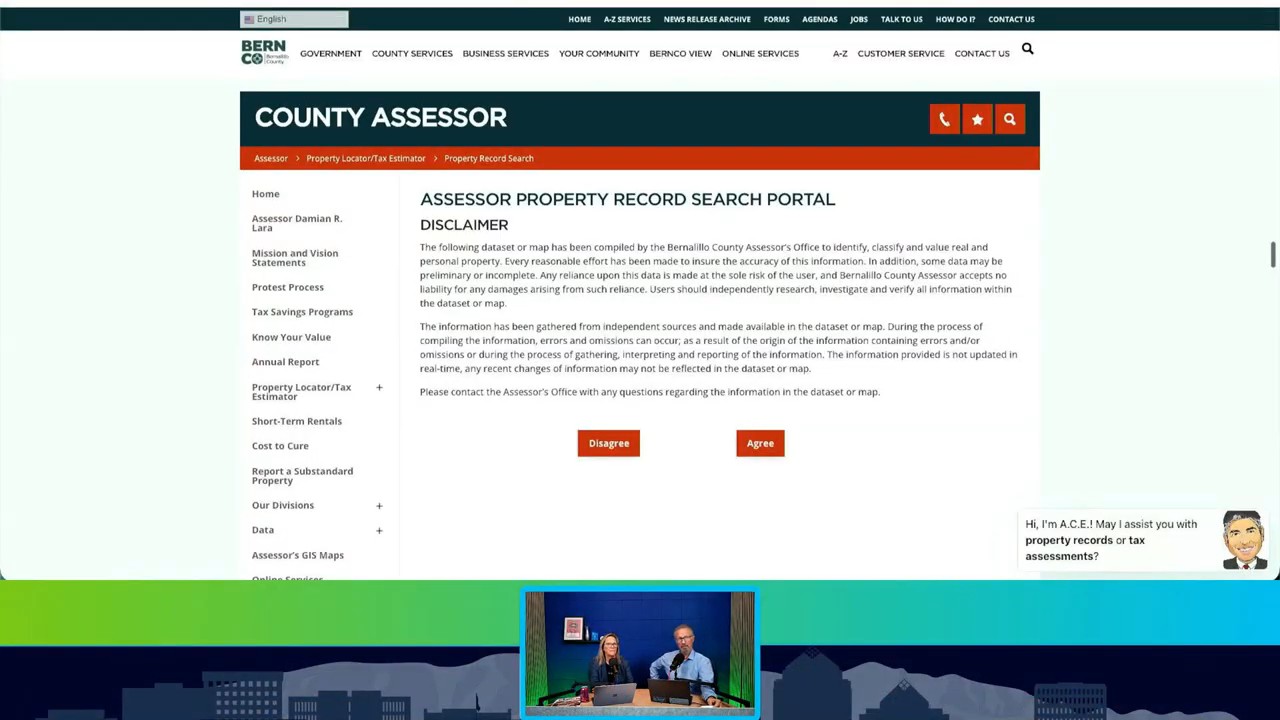
Watch the tax-lightning explanation at 2:52.
Ask your lender to use the estimated post-sale tax amount when calculating the payment and escrow. If the initial escrow is based on the seller’s bill, the later adjustment can feel like a second surprise.
Relocation question: “What is the estimated tax levy after this sale, and what assumptions are in my monthly payment?”
2. “Swamp cooler” and “refrigerated air” describe different cooling systems
Many Albuquerque-area listings identify the cooling as evaporative cooling, commonly called a swamp cooler, or refrigerated air, the local shorthand for conventional air conditioning.
An evaporative cooler draws hot outside air through wet pads. As water evaporates, the air cools and gains humidity before moving through the house. The U.S. Department of Energy says evaporative coolers work well where the air is hot and humidity is low. They also push warmer air out through open windows or purpose-built vents. See the DOE Energy Saver guide.
That setup can use less electricity than compressor-based air conditioning, but it also uses water, needs seasonal maintenance and becomes less effective when outside humidity rises. Refrigerated air generally gives more consistent temperature control and does not depend on evaporation in the same way, but its equipment and operating profile are different.
Neither label tells you whether the system is in good condition. During the inspection and seller-document review, ask about:
- The type, age and service history of the system.
- Which rooms receive air and how evenly.
- Pads, pump, motor, belt, water lines and winterization for an evaporative unit.
- Outdoor condenser, indoor equipment and refrigerant system for refrigerated air.
- Utility history when available and relevant.
- Any conversion from evaporative to refrigerated air and the related permits or electrical work.
Tego’s advice in the episode is simple: make the cooling type an active question instead of discovering it after moving in.
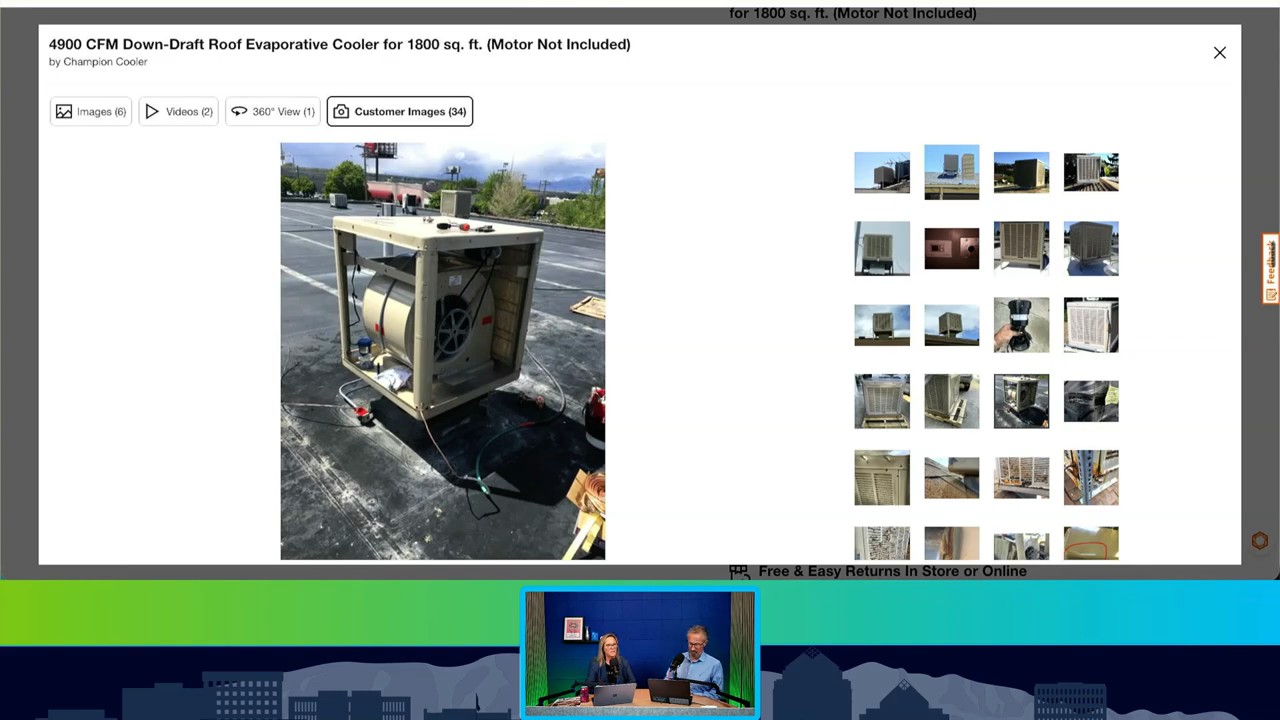
Watch the swamp-cooler versus refrigerated-air discussion at 5:01.
3. A “flat” roof should not be truly level
Pueblo Revival and other Southwestern home styles often use parapet walls that hide the roof surface from the street. What looks flat from below should still direct water toward drains or projecting scuppers called canales.
City of Albuquerque construction documents show “flat” roof assemblies with positive slope and crickets that channel water toward canales. The city’s current code page points to the applicable New Mexico building codes. See the roof-drainage plan in the city’s flat-roof ADU model.
For a buyer, the practical question is not whether flat or pitched is universally better. It is whether this roof was designed, installed and maintained well and whether water has a clear path off it.
Ask your inspector to evaluate:
- Roof covering and remaining service life.
- Ponding or signs of poor drainage.
- Parapet, flashing and penetration details.
- Canales, scuppers, gutters and downspouts.
- Interior staining or evidence of prior leaks.
- Repair, coating and replacement history.
A pitched roof deserves the same level of attention. Albuquerque-area homes also combine pitched and low-slope sections, so one property may have more than one roofing system and maintenance schedule.
4. Elevation changes the house-hunting experience
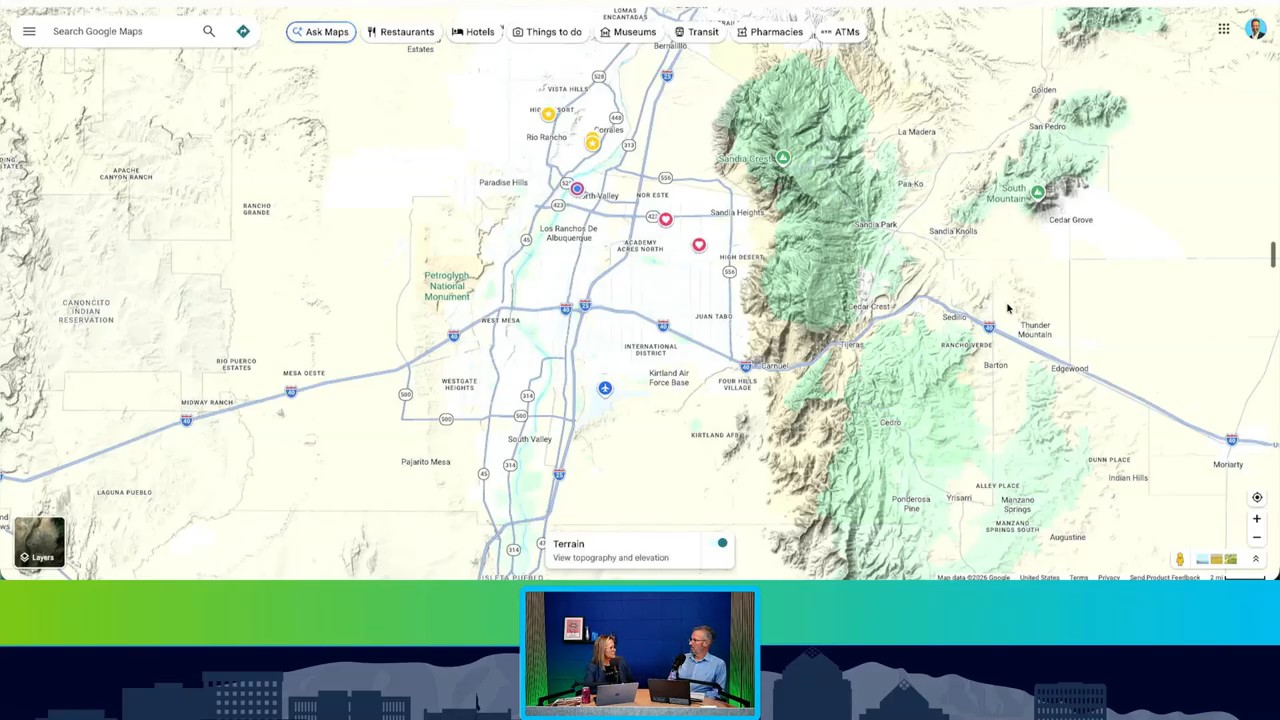
Albuquerque is a high-desert city with meaningful elevation changes over a relatively short distance. The city’s comprehensive planning material describes elevations from about 4,920 feet in the Rio Grande Valley to more than 6,000 feet within the city. The Sandia Foothills Open Space ranges from roughly 5,720 to 6,800 feet, while the Sandia crest rises much higher. See the City of Albuquerque’s geographic overview and foothills elevation information.
The larger relocation search may also extend into Rio Rancho, Placitas, the East Mountains or Valencia County. Those locations differ in elevation, terrain, vegetation and distance from services. A weather reading at the Albuquerque International Sunport does not describe every one of them.
Use that variety as a reason to compare actual properties, not as a reason to rank communities by a stereotype. During your search, notice:
- Morning and afternoon sun on the house and yard.
- Wind exposure.
- Snow and ice conditions on the route you would use.
- Outdoor maintenance and water needs.
- Heating and cooling equipment.
- Access to utilities, services and emergency response.
If you are considering the East Mountains or another higher-elevation location, drive the route in conditions that matter to you rather than relying on a summer showing alone.
5. Monsoon rain makes drainage worth investigating
“High desert” does not mean “no flood risk.” The National Weather Service identifies June 15 through September 30 as the North American Monsoon season and warns that flash flooding can occur throughout New Mexico. See NWS Albuquerque’s monsoon and flash-flood guidance.
Albuquerque’s arroyos, channels and site grading are designed to move intense stormwater, sometimes after rain falls far from the property itself. The City of Albuquerque reports more than 5,000 acres within Special Flood Hazard Areas and notes that standard homeowners insurance does not cover flooding caused by stormwater. Review the city’s floodplain resources.
For a specific home, review the current flood map, seller disclosures, insurance availability, grading and visible drainage. Look at where roof water exits, whether soil slopes toward or away from the structure, and whether walls or later landscaping may have changed the intended flow.
Flood-zone status is not the only drainage question, and being outside a mapped special hazard area does not mean water management is irrelevant. Ask a qualified inspector, surveyor, engineer, insurance professional or public agency for property-specific guidance when the site raises a concern.
6. Test the commute by route and time—not mileage alone
Albuquerque-area distances can look modest on a map, but the Rio Grande creates a limited set of east-west crossings. Tracy calls those crossings the metro’s commute “choke points” in the episode.
The Mid-Region Council of Governments publishes traffic counts, maps and historical river-crossing volumes for the region. Those resources are useful context, but they do not replace testing your own trip. Explore MRCOG traffic-flow and river-crossing data.
If your search includes Rio Rancho, Albuquerque’s Westside, Corrales, Los Lunas or another location across the river from work, school, appointments or frequent activities, check the route during the time you would normally travel. Try the return trip too. A map estimate at 10 a.m. may not reflect an 8 a.m. crossing.
Also check whether the route depends on one bridge, one freeway interchange or a road that behaves differently during construction or bad weather. The better location is the one that fits your actual weekly pattern, not the one with the shortest straight-line distance.
“The thing that impacts everybody here is our river crossings.” — Tracy Venturi
7. Get the insurance quote before the property becomes the plan
Homeowners insurance varies by the address, structure and insurer. The New Mexico Office of Superintendent of Insurance says premiums can be affected by the home’s value and age, roof and system updates, local fire protection, distance from a fire hydrant, coverage amount and deductible. See New Mexico OSI’s homeowners-insurance guide.
Wildfire exposure deserves extra attention when a search reaches wooded or mountain settings. New Mexico’s insurance regulator has highlighted wildfire risk, nonrenewals in some higher-risk areas, mitigation measures and the state’s FAIR Plan as a limited market-of-last-resort option. That does not mean every mountain property is difficult to insure. It means the quote and coverage should be confirmed early rather than treated as a closing-week formality.
Give the insurance professional the exact address and relevant details. Ask about:
- Replacement-cost assumptions.
- Roof age and material.
- Wildfire, wind and hail considerations.
- Deductibles and exclusions.
- Flood insurance as a separate policy.
- Required mitigation or inspections.
- Availability of multiple carriers.
Do not use a quote for another neighborhood—or another house on the same road—as a substitute for the property you are considering.
8. New Mexico home inspectors must be licensed
New Mexico regulates home inspectors. The state’s Home Inspectors Board says it is illegal to inspect real estate for compensation without a board-issued license. Its defined inspection scope includes accessible structural components, foundation, roof, heating, cooling, plumbing and electrical systems. Review the New Mexico Home Inspectors Board information.
Licensing establishes a baseline; it does not make every inspector the same. Ask about experience with the home’s age, roof type, cooling system, well or septic system when applicable, and the area’s construction practices. Verify the license and discuss any specialist inspections that may be appropriate.
An inspection is an option under the purchase contract, with specific deadlines and rights. Plan it early enough to understand the findings and decide what they mean for your purchase.
Watch the New Mexico home-inspector licensing discussion at 8:33.
How to compare very different parts of the Albuquerque metro
The Albuquerque-area search can include older city homes, Downtown or Nob Hill properties, valley settings, foothill communities, master-planned neighborhoods, Rio Rancho, Placitas, the East Mountains and communities farther south in Valencia County. Those labels do not tell you which place is right for you.
Use a property-focused comparison instead:
| Your decision | Questions to test |
|---|---|
| Monthly cost | What are the post-sale taxes, insurance, HOA or district charges and utilities? |
| Daily travel | Which river crossings and corridors will I use at my actual travel time? |
| Home systems | What type and age are the roof, cooling, heating, electrical and plumbing systems? |
| Site | How do drainage, sun, wind, slope and outdoor maintenance affect this property? |
| Services | Which utilities, internet options and public services are available at this address? |
| Space and maintenance | Do the lot, landscaping and outbuildings fit the time and budget I want to spend? |
| Weather | How do elevation and terrain affect this home and the route to it? |
That approach keeps the search anchored to the home and your stated priorities. It also avoids reducing a varied community to someone else’s idea of who should live there.
Frequently asked relocation questions
Why can property taxes rise after buying a home in Albuquerque?
New Mexico limits many year-to-year increases in residential property valuation while ownership remains unchanged. A change of ownership is an exception, so the assessor may value the property at its current and correct value. Use the appropriate county estimator rather than the seller’s present bill when planning your payment.
What is a swamp cooler?
A swamp cooler is an evaporative cooler. It pulls hot, dry outside air through wet pads, cooling and humidifying the air before moving it into the home. It works best in low humidity and has different water, airflow and maintenance needs from refrigerated air conditioning.
Are flat roofs normal in Albuquerque?
Low-slope roofs are a familiar part of Southwestern architecture. They should still have positive drainage toward drains, scuppers or canales. The relevant question is the specific roof’s design, material, condition, drainage and maintenance history.
How bad is the Albuquerque commute?
It depends on the route and time. Many drives are manageable, but river crossings and major interchanges can create bottlenecks. Test the actual trip during your normal travel window rather than relying on mileage or an off-peak map estimate.
Do Albuquerque buyers need a licensed home inspector?
New Mexico requires people performing home inspections for compensation to hold a state license. Buyers should verify the inspector’s license and choose someone whose experience fits the property and its systems.
Sources and scope notes
This article combines Episode 603 of Albuquerque Real Estate Talk with public-source research reviewed October 23, 2026. Property taxes, insurance, flood risk, travel time, climate and inspection needs are property-specific. Verify the current facts for the exact address.
- New Mexico Property Tax Code
- Bernalillo County Assessor tax calculator
- Sandoval County Assessor tax-calculator instructions
- U.S. Department of Energy Energy Saver guide
- City of Albuquerque current building codes
- City of Albuquerque flat-roof ADU drainage plan
- City of Albuquerque geographic overview
- National Weather Service Albuquerque monsoon and flash-flood guidance
- City of Albuquerque floodplain resources
- Mid-Region Council of Governments traffic-flow data
- New Mexico Office of Superintendent of Insurance homeowners guide
- New Mexico Home Inspectors Board
This is general educational information, not legal, tax, engineering, insurance or inspection advice.
A move goes better when the local details arrive early
Relocating buyers do not need to memorize every roof term, assessor rule or traffic pattern before looking at homes. They do need a process that brings those details into the decision before a contract or closing makes them expensive surprises.
Venturi Realty Group helps buyers compare Albuquerque-area homes by the factors that actually affect the move: budget, route, property type, systems, land, maintenance and long-term plans. Contact Venturi Realty Group or call or text (505) 448-8888 to plan an Albuquerque relocation search.
Venturi Realty Group, brokered by Real Broker LLC.