
Closing Costs in Albuquerque: Who Pays What?
Listen To The Summary
0:00 / 1:45
The short answer
Buyers and sellers can both have closing costs. Your loan, written agreements, title charges, and negotiated credits determine the actual split. Start with itemized figures, then separate closing costs from the down payment and the cash still due at closing.
Who pays? Start with the actual agreement
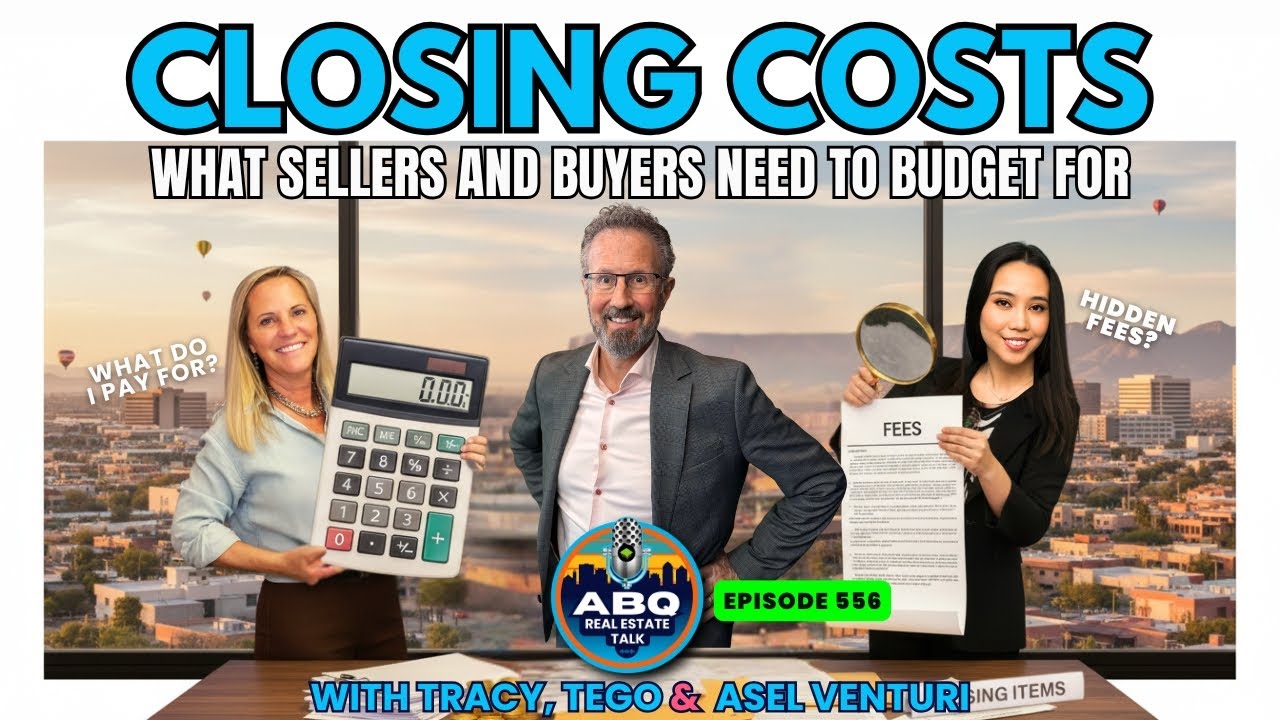
Asel Venturi puts the question directly to Tracy and Tego: who pays closing costs—the buyer, the seller, or both? Tracy’s answer is both, followed immediately by the detail that makes the conversation useful: local customs and negotiated terms matter.
That is the thread running through Episode 556. A buyer needs to understand the cost of getting a loan and completing the purchase. A seller needs a realistic view of the proceeds left after expenses. Both need to know which figures are estimates and which terms are actually in their agreements.
Watch Asel’s closing-cost question · 13:52 ↗
This guide draws on the October 2025 episode, with outside guidance reviewed November 2, 2026. Market figures and listing screens in the recording describe that earlier period.
Watch or listen to the complete conversation
Open the matching Podbean episode
The full episode and the article summary are separate listening options. Nothing plays automatically.
For a buyer, the down payment is only the beginning
Tego starts with the mortgage: getting a loan can involve lender, appraisal, credit-report, and other charges. Asel’s lending background helps turn the list into the question a buyer really needs answered: how much money needs to be available, and when?
Organize the conversation into three parts:
- Down payment: the part of the purchase price you contribute rather than borrow.
- Closing charges and prepaids: the lender and settlement figures, plus items such as insurance, prepaid interest, and initial escrow funding when applicable.
- Cash still due at closing: the amount remaining after applicable deposits, credits, and adjustments.
Some expenses can be paid earlier. Ask whether an inspection, appraisal, or other charge is already paid or remains in the amount due. Counting it in both places can distort the budget. Our New Mexico home-inspection guide helps with the inspection part of that planning.
Use the CFPB’s Loan Estimate explainer to review the estimate with your lender. It is more useful than treating a percentage mentioned in a conversation as your personal quote.
Watch the buyer-cost discussion · 14:54 ↗
For a seller, work backward from the proceeds
Tracy describes the seller side through the title company, settlement charges, and brokerage arrangements. The practical starting point is a seller net sheet: an estimate of what may remain after the transaction’s expenses and any existing loan payoff.
Ask which title charges the estimate assigns to each party, which brokerage compensation you have agreed to, and what would change if the offer includes a buyer credit. Then keep the estimate current as terms develop. An early net sheet cannot know every later repair agreement or settlement adjustment.
Compensation deserves its own clear conversation. It is negotiable and not set by law; the services, amount, and payment terms belong in the applicable agreements. The NAR’s consumer guide to negotiating buyer agreements explains that negotiation. Avoid assuming that every seller must pay every buyer-broker fee.
Watch the seller-cost discussion · 16:40 ↗ · Watch the brokerage-fee discussion · 18:02 ↗
Discuss a seller credit while you are structuring the offer
A buyer can ask the seller to contribute toward eligible costs, but the request becomes part of the offer the seller evaluates. Tracy brings the timing into focus: discuss that need while preparing the offer, alongside price and the other terms.
Tego returns to coordination between the buyer, broker, and lender. The lender needs to confirm what the particular loan allows. A requested credit is not the same as an approved credit, and a larger credit is not automatically usable for every expense.
Housing New Mexico’s homebuyer programs are another place to investigate down-payment and closing-cost assistance. A participating lender can review available programs and eligibility. Do not assume that assistance is available to every borrower or that its terms are the same as those described in an older episode.
Watch the seller-credit discussion · 22:16 ↗ · Watch the assistance-program discussion · 24:22 ↗
Know when to expect the mortgage disclosures
The episode distinguishes the early estimate from the figures that come together near settlement. Keep that practical distinction, while allowing time to review the required mortgage disclosures.
For most closed-end home-purchase mortgages, the lender must provide the Closing Disclosure at least three business days before closing. It shows the loan terms, projected payments, and closing costs. Some loan types use different disclosures. See the CFPB’s Closing Disclosure guidance for the rule and exceptions.
Compare it with the Loan Estimate and ask about differences. Late adjustments and confirmation of final settlement instructions are separate from the advance disclosure review. The CFPB’s annotated Closing Disclosure walks through the actual form, including the cash-to-close calculation.
Also in Episode 556: the market and a Northeast Heights stop
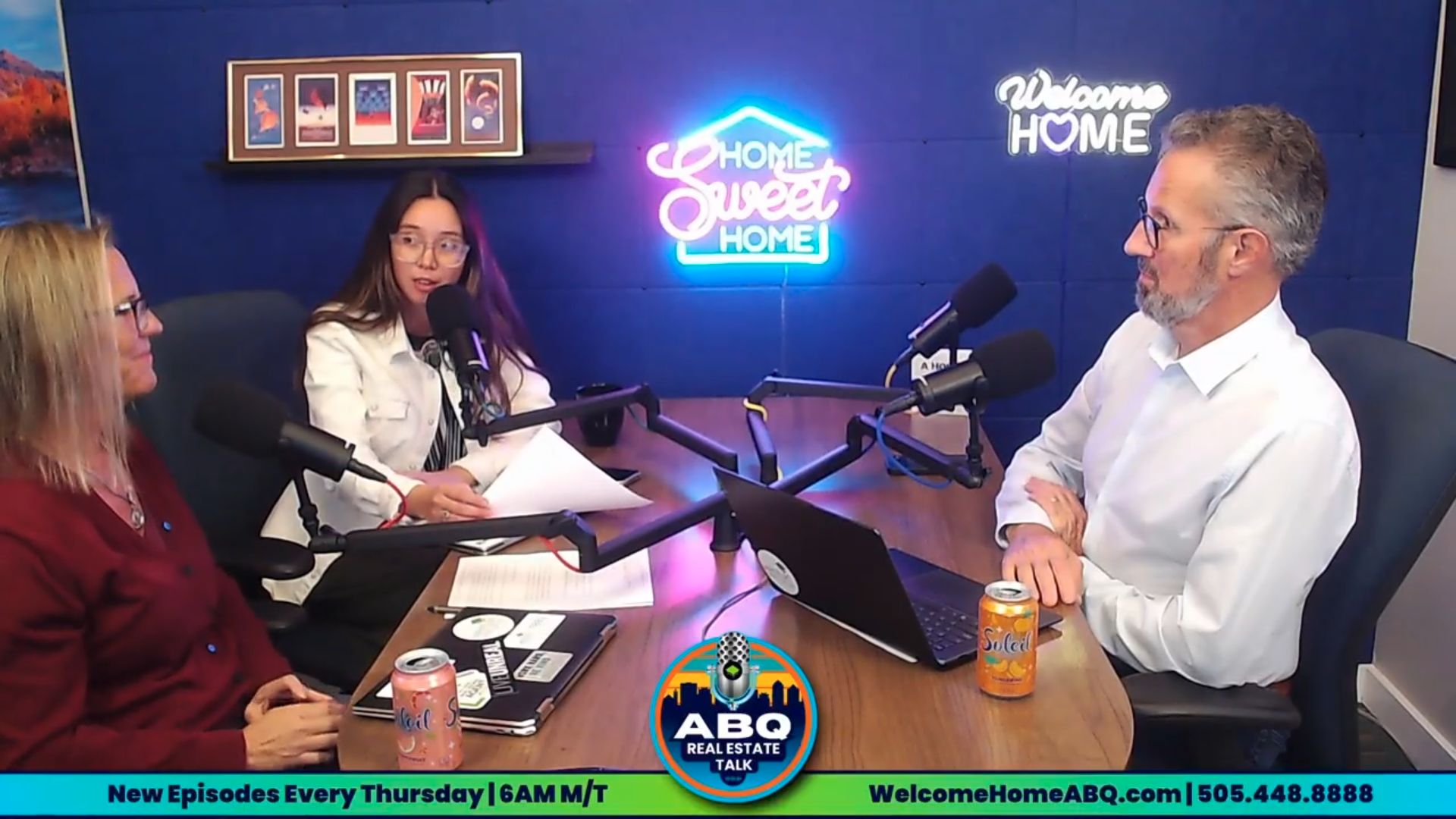
The full conversation begins with a county-by-county home-value discussion, then moves to pricing and preparation before Tracy brings the group to the area near Arroyo del Oso. Those segments put the closing-cost conversation inside the broader question of making a purchase or sale work.
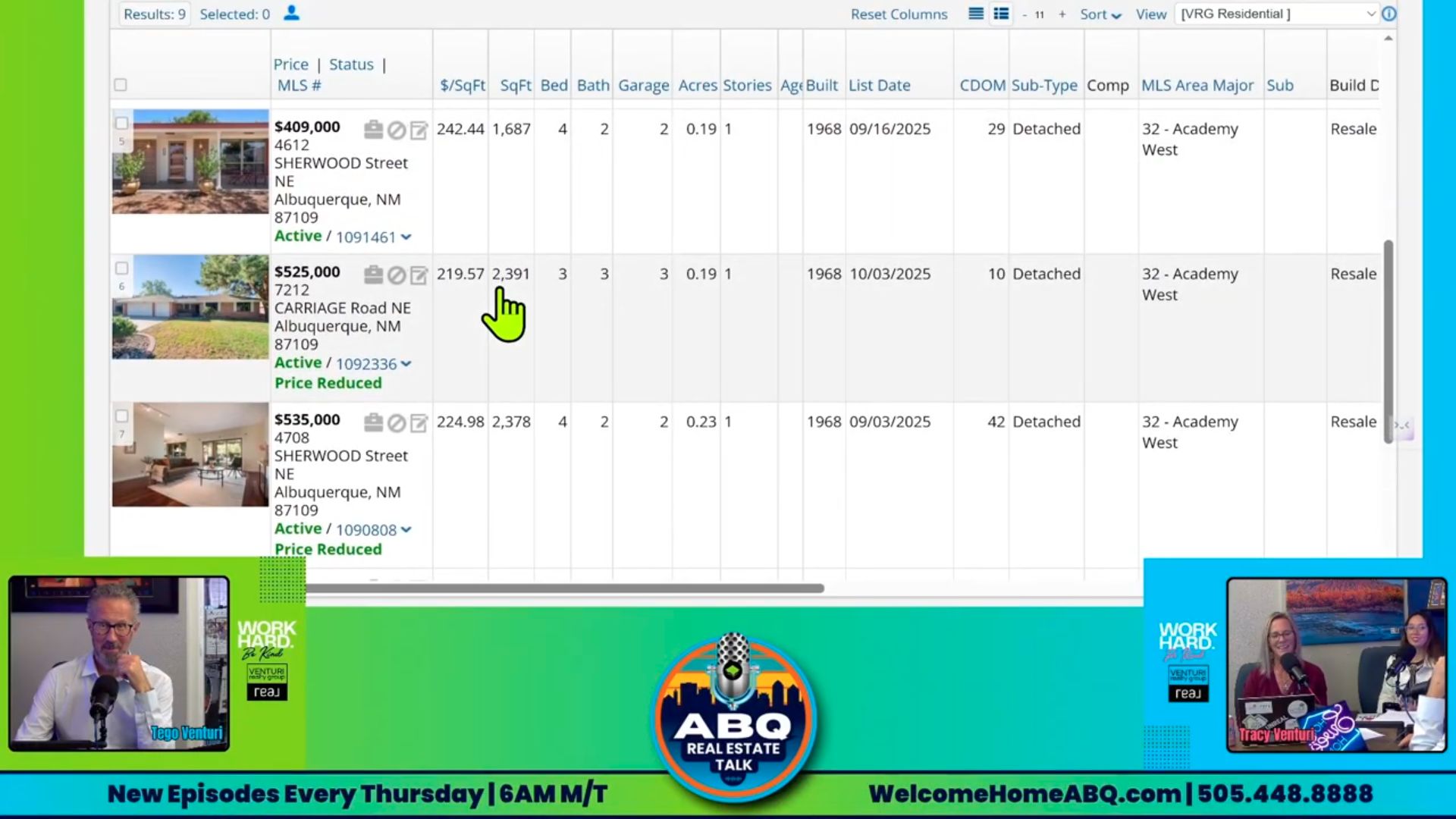
The numbers and listings shown belong to October 2025. For a current decision, compare them with the current Albuquerque housing-market tracker.
- County-level home-value discussion · 2:29 ↗
- Pricing and preparation discussion · 6:05 ↗
- Tracy’s Northeast Heights discussion · 9:23 ↗
Closing-cost questions buyers and sellers ask
Who pays closing costs in Albuquerque?
Both parties can have costs. The loan, title and settlement charges, service agreements, and negotiated purchase terms determine the actual allocation.
Are closing costs the same as the down payment?
No. The down payment is your contribution toward the price. Closing charges and prepaids are additional items. The amount still due at closing reflects applicable deposits, credits, and adjustments.
Can I ask a seller to help with my costs?
Yes. Discuss the request with your broker while structuring the offer and confirm the allowed amount and uses with your lender. The seller must agree to the negotiated terms.
Can cash buyers avoid every closing expense?
A cash purchase avoids mortgage-origination expenses, but title, settlement, inspection, and other property-specific costs can remain. Request an itemized estimate rather than assuming the total is zero.
Sources and further reading
Episode 556 is the source for the hosts’ conversation. Current explanatory guidance was checked November 2, 2026; the episode’s market data remains historical.
Put the purchase or sale numbers in context
Bring your questions about timing, credits, and estimated proceeds to Venturi Realty Group. We can help coordinate the real-estate side of the conversation with your lender and title team.
Venturi Realty Group, brokered by Real Broker LLC
General educational information, not a mortgage quote or legal, tax, or financial advice. Actual costs, credits, disclosure requirements, and available programs depend on the transaction and loan.