
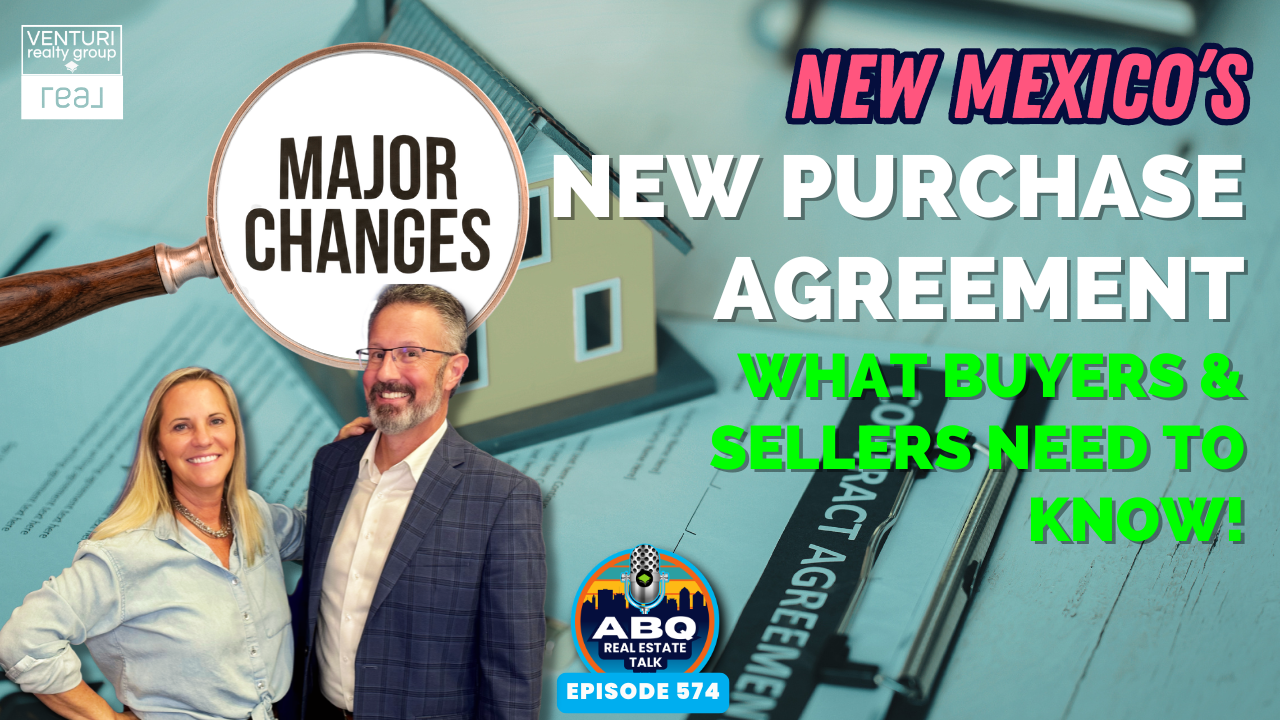
What Consumers Need to Know About the 2026 New Mexico Purchase Agreement Changes
By Venturi Realty Group
Albuquerque Real Estate Talk, Episode 574: Navigating the 2026 New Mexico Purchase Agreement Changes
If you are buying a home in Albuquerque or anywhere in New Mexico, the 2026 New Mexico Purchase Agreement introduces major changes that directly affect how you protect your money, how fast you must act, and what rights you have during due diligence. In Episode 574 of Albuquerque Real Estate Talk, Tego Venturi and Tracy Venturi explain that this is not a light edit to an old form. As Tego put it, the contract has been “completely redone,” and it now requires buyers and sellers to pay closer attention to deadlines, inspections, and how the transaction is handled from day one.
For consumers, the biggest takeaway is that this new agreement is designed to be more structured and more specific. The first page now gives a quick snapshot of major deal terms, but the protections and risks are buried deeper in the agreement. Buyers need to understand that they now have broader due diligence rights in some areas, but they also face stricter consequences if they miss key deadlines or handle inspection materials the wrong way. Sellers need to understand that they may benefit from stronger upfront commitment from buyers, but buyers still retain many important rights to investigate and terminate during the contract period.
"This is not just an update. The New Mexico purchase agreement has been completely redone."
One of the most consumer-facing changes is the required payment called independent consideration. Tracy Venturi explained it this way: “It’s where the buyer offers something of consideration, monetarily to the seller to take the house off the market for them to give them time to do their due diligence and make sure they’re comfortable with moving forward.” That single change affects how quickly a contract becomes truly enforceable, how buyers show commitment, and what happens if a buyer changes course. For anyone entering the Albuquerque real estate market in 2026, understanding these new rules is essential before signing anything.
The Biggest Change: Independent Consideration and Why It Matters to Buyers
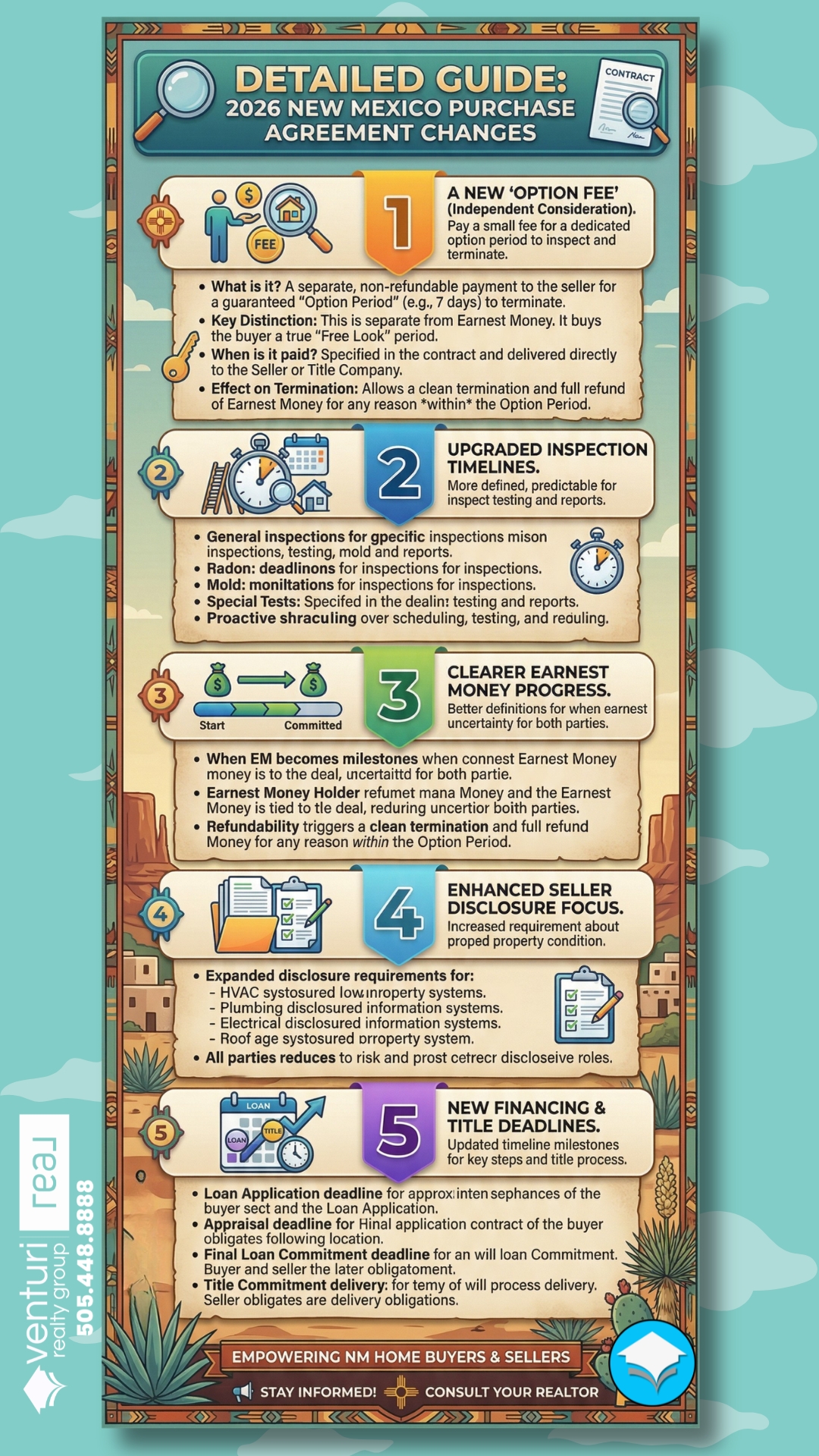
The most important new concept for consumers is independent consideration. Under the 2026 New Mexico Purchase Agreement, this is not optional. It is a required payment from the buyer to the seller, and it must be greater than zero for the contract to be valid. That means a buyer is no longer simply signing paperwork and moving into inspections with no upfront non-refundable commitment. The buyer is now offering actual consideration to secure time off market and the exclusive opportunity to perform due diligence.
Tego Venturi explained the practical meaning of it in plain language: it is “a fee that the buyer is paying to the seller directly,” and it is “non-refundable if the deal doesn’t close.” Tracy added that the amount is negotiable and can vary widely depending on the property and the competitiveness of the situation. In one offer she referenced, the amount was $100. In another, it was $1,000. The point for buyers is not that there is one standard amount. The point is that it is now part of how an offer gets structured, and it can affect how attractive that offer looks to a seller.
Consumers should also understand that independent consideration is different from earnest money. Earnest money goes to the title company and is generally credited back to the buyer at closing. Independent consideration goes directly to the seller. If the transaction closes, the parties may choose for that amount to be credited toward closing costs, but that is something negotiated in the offer itself. If the deal does not close, independent consideration is generally gone.
Here is the clearest statement from the episode: “It must be paid to have a valid contract.”
"You must put skin in the game upfront."
For consumers, this creates both a benefit and a risk. The benefit is that it can make your offer stronger and show the seller you are serious. The risk is that it creates a strict obligation immediately after going under contract. Buyers should not treat this as a small technicality. It is one of the core changes in the new agreement, and it shapes the rest of the transaction from the start.
DANGER ZONES for Buyers: Mistakes That Can Kill the Deal or Put Your Money at Risk
- Do not miss the independent consideration deadline.
The buyer has just three calendar days to get that payment to the seller, and if it is not received on time, the contract “immediately and automatically terminates.”
- Do not assume earnest money and independent consideration are the same thing.
Earnest money is held by the title company and may be refundable under the contract, but independent consideration is a separate payment to the seller and is generally non-refundable.
- Do not send the full inspection report to the seller unless they request it in writing.
Tego warned that sending the entire unrequested report can put the buyer’s earnest money at risk if the transaction later falls apart.
- Do not ignore due diligence deadlines.
If you miss an objection deadline tied to inspections, documents, or other due diligence items, you may lose the right to object even if the contract does not automatically terminate.
- Do not skip neighborhood investigation just because you liked the house.
The new agreement gives buyers time to investigate the neighborhood and surrounding area, but you must do that work during the contract period if you want to preserve your rights.
- Do not assume attached items automatically stay with the property.
Items like refrigerators, washers, dryers, rain barrels, EV chargers, or attached bookcases should be clearly addressed in the agreement so there are no surprises before closing.
What the New Contract Means for Your Due Diligence, Inspections, and Day-to-Day Decisions
One of the most consumer-friendly changes in the 2026 New Mexico Purchase Agreement is that buyers now have more explicit room to investigate not just the home, but the surrounding area. Tracy Venturi explained that the old contract effectively said the buyer had already inspected the neighborhood and was comfortable with it. The new contract changes that. Now the buyer has time during due diligence to research the neighborhood, visit at different times of day, and decide whether the area works for their lifestyle.
That matters in real life. Tracy gave practical advice for out-of-area buyers: go walk the neighborhood in the morning, go back after work, visit the grocery store you would use, and make sure you feel comfortable calling that place home. This is a major consumer benefit because it recognizes that a home purchase is not just about the structure. It is also about noise, traffic, surroundings, convenience, and whether the area feels right for you and your family.
"Go walk the neighborhood at different times of day."
Inspections also require more care than many buyers realize. Tego identified one of the biggest traps in the new agreement: if the buyer or buyer’s broker sends the entire inspection report to the seller without a written request from the seller, the buyer’s earnest money can be put at risk. That is a huge practical lesson for consumers. The inspection process is not just about uncovering issues. It is also about how you communicate those issues and how your broker documents requests for repairs or credits.
Tego’s warning was direct: “Don’t send the entire inspection report to the seller without them giving you a written request for it.”
The agreement also makes it more important than ever to pay attention to what stays with the property. Tego and Tracy discussed how things like refrigerators, microwaves, washers, dryers, rain barrels, EV chargers, and even attached bookcases can become points of confusion if they are not clearly addressed. What feels obvious to one side may not be obvious to the other. For consumers, the lesson is simple: do not rely on assumptions. Put it in writing.
Sellers also need to know that buyers still have many ways to terminate under the contract if they are unsatisfied during due diligence, financing, or other allowed review periods. Buyers gain a clearer path to investigate, but they also take on more responsibility to meet deadlines and follow the rules. This is why the technical pieces matter only when they affect the consumer. A missed date, a mishandled report, or a misunderstanding about what is included with the home can turn into a real financial problem fast.
"The dates are so critical in this."
Other Important Consumer Changes Sellers and Buyers Should Understand
The first page of the new purchase agreement now works as a quick summary of key terms such as price, down payment, earnest money, independent consideration, closing date, and signing date. That makes the contract easier to review at a glance, but consumers should not confuse readability with simplicity. The agreement still contains many obligations and decision points that require careful review.
The episode also highlighted that title can help with certain administrative items, including HOA documents in some transactions. Sellers heard another smaller but meaningful point as well: they may request proof that a buyer’s loan estimate has been delivered. That does not change the entire deal, but it gives sellers another way to confirm that the buyer’s financing process is moving forward.
The larger takeaway is that the 2026 contract is intended to create clearer structure, but that structure only protects you if you understand it. Buyers now have broader investigation rights, but stricter timing requirements. Sellers may receive stronger upfront commitment, but they also need to understand how much flexibility buyers still have under the agreement. In short, the new New Mexico purchase agreement gives consumers better-defined rules, but those rules reward attention and punish carelessness.
Frequently Asked Questions
What is independent consideration in the new New Mexico purchase agreement?
It is a required payment from the buyer directly to the seller for the seller to take the home off the market and allow the buyer time to perform due diligence. It must be greater than zero for the contract to be valid.
How is independent consideration different from earnest money?
Independent consideration goes directly to the seller and is generally non-refundable if the transaction does not close. Earnest money is usually held by the title company and may be returned to the buyer if the buyer properly terminates under the contract.
What happens if the buyer does not pay independent consideration on time?
The contract automatically terminates. If the payment is not received by the deadline, the agreement immediately becomes void and the buyer loses the opportunity to move forward with the purchase.
Can a buyer back out because they do not like the neighborhood?
Yes. The new agreement allows buyers time during due diligence to investigate the neighborhood and surrounding area, not just the home itself, and make a decision based on that research.
Can a buyer send the full home inspection report to the seller?
Not unless the seller has requested it in writing. Sending the full unrequested report can put the buyer’s earnest money at risk if the transaction falls apart later.
Why are deadlines so important in the new contract?
The updated agreement places a strong emphasis on timelines. Missing a deadline—whether for deposits, inspections, or objections—can result in losing key rights or even terminating the contract altogether.
How long does a buyer have to pay independent consideration?
Buyers typically have a very short window, often just a few calendar days, to deliver the payment. This tight timeline is one of the most critical changes buyers must be prepared for.
Is independent consideration credited back to the buyer at closing?
It can be, but only if it is written into the offer and agreed upon by both parties. Otherwise, it is treated as a separate payment to the seller.
What does “due diligence” include under the new agreement?
Due diligence includes inspections, reviewing documents, verifying property condition, and evaluating the neighborhood and surrounding area to ensure the home fits the buyer’s needs.
Can buyers visit the property whenever they want during escrow?
No. Buyers must have permission to access the property prior to closing. Entering without approval can create serious issues, including potential contract violations.
What types of items need to be clearly included in the contract?
Items such as appliances, fixtures, EV chargers, and even certain attached features should be clearly listed to avoid disputes about what stays with the property.
Are buyers more protected under the new agreement?
In many ways, yes. Buyers have clearer rights for inspections and due diligence, but those protections only apply if the buyer follows all deadlines and contract requirements.
What risks do buyers face under the new contract?
The biggest risks include losing independent consideration, missing deadlines, mishandling inspection communications, and assuming access rights that do not exist.
How can buyers avoid losing their earnest money?
By following the contract carefully, meeting all deadlines, and ensuring that any termination is done properly within the allowed contingency periods.
What should buyers do before submitting an offer?
Buyers should fully understand the financial commitment of independent consideration, review timelines carefully, and work closely with their broker to structure a strong and compliant offer.
Does the new contract make offers more competitive?
Yes. Because independent consideration is negotiable, buyers can use it as a tool to strengthen their offer and stand out in competitive situations.
Do these changes affect sellers as well?
Yes. Sellers may benefit from stronger buyer commitment upfront, but they must also understand the buyer’s rights during due diligence and how the contract can be terminated.
Is the new purchase agreement easier or more complex?
It is more structured and clearer in many ways, but it also requires more attention to detail. Buyers and sellers need to be more engaged in the process than before.
What is the biggest takeaway for buyers in 2026?
The biggest takeaway is that the contract is more strict and more defined. Buyers have great protections, but only if they follow the rules, meet deadlines, and understand their obligations from day one.
Who should buyers talk to before signing a purchase agreement?
Buyers should work closely with a knowledgeable real estate professional who understands the new contract and can guide them through each step to avoid costly mistakes.
Related reading: step-by-step guide to buying a home in New Mexico and questions to ask a real estate agent.
Have questions about Albuquerque real estate?
If you are thinking about buying or selling, or just want to understand how the current market affects your plans, our team is here to be a resource.
Call or text: (505) 448-8888
Email: [email protected]
Website: WelcomeHomeABQ.com
Venturi Realty Group of Real Broker, LLC