
Listen To The Summary
0:00 / 1:44
A model-home kitchen has a way of making the decision feel easy. The counters shine, the furniture fits perfectly, the landscaping is finished, and there is often an attractive financing offer waiting on the price sheet.
The harder questions concern the home you will actually receive: Which finishes are standard? What will you need to buy after closing? How will the payment change when a temporary incentive ends? Who helps if something is unfinished or needs warranty service?
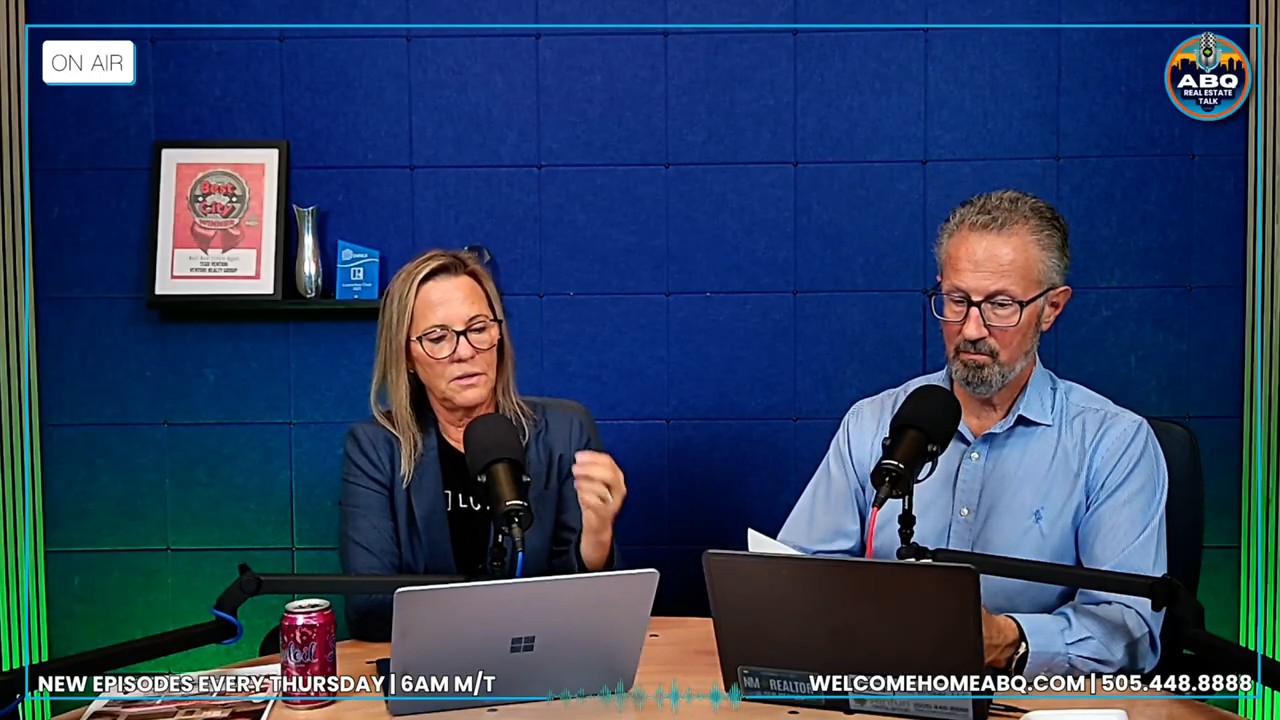
In Episode 603 of Albuquerque Real Estate Talk, Tracy and Tego Venturi walk through the questions they want buyers to ask before signing with a home builder. Their simplest advice may also be the most useful:
“Make sure you’re very clear on what’s included.” — Tego Venturi
Listen to the full conversation
The episode covers both the new-construction and relocation topics developed in these separate guides.
Why do buyers choose new construction?
New construction can be a good fit when you want fewer immediate projects, particular design choices or a newly planned community. In the National Association of REALTORS®’ 2025 Generational Trends report, buyers of new homes gave these leading reasons:
| Reason for choosing a new home | Share of new-home buyers |
|---|---|
| Avoid renovations or plumbing and electrical problems | 42% |
| Choose and customize design features | 27% |
| Amenities in new-construction communities | 25% |
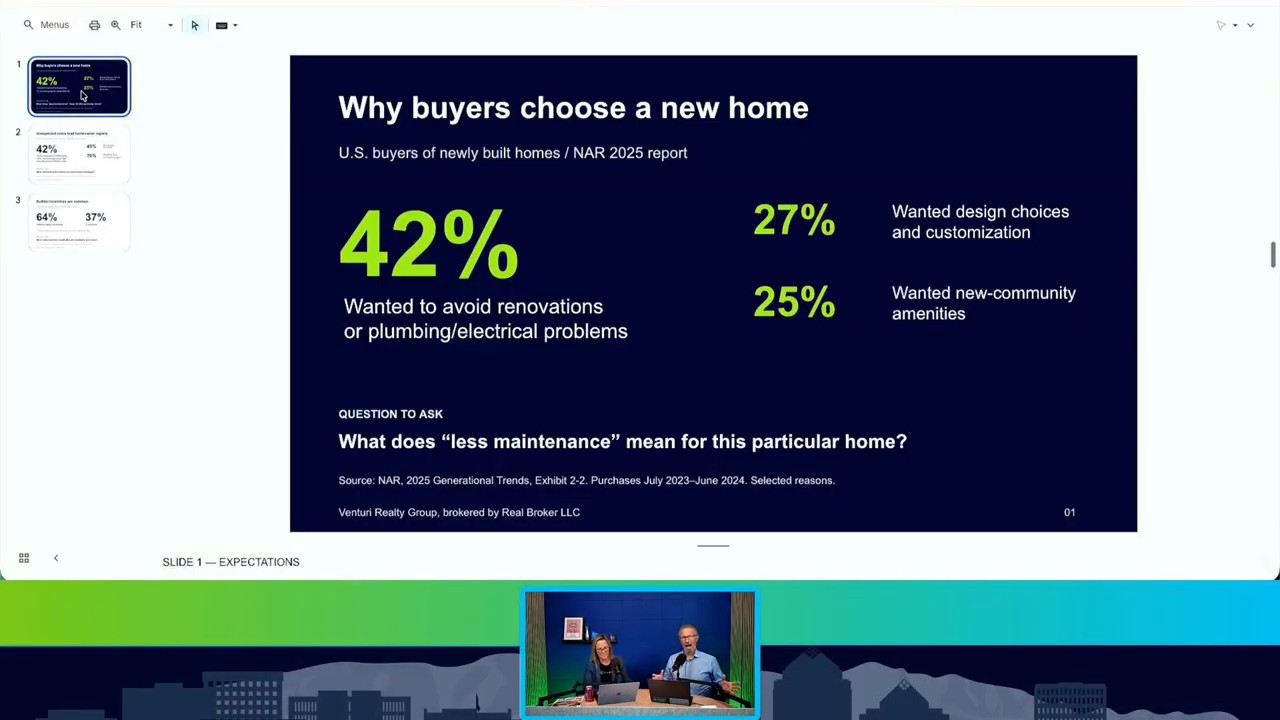
Those are buyer motivations, not a guarantee that a new house will be maintenance-free. The report covers purchases from July 2023 through June 2024, and respondents could choose more than one reason. See NAR Exhibit 2-2.
Start by naming your own reason. If you mainly want fewer projects, price the house with the yard, window coverings, appliances and other work you would need to complete after moving in. If customization matters most, ask how much flexibility remains at the home’s current construction stage.
Interactive planning exercise
Builder offer trade-off explorer
Move the sliders to show what matters most in your purchase. The result turns those priorities into opening questions for a builder and lender conversation.
This does not calculate a mortgage, compare APRs or assign a dollar value to an incentive. It is a conversation-planning tool.
Your priorities are broadly balanced
Compare the whole offer instead of letting one headline incentive decide the purchase.
1. What is the complete price of this specific home?
An advertised starting price may describe a different lot, elevation and feature package. Ask for an itemized price tied to the exact home you are considering.
The breakdown may include:
- Base price and floor plan.
- Lot premium.
- Exterior elevation.
- Structural options.
- Design-center selections.
- Builder fees.
- Incentives or credits.
- Costs that remain outside the contract price.
Keep closing costs and after-move expenses on separate lines so you can see the full cash requirement. If the agreement contains allowances rather than fixed prices, ask what each allowance buys and how you will approve an overage.
Ask the builder: “What is my total purchase price with these exact selections, and what costs remain outside that figure?”
2. Which model-home features are standard, optional or excluded?
The model is designed to show the builder’s possibilities. It may include upgraded flooring, cabinets, lighting, landscaping, appliances and outdoor features that are not part of the advertised starting price.
Take the included-features sheet on the tour and compare it with what you see. Confirm items such as:
- Cabinets, counters, flooring, backsplash and lighting.
- Refrigerator, range, dishwasher, washer and dryer.
- Window coverings, screens, garage-door opener and storage features.
- Front and backyard landscaping, irrigation, walls, fencing and gates.
- Covered patio, exterior outlets and other outdoor improvements.
- Smart-home equipment, subscriptions and internet availability.
Also ask what happens if a selected material or appliance becomes unavailable. Your signed selections and change orders should show the final choice, price and any permitted substitutions.
Ask the builder: “Can you show me which features in this model I will receive at the quoted price?”
3. Is this a to-be-built home, a home already under construction or completed inventory?
These are different purchases even when the floor plan is the same.
A to-be-built home may offer more choices, but it also brings more decisions and a longer timeline. A home already under construction may have fixed structural choices with some finish selections remaining. A completed or “spec” home gives you a clearer look at the actual finishes and may allow a faster closing, but usually offers less customization.
Ask which decisions are still open, the deadline for each one, and whether a change will affect price or completion. Compare the cost of adding a feature during construction with the difficulty of adding it later. A larger garage, different layout or extra plumbing is not the same kind of decision as changing a decorative light fixture.
Watch the spec-home versus to-be-built explanation at 23:54.
4. What will the home cost after closing?
The purchase price is not the ownership budget. Build a monthly estimate that includes property taxes, homeowners insurance, mortgage insurance when applicable, HOA charges, utilities, maintenance and any special district assessments.
Then add the one-time expenses that tend to arrive quickly:
- Backyard landscaping and irrigation.
- Window coverings.
- Appliances that are not included.
- Storage or garage improvements.
- Fencing, gates or walls.
- Moving and temporary storage.
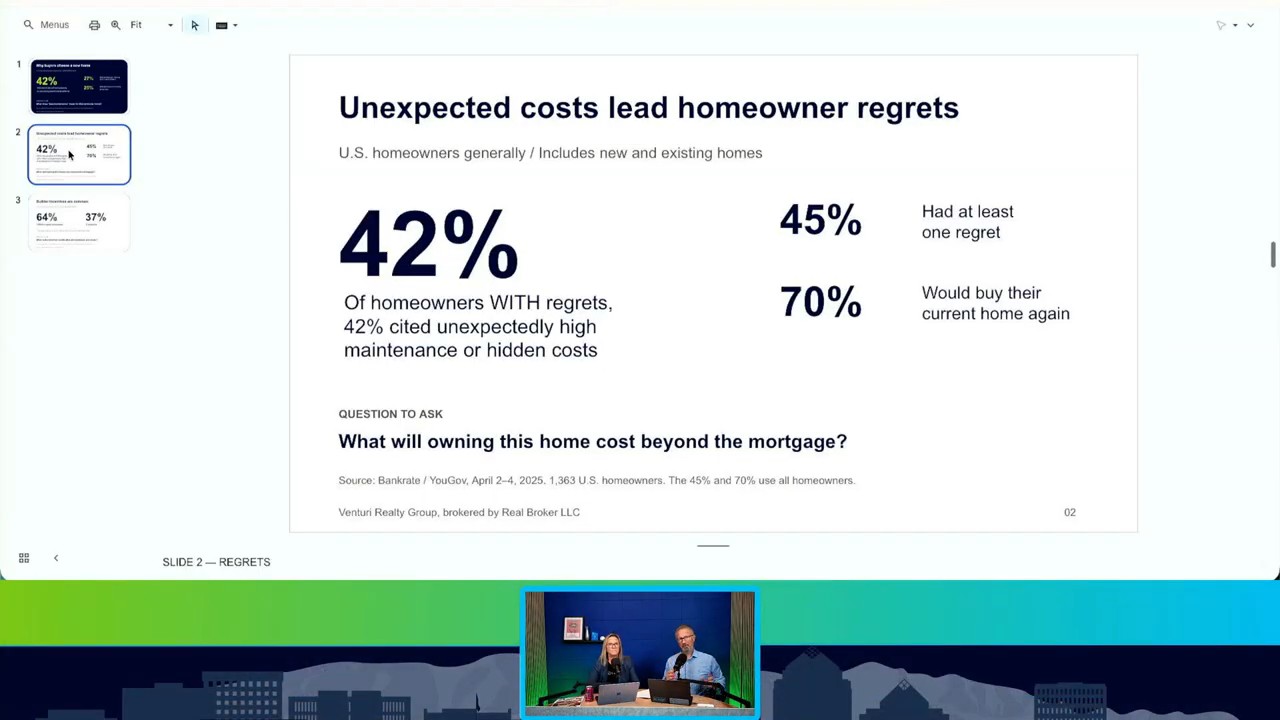
Watch the after-closing cost discussion at 24:24.
Ask the lender which tax and insurance assumptions support the quoted payment. Obtain an insurance quote for the actual address, and confirm whether the tax estimate reflects a completed home rather than vacant land or an earlier construction stage.
Even with a fixed-rate mortgage, the total payment can change when taxes or insurance change. A temporary buydown can also reduce the buyer’s payment for a limited period before it increases. The Consumer Financial Protection Bureau explains these payment changes.
Ask the builder and lender: “What should I budget at closing, during the first year, and after every temporary incentive ends?”
5. What is the incentive actually worth to me?
Builder incentives can be valuable, but the headline number does not tell you how the benefit works.
In an April 1, 2026 national snapshot, the National Association of Home Builders reported that 64% of surveyed builders were offering sales incentives and 37% were cutting prices. Those groups can overlap, and the figures do not describe every builder or today’s Albuquerque-area offers. Read the dated NAHB release.
Ask what is available on the specific home, how you may use it and what conditions apply.
| Incentive or extra | What to clarify |
|---|---|
| Closing-cost credit | Which expenses qualify, and what happens to unused credit? |
| Permanent rate buydown | What are the note rate, APR, points and lender fees? |
| Temporary payment buydown | What is the payment each year, and when does the subsidy end? |
| Price or lot-premium reduction | What is the revised contract price, and can it combine with other offers? |
| Flexible credit | May it cover closing costs, upgrades, the lot or another approved use? |
| Design-center allowance | Which selections qualify, and what are the builder’s prices? |
| Appliance or window package | Which products, installation and warranties are included? |
| Landscaping or patio work | What is the exact scope, and when will it be complete? |
| HOA assistance | Which dues are covered, for how long, and what is excluded? |
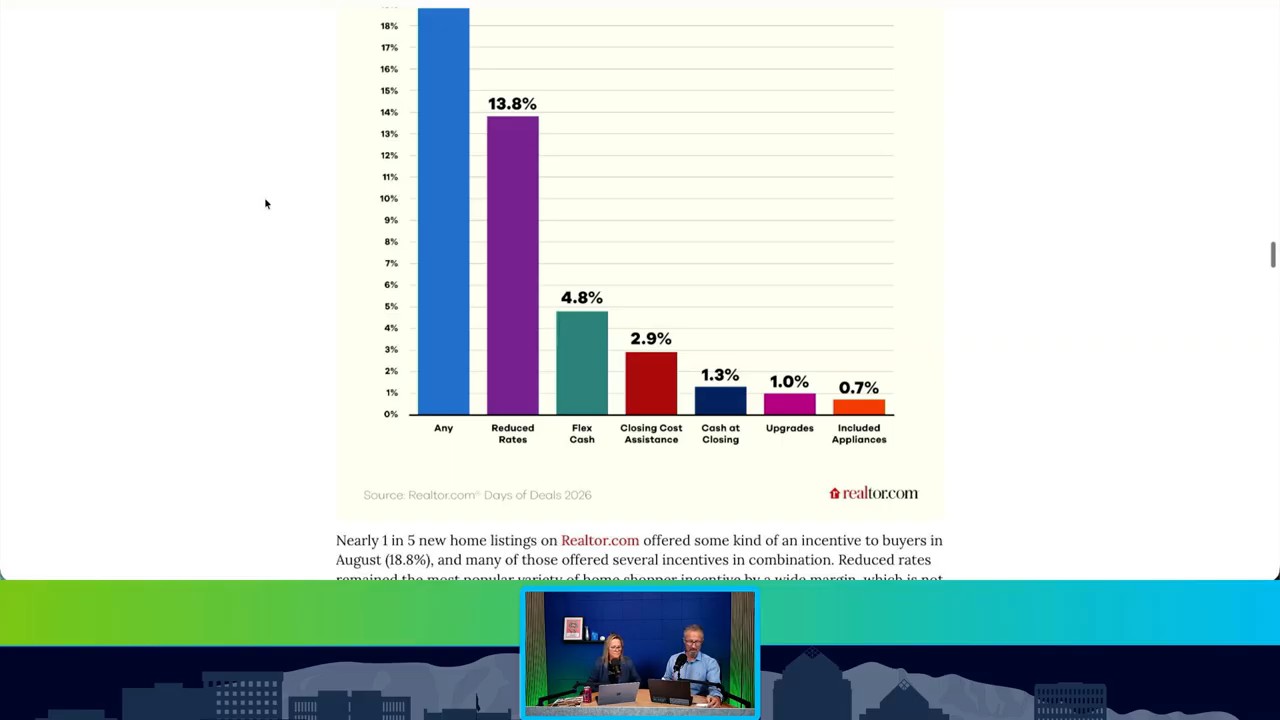
Watch the builder-incentive discussion at 28:13.
A credit toward something you would not otherwise buy may be less useful than help with a cost you already expect. Compare the offers using your planned financing and selections—not only the advertised total.
Ask the builder: “What must I do to qualify, and what do I give up if I choose another lender, title provider or closing date?”
6. Should I use the builder’s preferred lender?
You can compare the builder-affiliated or preferred lender with another lender. Ask for Loan Estimates based on the same loan type, down payment, term and timing.
Review the interest rate, APR, points, lender charges, cash to close and rate-lock terms alongside any builder credit. Confirm whether the loan has a fixed or adjustable rate.
A temporary buydown is not the same as a permanently lower note rate. It subsidizes part of the payment for a defined period. Ask for the full payment schedule and make the decision using a payment you can afford under the loan you are accepting—not an assumed future refinance.
7. Who represents me when I visit the builder?
The sales representative in the model-home office represents the builder. A buyer can choose separate representation, but builder registration and compensation policies vary.
Discuss representation before the first visit, online registration or self-guided tour. Tell the builder about your broker when you register, and ask how that broker may participate. Review your buyer-broker agreement and any compensation obligation separately; do not assume the builder will pay it or that visiting without representation produces a lower price.
Tracy’s practical point in the episode is that representation is not only about the contract. A local broker can help you compare builders, communities, available inventory, lots and resale alternatives before one attractive model becomes the entire search.
8. What should I investigate about the lot and community?
The floor plan is only part of the purchase. Evaluate the actual lot’s usable space, sun exposure, drainage, surrounding plans, ongoing charges and everyday travel.
In Rio Rancho, ask whether the property lies in a Public Improvement District or another special district and what charges apply. The City of Rio Rancho explains that special districts can use taxes, fees, charges or assessments to fund public improvements. Confirm the obligations for the specific parcel with the title company and relevant district.
In Albuquerque, ask to see the approved grading and drainage information and learn about easements or maintenance obligations before planning walls, landscaping or a patio. The City of Albuquerque Hydrology Section maintains drainage resources and reviews development plans.
Also confirm:
- What the builder will complete outside before closing.
- What adjacent parcels and future phases are currently approved for.
- Which HOA amenities exist now and which are only planned.
- Utility and internet service at the address.
- The route you will actually drive at the time you will normally drive it.
9. Can I arrange an independent inspection?
New does not mean uninspectable. Municipal inspections and a buyer’s independent inspection have different purposes and scopes.
Ask a qualified inspector which stages make sense for the home. Depending on construction progress and the agreement, the conversation may include a pre-drywall inspection, an inspection near completion and a follow-up after repairs.
Confirm access and deadlines before signing. Find out who receives the report, how the builder responds, which findings it will address before closing and whether a reinspection is allowed.
Ask the builder: “When may my inspector enter, and how will findings be documented and resolved?”
10. What happens if construction takes longer than expected?
An estimated completion date is not always a guaranteed closing date. Read the agreement’s completion, extension and cancellation provisions before organizing your move around one date.
Discuss what happens if:
- A rate lock expires before the house is ready.
- Your lease ends or your current home sells first.
- A material is unavailable and the builder proposes a substitution.
- Financing, appraisal or employment circumstances change.
- Either party cannot meet a contractual deadline.
Ask who pays extension costs and when deposits may or may not be refundable. If your purchase depends on proceeds from another sale, coordinate the construction, listing and financing timelines together. A priced backup plan for housing and storage can keep a delay from becoming a rushed decision.
11. How will unfinished work and warranty claims be handled?
Get the warranty documents, repair process and responsible contacts before closing. Keep the final list of incomplete items in writing, with the agreed scope and target dates, and understand what closing means for unresolved work under the contract.
Warranty coverage varies by builder and component. The Federal Trade Commission says builder warranties commonly provide limited coverage for workmanship and materials, often with different periods for components, systems and major structural defects. Appliances may have separate manufacturer warranties. Review the FTC’s new-home warranty guide.
Ask how to submit a service request, what maintenance the warranty requires, what it excludes and how disputes are handled. Put important warranty dates on your calendar and keep requests and responses in writing.
Ask the builder: “Who handles service after closing, and what is the next step if a reported issue remains unresolved?”
A builder-meeting checklist
Bring the same checklist to each builder so you can compare like with like:
- Itemized price for the selected home and lot.
- Included features, options and substitution rules.
- Incentive rules, lender requirements and expiration dates.
- Comparable Loan Estimates and the full payment schedule.
- Expected taxes, insurance, HOA dues and district charges.
- Lot, drainage, easement and future-phase documents.
- Representation and compensation arrangements.
- Deposit terms, contingencies, deadlines and delay provisions.
- Inspection access and the process for resolving findings.
- Warranty documents and post-closing service contacts.
Record the source and date of each answer. If an answer would affect your willingness to buy, ask where it appears in the signed documents.
Frequently asked questions about new construction
What is the most important question to ask a home builder?
Ask for the complete price and scope of the specific home you intend to buy. That gives you a sound basis for comparing the lot, included features, upgrades and incentives. Then review ownership costs and contract terms before committing.
Can you negotiate with a new-home builder?
You can ask about price, closing-cost assistance, financing incentives, upgrades and other terms. What a builder will accept depends on the home, timing and builder policies. Request the available choices in writing and do not assume a discount is guaranteed.
Are appliances, blinds and landscaping included?
They may be standard, optional or promotional. Ask for the included-features list for your exact home and confirm product details and installation. The model and a general advertisement may show a different package.
Can my payment rise if I have a fixed-rate mortgage?
Yes. The principal-and-interest portion may be fixed, while taxes and insurance can change. Your share of the payment can also rise when a temporary buydown ends. Ask for an itemized payment schedule.
Does new construction mean I can skip an inspection?
No. Plan for independent inspection access and timing before signing. A new home can still have installation, operation or finish issues, and the builder’s orientation is not the same as an independent inspection.
Sources and scope notes
This article combines Episode 603 of Albuquerque Real Estate Talk with research reviewed October 14–23, 2026. National survey figures are dated and do not describe every Albuquerque or Rio Rancho builder. Incentives, prices, registration rules, contracts, districts, inspection rights and warranties vary by home and builder.
- 2025 NAR Home Buyers and Sellers Generational Trends Report
- NAHB builder incentives release, April 1, 2026
- CFPB: Why a monthly mortgage payment can change
- FTC: Warranties for new homes
- City of Rio Rancho: Special districts
- City of Albuquerque: Hydrology and drainage resources
This is general educational information, not legal, tax, lending, insurance or inspection advice. Review the property, financing and signed agreements with the appropriate qualified professionals.
Plan the purchase before you fall for the model
The model-home visit is easier to evaluate when you already know your budget, priorities and questions. Take notes, collect the documents behind the answers and compare the full purchase—not only the floor plan or promotional payment.
As Tego says near the end of the episode:
“Just ask the questions. Get the answers.”
Watch Tego’s closing advice at 33:58.
Venturi Realty Group can help you prepare for builder visits and compare new-construction homes, resale alternatives, financing tradeoffs and locations across Albuquerque and Rio Rancho. Contact Venturi Realty Group or call or text (505) 448-8888 to plan your search before you register with a builder.
Venturi Realty Group, brokered by Real Broker LLC.