
Albuquerque Real Estate Talk · Episode 602
Inherited a House in New Mexico? What to Do Before You Sell
Tracy and Tego Venturi explain how to protect the property, sort out the decisions, and make a thoughtful plan for an inherited home.

LISTEN TO THE SUMMARY
0:00 / 2:18
What should you do first?
Start by asking a New Mexico estate attorney to review who is authorized to act. A title professional can identify the documentation needed for closing, while your broker helps plan the real estate work.
This article provides general real estate information. Venturi Realty Group does not provide legal or tax advice. A New Mexico attorney should address probate, ownership, authority to sell, and estate obligations; a qualified tax professional should address tax treatment. We help with property preparation, pricing, marketing, and the real estate sale.
Tracy Venturi knows the pause that often follows the first sentence of an estate-property call: someone has inherited a home in Albuquerque or elsewhere in New Mexico, and they aren’t sure what to ask next.
The house may be unoccupied but still full of belongings. One person may live nearby while the others are out of state. Before anyone decides what to sell, donate, repair, or sign, there are several different decisions to untangle.
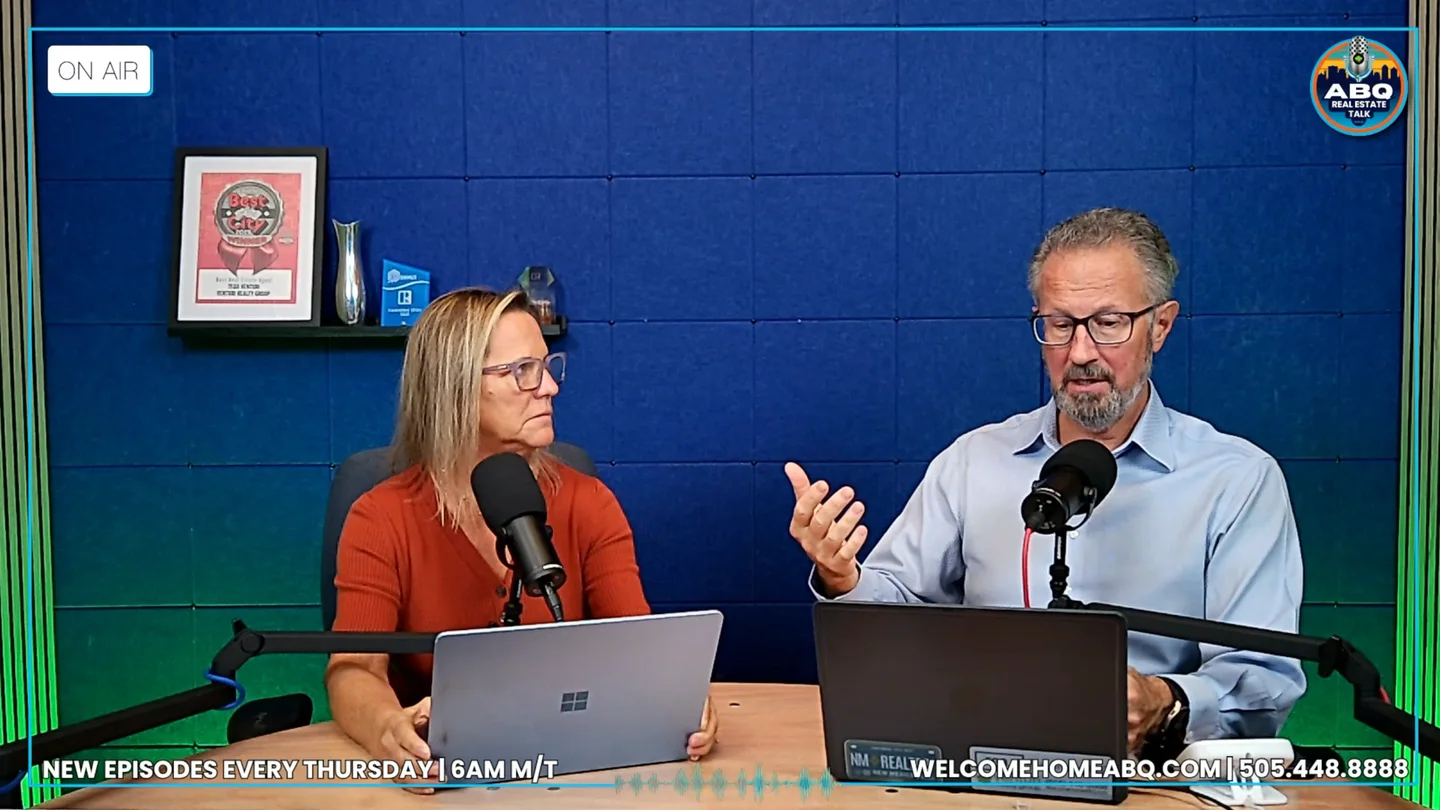
In Episode 602 of Albuquerque Real Estate Talk, Tracy and Tego Venturi walk through those decisions in a useful order. Their advice begins with slowing down enough to understand the situation. Getting help early can prevent a well-intended cleanout or renovation from becoming an expensive detour.
Watch the inherited-home conversation · 5:58 ↗
Before selling an inherited house in New Mexico, ask an attorney who can act
Tego starts with a distinction that can get lost when people say they inherited a house: the person making the phone call may not be the person authorized to sign for the sale. Being a beneficiary and administering an estate are different roles.
Ask a New Mexico estate attorney to review the deed and estate documents and explain who is authorized to act. A title professional can identify the documentation needed for closing, and a broker can help organize the property work around that guidance.
Whether probate is needed depends on how the property was owned and the estate documents involved. New Mexico Courts provides general background; an attorney should review which process applies to your situation.
Watch the ownership and authority conversation · 7:06 ↗
Keeping the house is an option, too
Once the authority questions are being addressed, the next conversation is about what should happen to the house. Selling is one possibility. Tego also raises renting it, while Tracy describes situations in which a beneficiary wants to move in and keep it in the family.
Those choices get more complicated when several people have an interest in the outcome. One may want proceeds from a sale; another may prefer rental income. Someone who wants to live in the property may need to explore a buyout with the appropriate legal and financing professionals.
If someone wants to move in, rent the property, or buy another person’s interest, ask an attorney to explain the ownership, agreement, and documentation issues before making commitments.
Give the house a caretaker while the decisions take shape
Tracy brings the conversation back to the house itself. Who has keys? Is anyone staying there? Who is checking the property, handling the bills, and making sure a small problem gets noticed?
Her example is especially timely in a mid-October New Mexico conversation: cold weather is coming, and an unattended plumbing problem can change the entire sale plan. Insurance, electricity, gas, leaks, and regular check-ins deserve attention while the larger estate decisions are underway. Confirm the occupancy situation and coverage requirements directly with the insurer.
Belongings need a plan of their own. Before removing, donating, or selling belongings, confirm with the authorized representative—and the estate attorney if authority is unclear—who may approve those decisions. Start by identifying important documents and the keepsakes people want to preserve. Then consider estate-sale services, charities, and hauling companies for what remains. Tracy’s point is to organize the work before the rush to empty every room.
That same pause helps when an unsolicited cash offer arrives. Tego acknowledges that a cash sale can make sense. The useful comparison is between actual options: the expected proceeds, preparation costs, time, and work involved. Convenience has value, but it helps to understand what that convenience costs.
“You don’t have to rush the process”
Tracy Venturi · Episode 602, 6:56
Fix the problem that changes the sale, before remodeling the room
With a sale in view, Tego moves to the question many families ask first: what should we fix?
His starting point is the home’s working condition. A roof leak or a heating-system problem can matter differently from an outdated kitchen. Repair needs may affect which buyers and loan programs can consider a home; the lender and property condition determine the specific requirements. Renovation financing, such as FHA’s 203(k) program, can also be an option, so a house needing work isn’t automatically limited to cash buyers.
Tracy adds another practical constraint: someone has to pay for the work. Before a beneficiary fronts money, the authorized estate representative and attorney should address spending and reimbursement. A hoped-for increase in the sale price doesn’t settle that question.
The hosts’ examples make the distinction clear. Painting may be worth evaluating for one property. Replacing a kitchen may not be worthwhile for another. Get a property-specific preparation plan and estimates before choosing a project.
Gather the records at the same time: repair history, warranties, permits, and information about solar equipment, wells, or septic systems when those features apply. Tracy says the team can help locate relevant well and septic records if the family doesn’t have them.
Look beyond the sale price to the proceeds and tax questions
Tracy describes comparing what similar homes have sold for and the condition they were in. The Albuquerque monthly housing market report offers broader context, but an inherited home still needs a valuation grounded in its own location, condition, and comparable sales.
An inherited-home sale can raise questions about tax basis, valuation records, and reporting. Ask a CPA to determine the applicable basis and tax treatment before relying on an estimated after-tax result. A broker’s pricing analysis serves a different purpose.
COMPARE TWO WAYS TO SELL
Which selling option could leave you with more money?
Use this calculator when you’re deciding between listing the home on the open market and accepting a direct cash offer. It compares the money remaining from each sale after the costs you enter.
A higher sale price may come with repairs, selling fees, and more months of bills. A lower cash offer may involve different costs and timing. Compare what’s left after those expenses, then weigh the difference against the time and work involved.
Using your own numbers? Enter a likely sale price and the cash offer, then add the costs and time for each option. The results update as you type.
Enter an estimate for every cost that applies; leave zero only when there is no cost. Your figures stay in this browser and aren’t submitted or saved.
Estimated money remaining after the costs above
Enter both sale prices to see how much each option could leave after costs.
Before income taxes and other estate obligations. This is money remaining from the sale, not an amount ready to distribute to heirs.
How the comparison works
For each scenario: sale price − mortgage and lien payoff − preparation and repairs − other selling costs − (monthly carrying costs × months until closing).
Results are planning estimates before income taxes and other estate obligations. They do not establish the property’s market value, signing authority, tax basis, beneficiary shares, or which offer to accept. The payoff input is shared; confirm date-specific payoffs with your lender and title professional.
The Consumer Financial Protection Bureau’s seller closing-disclosure requirements explain why sale price, seller costs, payoffs, and adjustments belong in the proceeds conversation. Ask your broker and title professional for a property-specific net sheet.
JavaScript is unavailable. You can still compare the scenarios using the formula above and a property-specific net sheet from your broker or title professional.
Local help matters when the people responsible live elsewhere
The discussion becomes especially concrete when Tego describes helping an out-of-state owner with a boarded-up house that someone was occupying. He coordinated with an attorney rather than treating the occupancy problem as something a broker could resolve alone.
That story explains what Tracy means when she calls the team “feet on the street.” A local broker can evaluate the home, help plan preparation, coordinate resources, and handle the real-estate sale. Establishing legal rights, resolving disputes, and giving tax advice belong with the appropriate professionals.
The person who calls doesn’t need every answer already. An early conversation can identify what information is missing and which professional needs to address it, before the property work gets ahead of the estate work.
When it is time to market the house, tell its story clearly
The later marketing conversation follows naturally from that preparation work. After the house is ready for a sale plan, how will buyers understand what it offers?
Tego describes writing detailed property stories that go beyond short listing remarks. The goal is to explain the home’s features, useful nearby context, and practical benefits in language that answers real buyer questions. He connects that work to answer engine optimization, often shortened to AEO, and the growing role of conversational search.
Clear information helps people evaluate a listing, but no marketing method guarantees an AI recommendation. Google’s guidance for AI features in Search says established SEO practices remain relevant and special AI-specific optimization isn’t required for its AI Overviews or AI Mode.
Tego’s closing point is more durable than any search tool: exposure can only do so much. Price, condition, and location still have to make sense together. For an inherited home, the work of understanding the property and choosing a realistic plan remains central.
A little Albuquerque conversation around the main question
The episode opens with Tracy and Tego enjoying the afterglow of Balloon Fiesta. They talk about the flying days and the visitors in town, including a restaurant encounter Tego describes from the week. It’s a familiar Albuquerque lead-in before the conversation turns to the work people need help with.
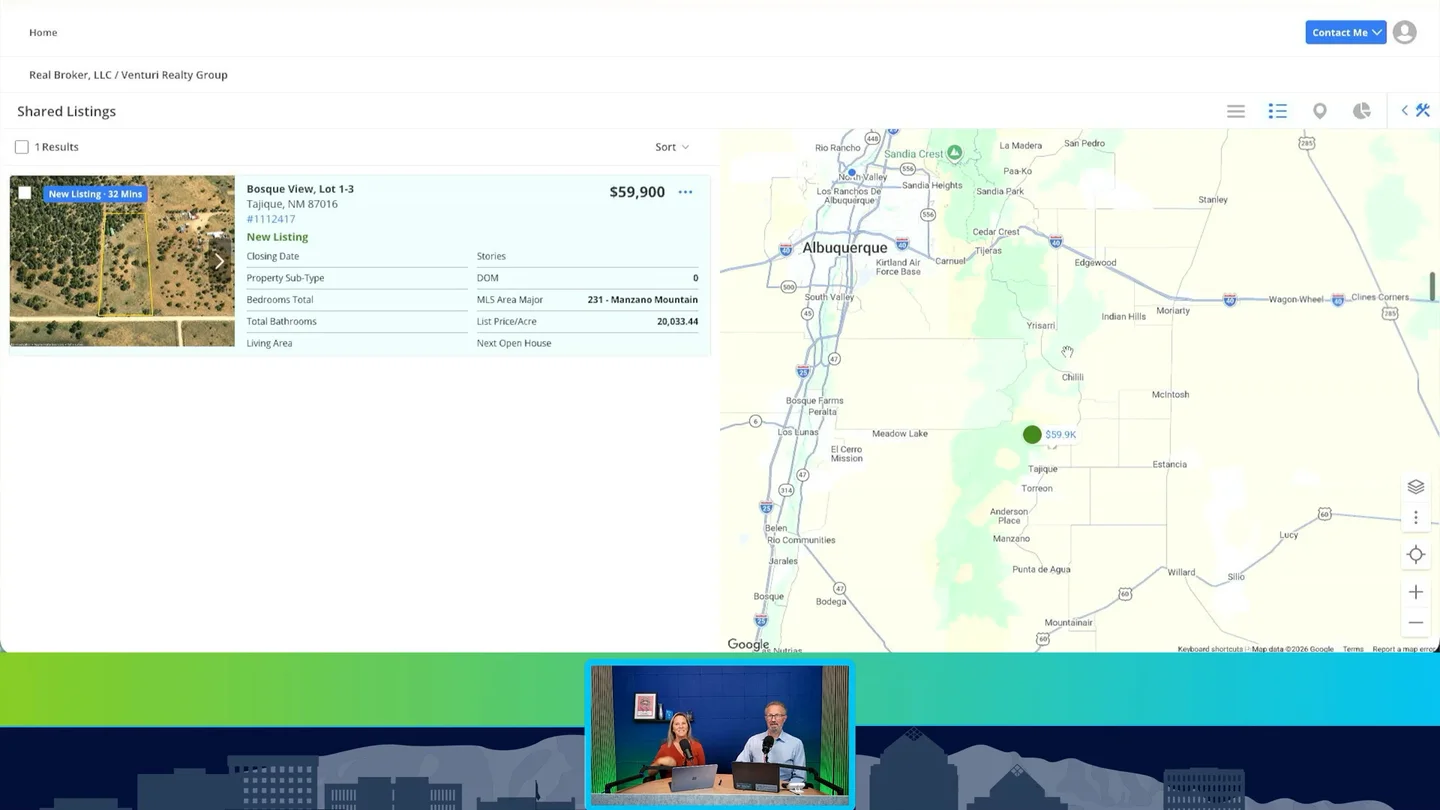
Tracy also spotlights land near Tajique and later mentions another property near Fourth of July Canyon. For the land, her focus is the infrastructure already described at the property and the seller-financing possibility discussed during recording. Those details prompt a useful reminder for anyone considering land: proposed use, permits, utilities, financing terms, and current availability all need a property-specific review.
The episode’s listing mentions reflect the recording, rather than a current availability statement. Contact the team for updated details before making plans around either property.
Watch the Balloon Fiesta conversation · 0:44 ↗
Watch the Tajique land spotlight · 2:46 ↗
Watch the Fourth of July Canyon property mention · 22:39 ↗
Watch or listen to Episode 602
The full conversation includes inherited homes, local property mentions, and changing real-estate marketing.
Watch the full episode on YouTube · 33:03
Open the supplied Podbean player if the embedded player doesn’t load.
Questions about an inherited house in New Mexico
Do I have to sell a house I inherit in New Mexico?
The episode considers keeping, renting, or selling. Ask a New Mexico estate attorney to review authority, ownership, and estate obligations before making commitments about any of those options.
Does every inherited house in New Mexico require probate?
Whether probate is needed depends on how the property was owned and the estate documents involved. New Mexico Courts provides general background; an attorney should review which process applies to your situation.
Does having a will mean we can skip probate?
Ask a New Mexico estate attorney to review the will, how the property was owned, and other estate documents before assuming whether probate is needed or who may act.
Should we remodel before selling an inherited home?
Get a property-specific plan first. Compare necessary repairs, likely buyer financing requirements, cost, time, and the estate’s ability to fund the work before choosing cosmetic updates.
Is selling an inherited house automatically tax-free?
An inherited-home sale can raise questions about tax basis, valuation records, and reporting. Ask a CPA to determine the applicable basis and tax treatment before relying on an estimated after-tax result. A broker’s pricing analysis serves a different purpose.
How can I compare a cash offer with listing an inherited home?
Compare the estimated proceeds after payoffs, preparation, selling costs, and carrying costs for each timeline. The interactive comparison above uses your figures; ask a broker and title professional to verify a property-specific net sheet. The estimate excludes income taxes and other estate obligations.
Sources and further reading
- Albuquerque Real Estate Talk, Episode 602 · Tracy and Tego Venturi · October 15, 2026. Published-video transcript and supplied source video.
- New Mexico Courts: probate and non-probate transfers · page updated July 28, 2026.
- New Mexico Courts probate self-help guide · executor/personal-representative terminology; December 2015.
- IRS: inherited-property basis and taxable gains.
- HUD: home purchase, rehabilitation, and repair mortgage programs.
- CFPB: seller closing disclosures, payoffs, and adjustments.
- Google Search Central: AI features and your website.
Sources accessed October 15, 2026.
Episode artwork supplied by Venturi Realty Group is a promotional illustration, not a photograph of an inherited property.
Make a thoughtful plan for the inherited home
Start with what you know about the property and the decisions ahead. We can help organize the real-estate work and connect you with relevant resources.
Venturi Realty Group, brokered by Real Broker LLC.